
Bat — a step-by-step lesson for grown-up and child
This lesson turns the day on its head: while the rest of the garden goes to sleep, the bat wakes up. Your toddler hangs, flaps and peers at dusk for the garden’s night shift.
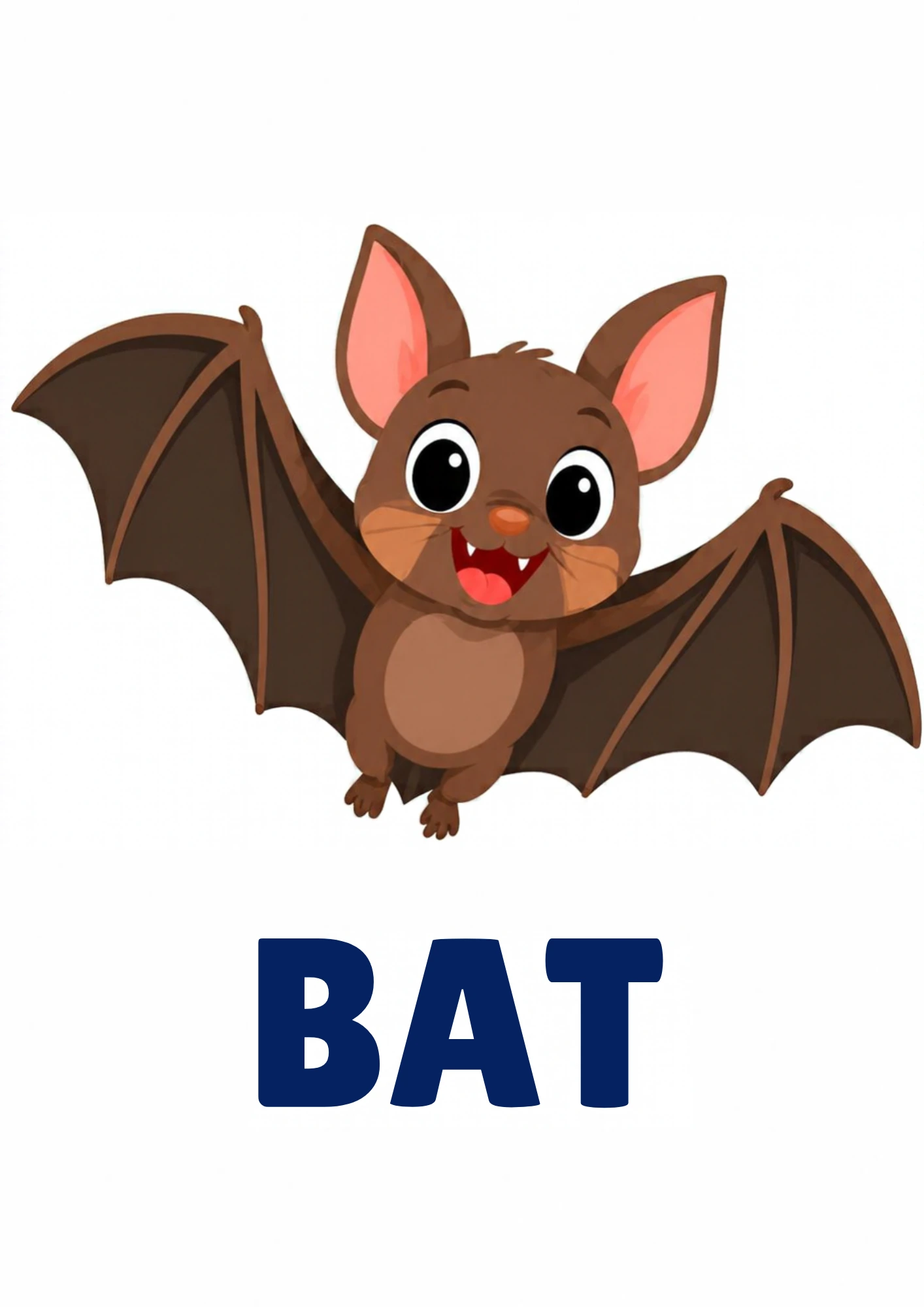
What is this?
A bat is a small furry animal with wings that flies at night. Bats twist and dart after insects in the dark and sleep through the day hanging upside down.
What does it mean?
The bat introduces a deliciously strange idea: some neighbours keep opposite hours. Upside-down sleeping and flying by night make the bat the set’s wonder card — the one that says the world is bigger than my bedtime.
What does the child need to know?
Bats fly at night and hang upside down to sleep. They are wild animals that are never touched or carried — but watching their fast zigzags over the garden at dusk is a airshow, and it is all ours.
Why this matters
Dusk-watching is a wind-down ritual with a thrill in it: the sky empties of birds and fills with bats just as curtains close. A toddler who knows who flies at night watches the evening sky with ownership instead of sleepiness.
What it teaches
Body inversion play (bending to hang is a novel vestibular treat), day-night sorting, quiet evening attention, flapping large-movement play, and comfort with the dark — a bat is a friendly face for it.
Words to learn
batnightwingshangflydark
Say this to your child
“"A bat! Night flyer — flap, flap, flap. When the sun goes down, the bat wakes up and catches bugs in the dark. And guess how it sleeps? Upside down, hanging by its toes! We watch bats from the ground and the window — they are wild flyers, and the sky is theirs."”
Step by step
- Show the card, say bat, and flap your hands like small quick wings — bats flutter, fast and jittery, not slow and soaring.
- Do the bat hang: bend forward at the hips, arms dangling down, head low — a bat at rest. Hold it, wobble happily, then rise.
- Dim the lights and fly: flap around the room together as night bats hunting — a few laps is plenty; bats tire, and so do knees.
- Tell the upside-down fact with wonder: bats sleep with their feet holding on, heads pointing at the ground — every toddler’s favourite nonsense that is true.
- End at a window at dusk, if you can: look up, watch for fast flickers, and whisper bat! for each zigzag you spot together.
Look closer at the picture
Say bat and flap quick little hand-wings, fast and fluttery. Ask when the bat flies — at night, when we sleep — then bend forward and dangle like a bat at rest, toes holding on, head hanging low.
Ask your child
"When does the bat fly — day or night?" "Can you hang like a bat?" "How does a bat sleep?" "Do we touch the bat, or watch the sky?" — answered with a dangle, a gasp of delight and a point at the ceiling.
What your child can say or do
"Bat! Night-night up!" Expect upside-down facts recited at dinner, bat-hangs off the sofa arm, and requests to check the sky before bed. The dusk vigil may become a treasured slow-down ritual.
Out in the real world
Bats flicker over gardens, parks and street lamps at dusk almost everywhere — a two-minute sky-watch usually finds one. Each zigzag reruns the lesson, and the window is the best seat in the house.
Try it together
Moths and bats: you be the slow moth wandering the room, and your bat chases with flapping hands — then swap. A soft "swoosh" sound makes the hunting official.
Understanding check
Point at the darkening sky tomorrow evening without a word: if your toddler whispers "bat!" at the first flicker, the card has given your family a nightly wonder — lesson complete.
Parent tips
Keep the hanging game to sofas, beds and rugs — heads and floors negotiate poorly. If a real bat ever gets indoors, do not involve small hands: close the door, call for help, and save the story for breakfast.
Staying safe
Bats are strictly wild: never touch or pick one up, indoors or out — they can scratch and carry diseases, and only animal-carers should handle them. Dusk-watching happens behind glass or on a held hand, well away from open water and edges.
This lesson pairs with the Bat flashcard in the library — print it, show it, keep it on the fridge. Back to Garden Friends (School Garden).