
Frog — a step-by-step lesson for grown-up and child
This lesson gets the wiggles out and the word in: your toddler becomes the frog, leaps across a cushion pond, and learns that real frogs live by water where grown-up eyes do the finding.
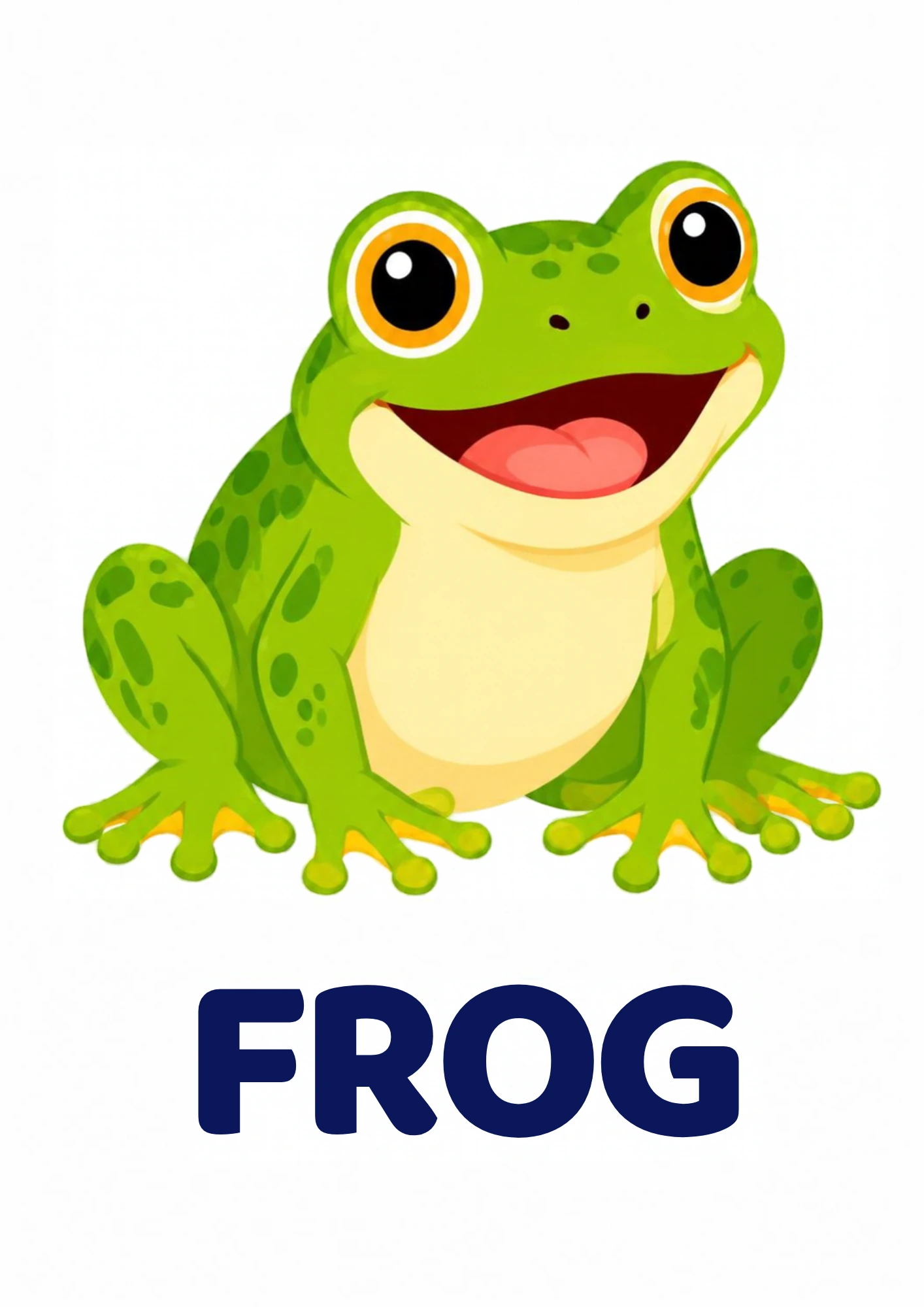
What is this?
A frog is a small green or brown animal with long back legs that hops high and swims well. Frogs live near ponds and puddles and catch bugs with a quick flick of the tongue.
What does it mean?
The frog is the movement card of the set — jumping is what a two-year-old’s legs have been waiting to do. Naming the animal while being the animal is how the word sinks all the way in.
What does the child need to know?
Two things to know: frogs jump and say ribbit, and real frogs live down by the water where we go with a grown-up. We watch them from the bank; their skin stays untouched.
Why this matters
Big jumps build balance, leg strength and landing control — genuine physical milestones dressed as a game. And the pond rule plants early respect: some animals are for looking, and that is not a loss, it is the friendship.
What it teaches
Gross motor power (crouch, launch, land), listening and responding ("jump!... freeze!"), animal vocabulary, and early self-control — the same legs that leap must also stop.
Words to learn
frogjumppondribbitlily padhop
Say this to your child
“"Can you be a frog? Crouch down low... and JUMP! Ribbit! Frogs have long strong legs and they live near the pond. When we see a real frog, we stand still and watch it — our hands stay in our pockets and our eyes do the finding."”
Step by step
- Show the card, say frog, and crouch down low yourself — your toddler will copy your shape before they copy your word.
- Do one big jump together and land with a plop — then say ribbit! Linking word, jump and sound is the whole lesson in three seconds.
- Spread cushions across the floor — your lily pads — and hop between them, whispering ribbit on every landing to keep it playful, not wild.
- Tell the pond story simply: real frogs sit by the water, and we look at them from the bank with a grown-up, hands tucked away.
- Finish by crouching very small and still — a hiding frog — then one last huge jump to end on a laugh.
Look closer at the picture
Who is on the card? Say frog out loud, then crouch and do one big frog jump right there. Ask where the frog’s eyes are, and finish with a ribbit — the picture, the jump and the sound make the whole introduction.
Ask your child
"Where does the frog live?" "Can you jump like the frog?" "What does the frog say?" "Do we touch the froggy at the pond, or only look?" — each one lands with a jump, a sound or a solemn little head-shake.
What your child can say or do
"Ribbit!" "Froggy jump!" Expect cushion-leaping for days, frogs spotted in puddles that are actually shadows, and the proud announcement "frog see it!" after any walk near water.
Out in the real world
Frogs turn up after rain, at pond edges, even in window wells — and every spot-the-frog moment reruns the rule for free. Between sightings, puddles and bath time keep the leaping going.
Try it together
Lily-pad musical frogs: scatter cushions, play a hum or a song, and leap pad to pad. When the music stops, every frog crouches tiny and still. Freeze plus jump is the toddler combination hit.
Understanding check
Ask for the sound and the move at a random moment tomorrow: if a crouch-jump-ribbit arrives unprompted, the word and the animal are glued together — lesson complete.
Parent tips
Soft landing spots only — rugs and cushions, never hard floors. Join every jump yourself; your leap is worth ten explanations. If a real frog is found, admire it, then steer away before small hands get ideas.
Staying safe
Leaping needs clear floor — slide the coffee table out of the flight path first. By real water, one grown-up holds one small hand at all times, and frogs are never picked up; their damp skin is delicate and ours is far too warm.
This lesson pairs with the Frog flashcard in the library — print it, show it, keep it on the fridge. Back to Garden Friends (School Garden).