
Lizard — a step-by-step lesson for grown-up and child
This lesson steals the lizard’s daily routine — warm up, stay still, dash — and turns it into a game your toddler can play on any mat, patio or patch of sunshine.
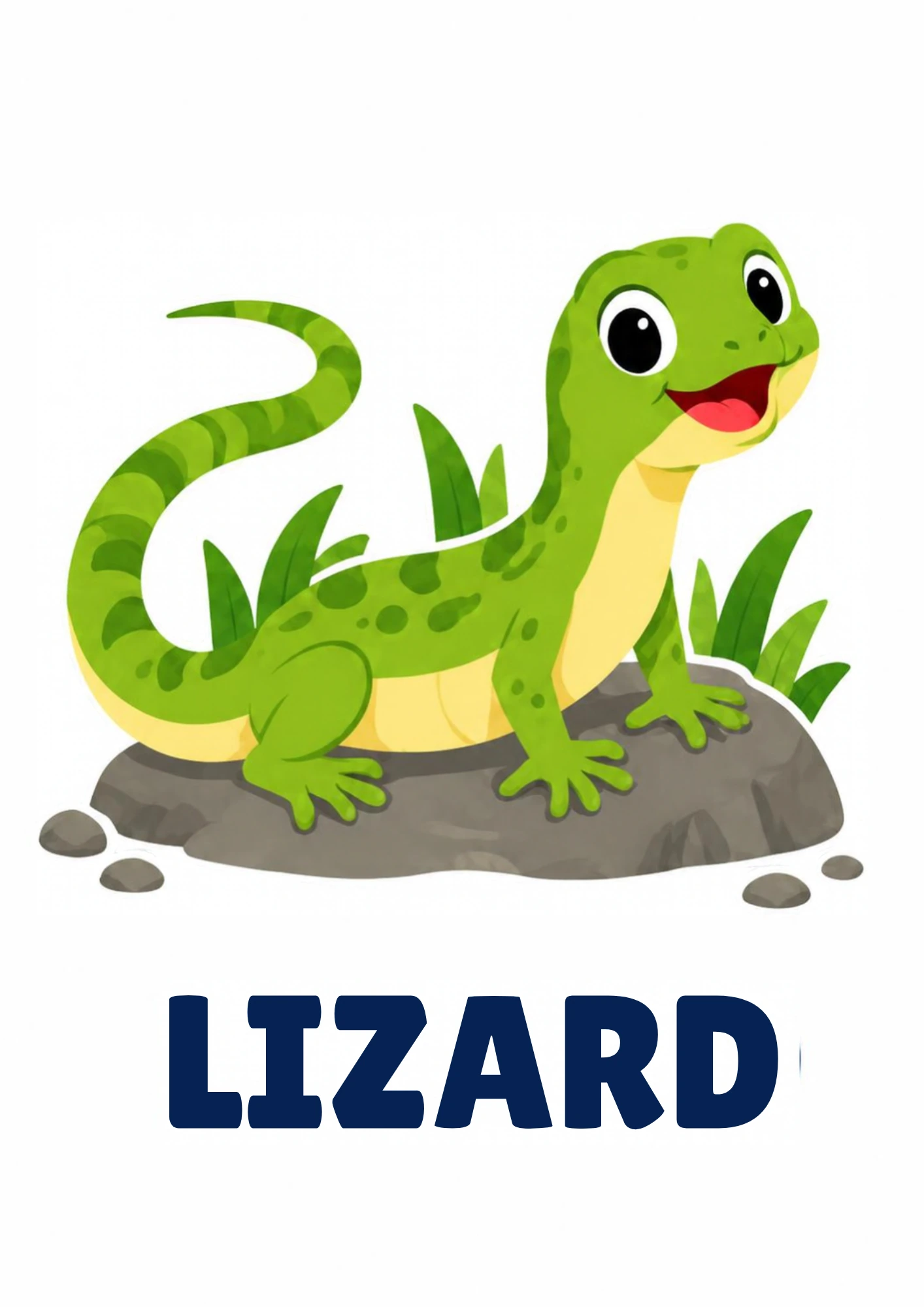
What is this?
A lizard is a small reptile with scaly skin, four quick legs and a long tail. It lies flat in sunny spots to warm up, then zips away at the first twitch of danger.
What does it mean?
Lizards are the garden’s stillness champions, and stillness is a superpower a two-year-old can actually train. The dash afterwards makes the whole cycle irresistible: wait... wait... GO.
What does the child need to know?
Lizards sunbathe on warm rocks and paths to wake their bodies up, and they zoom off when startled. We watch from a step away; grabbing is how lizards lose their tails, and hands stay in pockets near them.
Why this matters
Freeze-and-release play is impulse control with a joy at the end — the exact shape of self-regulation your toddler will use at preschool doors for years. And the tail fact lands the no-grabbing rule with a reason that sticks.
What it teaches
Stillness on purpose (a milestone at two), listening and responding to the "go" cue, warm-cool and sun-shade vocabulary, body imitation of a totally different body plan, and gentle curiosity about reptiles.
Words to learn
lizardsunstillzoomrocktail
Say this to your child
“"A lizard! It lies in the sun and gets warm — sss, so still. Can you be a lizard? Lie flat... be still... and when I say fly — ZOOM! Lizards are quick and shy. We watch them from a step away and our hands stay in our pockets, so their tails stay on."”
Step by step
- Show the card, say lizard, and lie down flat on the rug with your arms alongside your body — a sunbathing lizard is a funny sight and an easy copy.
- Hold the still together for a slow five-count, whispering warm... warm... warm, then shout fly! and scuttle across the room at full toddler speed.
- Play the cycle three times — sunbathe, freeze, zoom — so the order becomes the game and your toddler starts predicting the zoom.
- Tell the tail story with feeling: if someone grabs a lizard, the lizard leaves its tail behind and runs — which is why our hands stay tucked.
- Finish with a sunny-rock rest: lie flat on a mat by a real window and warm up quietly, lizards together, before the next zoom.
Look closer at the picture
Say lizard and lie down flat, arms tucked in, a sunbathing lizard on the rug. Hold still for a slow three-count, ask what the lizard is doing on its rock, then spring up and zoom once around.
Ask your child
"What is the lizard doing on the rock?" "Can you be still, still, still?" "What does the lizard do when you say fly?" "Do we touch the lizard, or watch it zoom?" — answered with stillness, a dash and pockets firmly filled.
What your child can say or do
"Zoom!" Expect flat-on-the-floor sunbathing in odd corners, freeze-games demanded in queues and shops, and lizards spotted on every warm wall. The still-then-dash rhythm will become a family classic.
Out in the real world
Lizards bask on sunny rocks, walls and patios in warm places — and every glimpse is a fast, thrilling rerun. Even without a live one, warm pavements and sunny windowsills keep the story going.
Try it together
Lizard rock: designate a cushion as the sunny rock. Lizards must reach it, lie flat, and hold still until you whisper fly — then one lap of the room. Simple, repeatable, and it empties wiggles fast.
Understanding check
Call "be a lizard" at a random moment: instant flat stillness followed by an explosive zoom means the lesson is fully installed — warm up, wait, go.
Parent tips
Count the stillness out loud and celebrate every extra second — the growing freeze is the progress chart. Keep the zoom zone clear of furniture corners; speed plus joy needs runway.
Staying safe
Stillness play happens on rugs and grass, never on roads or driveways. Real lizards are for eyes only — their tails drop when grabbed and wild reptiles can carry salmonella, so hands stay away and get washed after garden play.
This lesson pairs with the Lizard flashcard in the library — print it, show it, keep it on the fridge. Back to Garden Friends (School Garden).