
Mouse — a step-by-step lesson for grown-up and child
This lesson shrinks the whole body down to mouse-size: tiny steps, tiny squeaks, hiding behind the sofa — plus the respectful distance that keeps shy animals shy and safe.
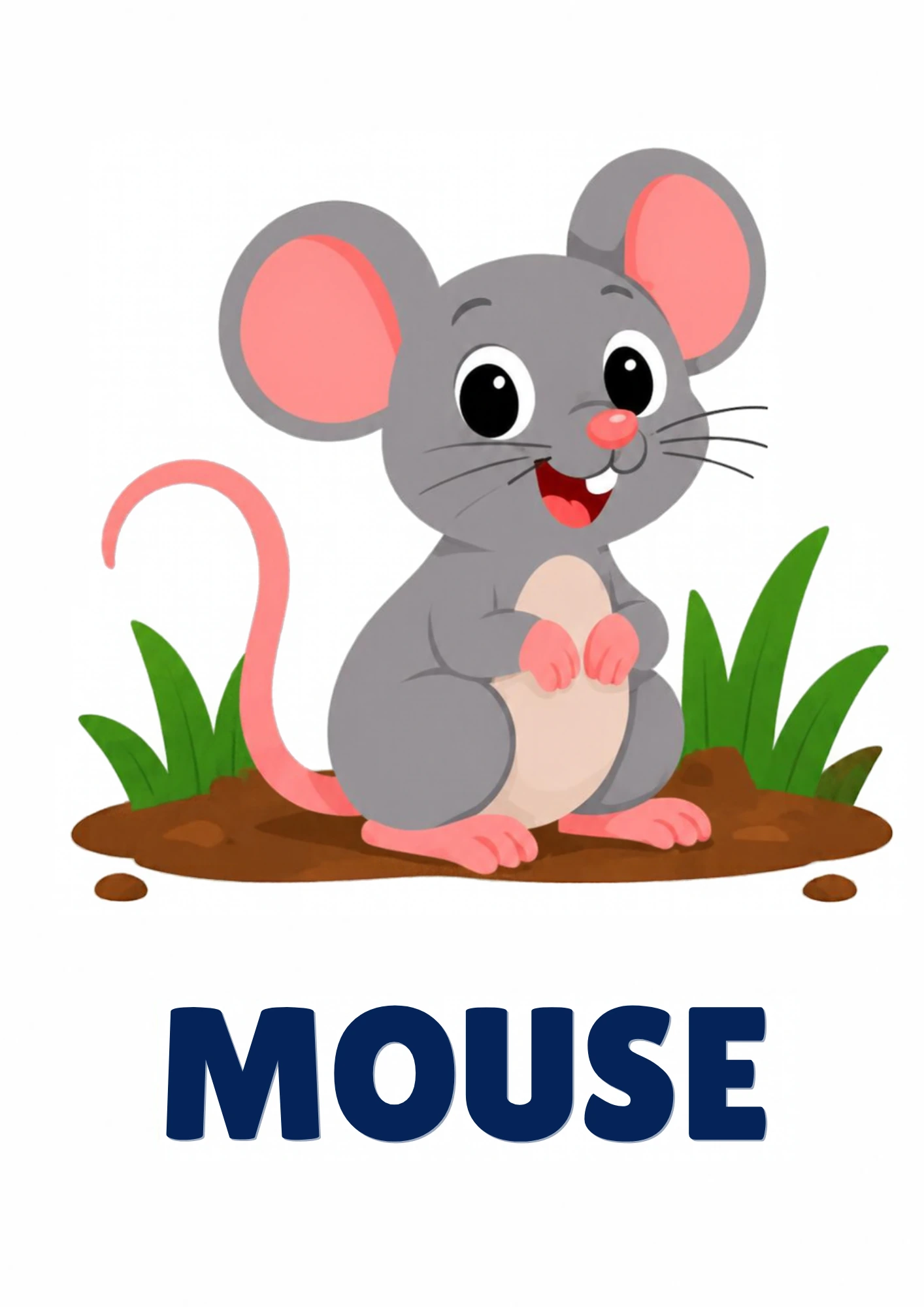
What is this?
A mouse is a very small furry animal with big ears, a long thin tail and quick little feet. Mice hide in quiet corners and come out at dusk to look for crumbs and seeds.
What does it mean?
The mouse is the set’s lesson in smallness — everything about it is a size word your toddler can act out with their body. It is also the set’s lesson in shyness: some creatures want to stay hidden, and letting them is the kind move.
What does the child need to know?
Mice are tiny, quick and shy; they squeak and tiptoe. If a real one is ever spotted, we stay put and watch for a second, then tell a grown-up — we never follow it into corners or cupboards.
Why this matters
Tiptoeing is balance and control at its trickiest, and a toddler who can move quietly has mastered their body in a new register. The shy-animal rule also generalises beautifully: it is the same courtesy they will owe the cat, the baby and new friends.
What it teaches
Slow controlled movement (tiptoeing), whisper-voice practice, size vocabulary (tiny, little, small), understanding that animals have feelings about being seen, and dramatic hiding play.
Words to learn
mousetinysqueaktiptoehidewhiskers
Say this to your child
“"A little mouse! Squeak! Mice are tiny and quick, with whiskers and a long tail. They tiptoe out at night when everything is quiet. If we see one, we stay still and let it run home — shhh — a mouse likes to be hidden, and that is how we are kind to it."”
Step by step
- Show the card, say mouse, and make yourself small — crouched, hands up as tiny paws — before you say another word.
- Squeak together, loudly once and then in a proper mouse whisper; the contrast teaches quiet better than any shushing.
- Tiptoe across the room on a mouse mission — fetch one crumb (a block), carry it back under the table, and hide.
- Tell the dusk story: mice wake when the house goes quiet, which is why we nearly always see only their dash and their tail.
- Set the rule with care: if a real mouse ever runs past, our feet stay planted and our voice finds a grown-up — mice are shy, and shy means we let them be.
Look closer at the picture
Say mouse and make yourselves tiny — crouched small on the rug, hands up as paws. Ask where the whiskers are on the card, then squeak once, quietly, like a mouse that does not want to be found.
Ask your child
"Is the mouse big or tiny?" "What sound does a mouse make?" "Can you tiptoe like a mouse?" "If a real mouse runs by, do we chase it or stay still?" — answered with a squeak, a tiptoe and a firm little pause.
What your child can say or do
"Squeak squeak!" Expect tiptoe missions to the kitchen, mice declared behind every cupboard, and sudden whisper-voice games. "Mouse!" may be announced at shadows — smile and agree to investigate slowly.
Out in the real world
Mice live near people everywhere — sheds, gardens, park corners at dusk. Real sightings are dashes; that is the whole show, and a fine one: point, gasp quietly, stay planted, tell the grown-up.
Try it together
Mouse house: drape a blanket over a chair as the hideout, tiptoe out to collect one block at a time, and stock the larder. A mouse that gathers is a mouse that practises quiet carrying, too.
Understanding check
Play a random tiptoe dare tomorrow — "mouse-walk to the door": silent feet and a whispered squeak mean the lesson moved in for good.
Parent tips
Keep the squeak indoors and the whisper outdoors; the game doubles as your secret weapon for quiet transitions. If a real mouse appears indoors, stay calm and matter-of-fact — your toddler is reading your face first.
Staying safe
A startled wild mouse can nip, so the never-touch rule is absolute — and never follow one into a corner or cupboard. If mice move into the house, that is a grown-up job; cleaning up after them is not for little hands.
This lesson pairs with the Mouse flashcard in the library — print it, show it, keep it on the fridge. Back to Garden Friends (School Garden).