
Rabbit — a step-by-step lesson for grown-up and child
This lesson teaches the rabbit card with the whole body: hopping across the rug, wiggling a nose, then meeting the rule that real rabbits are soft to look at and careful with.
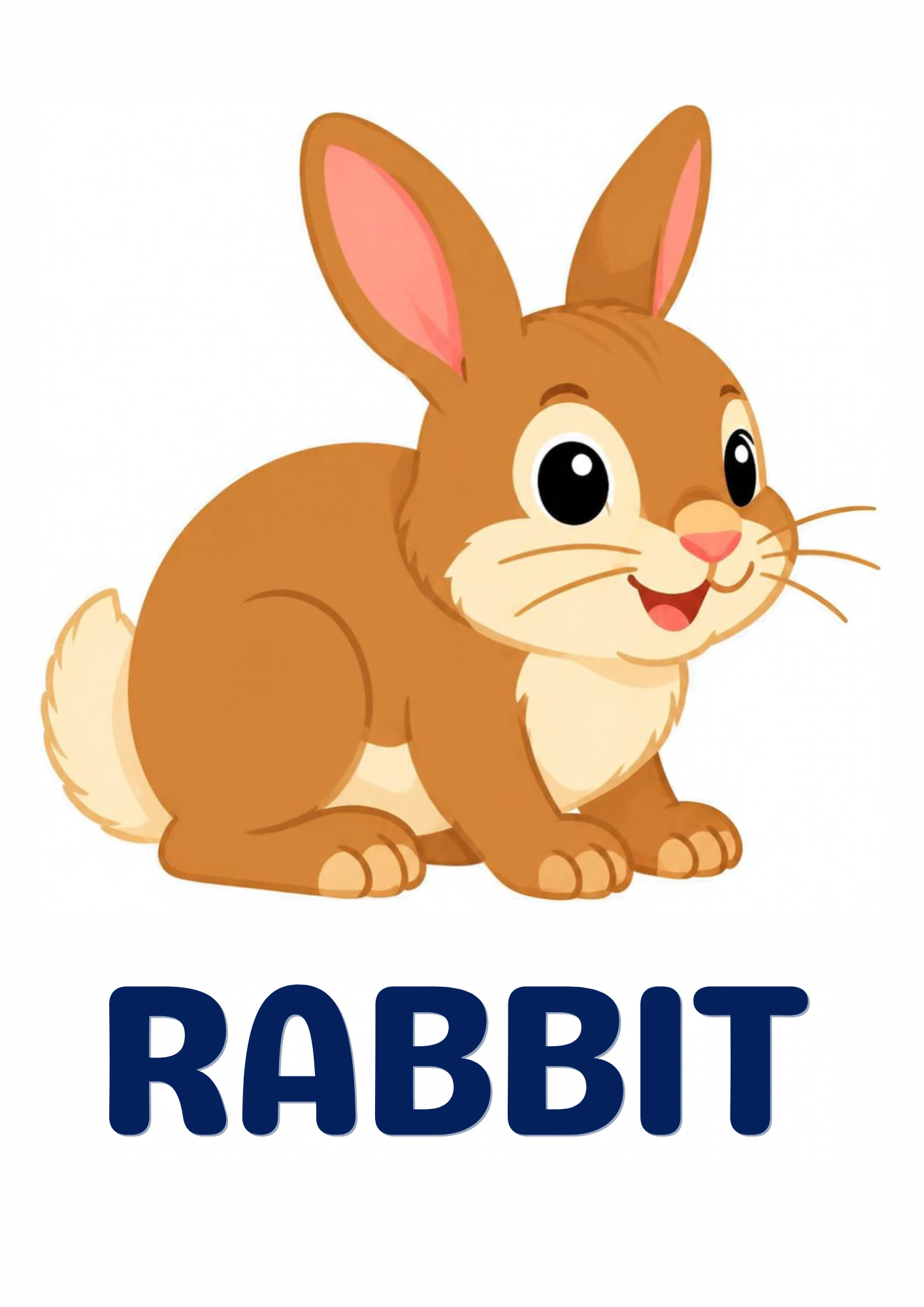
What is this?
A rabbit is a soft, gentle animal with long ears and strong back legs that hops. Rabbits live in burrows underground and munch grass and leaves.
What does it mean?
Rabbits are usually the first animal a toddler names from books, so this card lands on friendly ground. The lesson’s real gift is gentleness: a big animal feeling practised on a small, shy creature.
What does the child need to know?
Rabbits hop, twitch their noses and have long listening ears. Wild rabbits are quick and shy — we watch from a step away, and even friendly-looking ones stay unpetted.
Why this matters
Gentle is a skill, not a mood. Practising soft hands, quiet feet and a kind voice on the rabbit card builds the exact movements your toddler will need around pets, babies and other people’s things.
What it teaches
Gross motor (two-foot hops), body imitation (nose twitches are surprisingly hard and wonderfully funny), gentle-touch practice on a toy, and animal vocabulary with a feeling attached.
Words to learn
rabbithopearssoftnosegentle
Say this to your child
“"A rabbit! Rabbits have long ears and they hop, hop, hop. Can you hop? Can you twitch your nose like this? When we see a real bunny, we stay quiet and soft — hands down — and watch it hop away. Gentle hands, gentle feet."”
Step by step
- Show the card, say rabbit, and hop once — the word and the bounce should arrive as one event.
- Twitch your nose dramatically and wait: the copy may take a few tries, and the first successful twitch always earns a laugh.
- Hop a little rabbit trail across the room together, pausing at each stop to sniff the air like rabbits checking for danger.
- Hand your toddler a plush toy and practise the soft pat — one finger, slow and gentle — saying "gentle" as they do it.
- End with the rule in toddler words: real bunnies are watch-friends; we keep our hands to ourselves and let them hop away first.
Look closer at the picture
Say rabbit together, then hop once on the spot. Ask your toddler to point out the ears on the card — long ones — and finish by twitching your noses at each other like two rabbits in the rug-meadow.
Ask your child
"What does the bunny do?" "Can you hop two times?" "Where are its long ears?" "Do we touch the bunny or watch it?" — every answer arrives as a movement or a solemn nod, which is exactly right at two.
What your child can say or do
"Hop hop!" "Bunny!" Expect spontaneous nose-twitching at breakfast, rabbits spotted in every field and storybook, and a soft one-finger pat on the cat or the teddy — the gentleness practice escaping into real life.
Out in the real world
Rabbits appear in gardens at dusk, at petting farms, in every second picture book. Each one is a rerun: name it, admire its ears, watch from a little distance, wave goodbye.
Try it together
Carrot patch: cut carrot shapes from orange paper, scatter them, and let your rabbit-hop toddler gather them into a basket — hopping to each one, nose twitching, big feet and quiet landings.
Understanding check
Say "bunny" out of nowhere tonight: if a hop or a nose twitch comes back before the word does, the card did its work — the animal now lives in your toddler’s legs.
Parent tips
Practise the soft pat on toys daily; the hands learn faster than the rules do. If a real rabbit bolts away, treat it as the happy ending it is — "the bunny hopped home!" keeps watching sweet, never disappointing.
Staying safe
Hop on rugs, not tiles — hopping and hard floors collide. At farms, hands stay outside every hutch, and any animal touching is done to the plush toy only; real rabbits bite when startled and toddlers startle them.
This lesson pairs with the Rabbit flashcard in the library — print it, show it, keep it on the fridge. Back to Garden Friends (School Garden).