
Raccoon — a step-by-step lesson for grown-up and child
This lesson borrows the raccoon’s famous habit — dunking and rubbing everything in water — and turns it into washing play your toddler can own, with the mask as the memory hook.
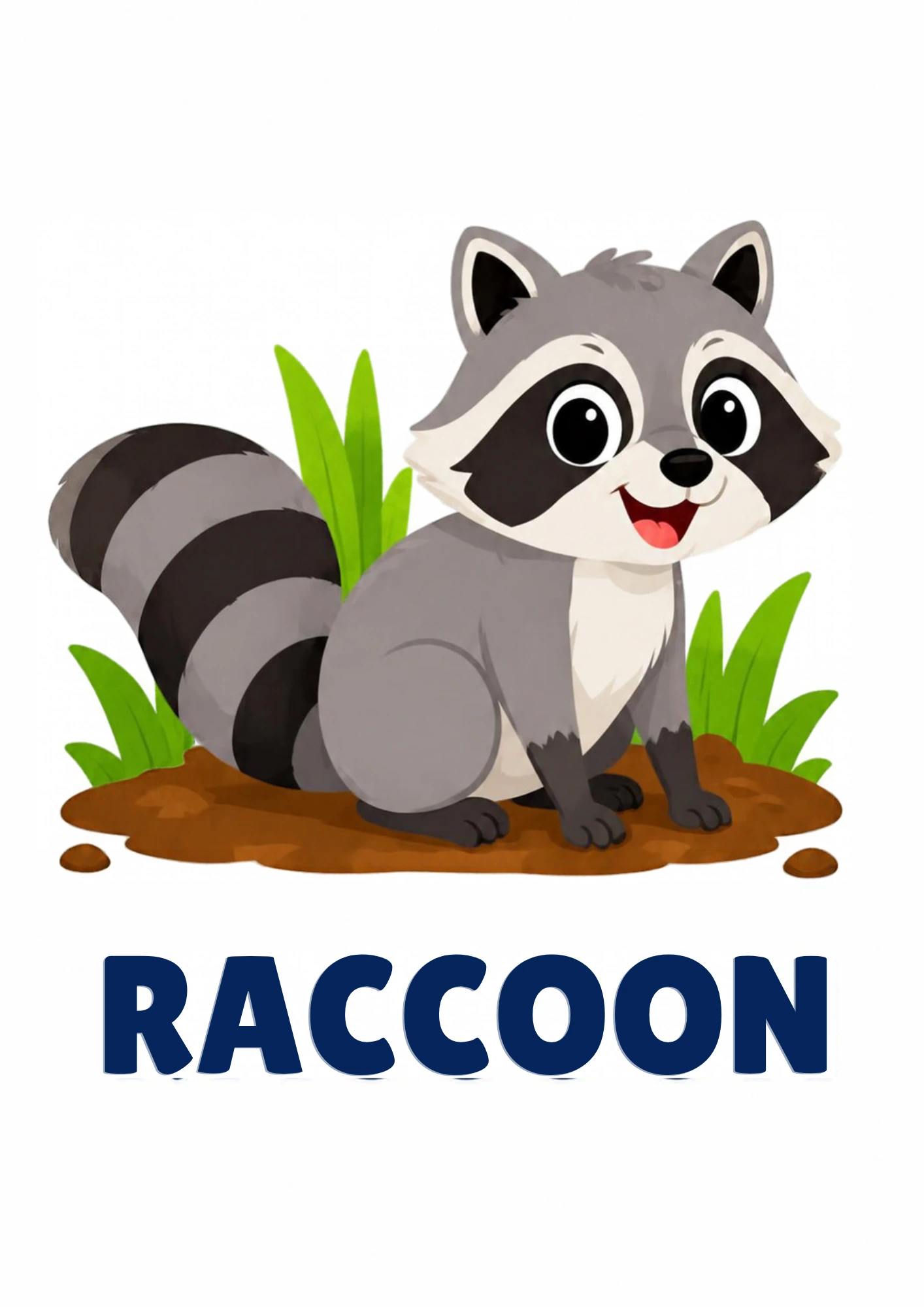
What is this?
A raccoon is a medium-sized animal with grey fur, a striped tail and a black mask of fur around its eyes. It has clever little hands and gives its snacks a famous wash in water before eating.
What does it mean?
The raccoon gives your toddler two gifts: an unmistakable picture to name (the mask!) and a washing habit worth copying. Clever hands, it turns out, wash their food — and little hands can too.
What does the child need to know?
Raccoons wear a black mask, work at night, and dunk their snacks in water to give them a good rub. They are wild night visitors — clever hands or not, we never try to hold one.
Why this matters
The wash-your-food story is a Trojan horse for hand-washing pride: if a raccoon washes everything, so can we. And the mask makes this the easiest animal on the whole set for a toddler to spot and name from a book.
What it teaches
Fine motor in water (rubbing, scrubbing, patting), the mask-as-identity idea (great for face vocabulary), night-and-day sorting, and hygiene habits smuggled in as animal play.
Words to learn
raccoonmasknightwashpawsclever
Say this to your child
“"A raccoon! See the black mask painted on its face — a little bandit! Raccoons have clever hands and they wash their food in water, rub-a-dub. Can you wash your toy like a raccoon? Raccoons come out at night. If one visits the garden, we watch from the window — clever hands stay wild."”
Step by step
- Show the card, say raccoon, and draw an imaginary mask around your own eyes with two fingers — the mask is the word’s best friend.
- Rub your hands together like a raccoon giving its food a wash — quick little scrubbing motions, and wait for the copy.
- Set a washing station: a shallow bowl of water, a few washable toys, and a towel — dunk, rub, pat, line up the clean ones like the raccoon would.
- Tell the night story: raccoons wake up when we go to bed, which is why the bin sometimes looks surprised in the morning.
- Land the rule kindly: raccoons are clever wild animals, so we watch them from windows and never reach out — wild hands and toddler hands do not mix.
Look closer at the picture
Say raccoon and draw a pretend mask around your eyes with two fingers. Ask what is black on the raccoon’s face, then rub your palms together like clever paws giving a toy its wash.
Ask your child
"What is black around the raccoon’s eyes?" "What does the raccoon do with its food?" "When is the raccoon awake — day or night?" "Do we touch the raccoon, or watch from far away?" — answered with mask-fingers, a scrub and a whisper.
What your child can say or do
"Mask!" Expect finger-masks around eyes at random, toy-washing stations appearing at every puddle, and raccoons blamed for midnight noises. Hand-washing may gain a raccoon soundtrack — take the win.
Out in the real world
Raccoons prowl gardens, parks and bins after dark in many places; most toddler sightings are from windows, which is exactly right. Each masked face in a book reruns the lesson instantly.
Try it together
Raccoon wash day: line up three toys, dunk and rub each one in the bowl, dry them, and repeat until the water is much too busy. Add a washcloth for the table afterwards — the raccoon cleans up, too.
Understanding check
Watch tonight’s hand-wash: if the rubbing comes with raccoon narrations, the habit and the animal are bonded — the lesson is complete and the sink is a Pond now.
Parent tips
Keep the washing bowl shallow and on a towel; raccoon play is wet play, and wet play needs a floor plan. Extend the mask idea to other faces — pandas, badgers — and watch the spotting skill generalise.
Staying safe
Raccoons can carry diseases and bite when cornered — window-watching is the whole friendship, and bin visits are grown-up business. After water play, empty the bowl and dry the floor so nobody skates.
This lesson pairs with the Raccoon flashcard in the library — print it, show it, keep it on the fridge. Back to Garden Friends (School Garden).