
Flower — a step-by-step lesson for grown-up and child
This lesson starts with the word your toddler almost certainly has: flower. The card turns it into a game with rules — find one, name it, keep walking — and makes the whole street a garden.
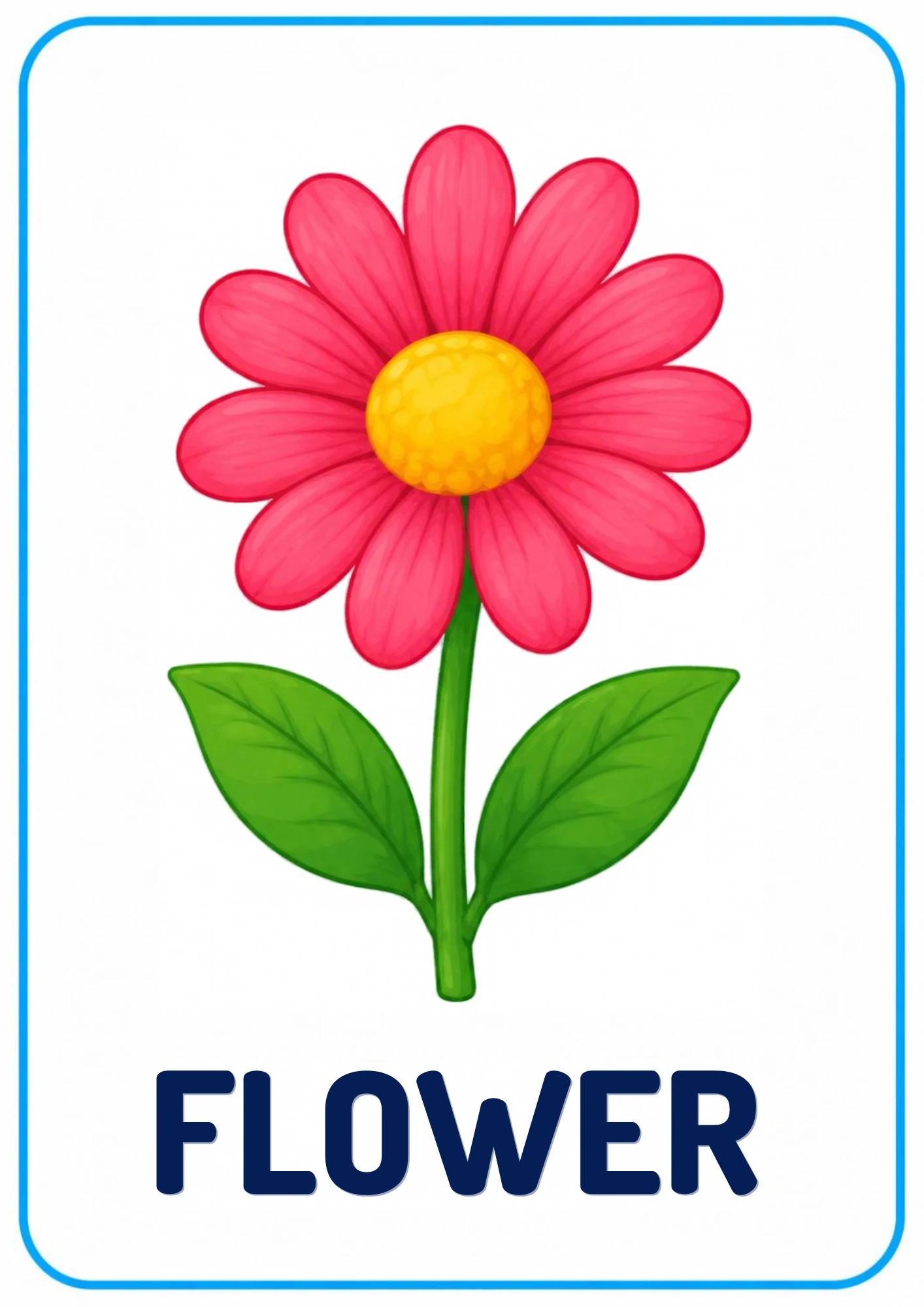
What is this?
A flower is the bright, bloomy part of a plant. Flowers grow in gardens, window boxes, parks and even cracks in the pavement, in every colour you can name.
What does it mean?
Starting the set with a known word is deliberate: naming something familiar builds the confidence to name what is new. Every flower your toddler spots today is evidence that they already speak garden.
What does the child need to know?
Flowers grow almost everywhere once you start hunting — beds, boxes, buckets, cracks. We look at them, smell them gently, name them, and leave every one growing where the bees can find it.
Why this matters
A word your toddler owns is a door into the whole set: flower leads to petal, stem, colour and bee. Ownership also makes pointing compulsory — the card gives that pointing a name and a direction.
What it teaches
Rapid naming in the wild, colour words (flowers supply every colour), pointing precision, gentle-smell manners, and the quiet pride of a word used in the right place at the right moment.
Words to learn
flowerpetalsgrowbrightsmelllook
Say this to your child
“"A flower! Bright and bloomy — can you say flower? Flowers grow in gardens, in boxes, even in cracks in the wall. Let us find them today and say the word every time — flower, flower, flower! We look at them and smell them softly, and we leave them growing for the bees."”
Step by step
- Show the card, say flower, and ask your toddler to say it back — chances are they already can, so celebrate like it is breaking news.
- Find the petals with one finger, then the middle — the card is the day’s map of what a flower is made of.
- Play the pointing game at the window or on the walk: every flower spotted gets its name said out loud, all of them.
- Compare flowers out loud: this one is big, that one is tiny, this one is yellow — same word, many shapes.
- End with the gentle rule: flowers stay growing where the bees need them — we point and name, and the picking is for nobody today.
Look closer at the picture
Say flower and point at the bloom on the card together. Ask where its petals are, then look out of the nearest window and count how many real flowers you can spot from where you stand.
Ask your child
"Can you say flower?" "Where do flowers grow?" "Is that one big or little?" "Do we pick them, or point at them?" — answered with the word, a point and a firm little finger-wag at the picking question.
What your child can say or do
"Flower!" — from the buggy, at everything. Expect pavement cracks announced, window boxes admired, and the word applied generously to dandelions and weeds. All of it counts; all of it is the lesson working.
Out in the real world
Flowers are everywhere all year: tubs by doors, beds by car parks, weeds in walls. Each one is a chance to run the routine — spot it, name it, maybe sniff the air near it — and keep walking.
Try it together
Flower tally: pick a walk and count flowers out loud together — one, two, lots. Stop at the prettiest for a ten-second sniff, then let your toddler choose which flower was the champion of the day.
Understanding check
Listen on tomorrow’s walk before you say anything: an unprompted "flower!" at a patch of blooms means the word is working on its own — lesson complete.
Parent tips
Accept every flower claim, including wrong ones — the pointing matters more than the species today. Grow the game slowly: colour words and size words ride along free on every walk.
Staying safe
Flowerbeds are not for wading — stems snap, soil flies and bees work there. Sniffing happens in the air above a flower, never with your nose pressed in, and nothing in the garden goes in the mouth.
This lesson pairs with the Flower flashcard in the library — print it, show it, keep it on the fridge. Back to Garden Things (School Garden).