
Helicopter — a step-by-step lesson for grown-up and child
This lesson adds a new verb to the vehicle set: hover. Spin, hover, freeze, land — the helicopter is the freeze-game champion, and stopping on cue is the hidden skill.
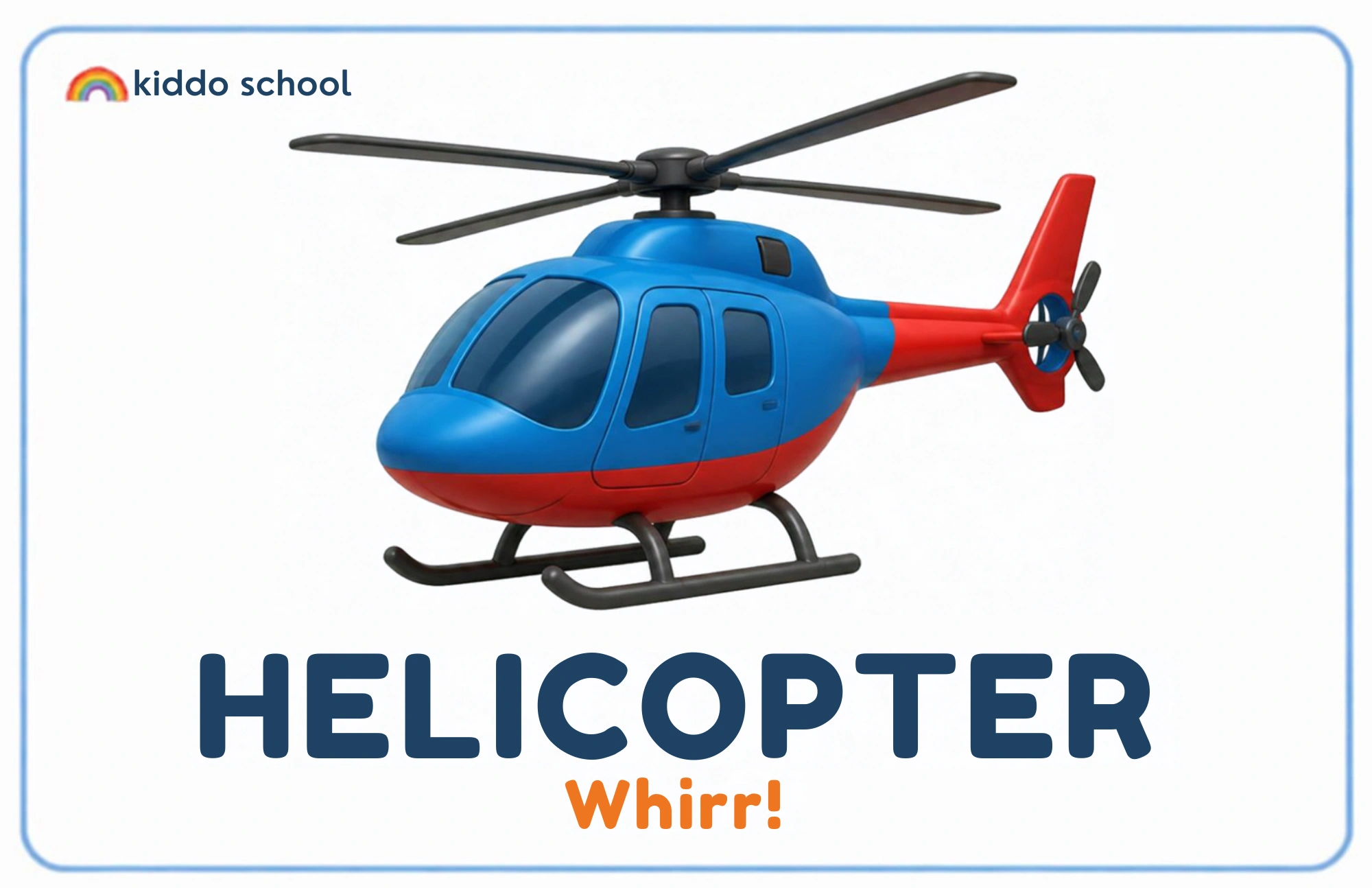
What is this?
A helicopter is a flying machine with spinning blades on top that goes whirr — and unlike every other vehicle, it can stop and hang in the air.
What does it mean?
Hover-and-freeze is impulse control wearing a rotor blade: the game is precisely about stopping when told, which toddlers practise harder when the stopping is funny.
What does the child need to know?
The blades go round and round — spin words come free with this card. Freeze mid-air like a real helicopter, then land gently; the landing is the punchline.
Why this matters
Freeze games are gold at two: they burn energy, teach stopping and always end in laughter. The helicopter hands you the frame; your toddler supplies the drama.
What it teaches
Start-and-stop body control, spinning-hand fine motor work, and sound imitation with a wobble in it — whirr is a vibrating noise worth mastering.
Words to learn
helicopterwhirrspinhoverfreezeland
Say this to your child
“"Helicopter! Whirr, whirr — round go the blades. Can you hover? Up, up… and FREEZE! Hold it… hold it… and down we come, soft landing. Whirr again!"”
Step by step
- Show the card and say helicopter, then whirr — a wobbly, vibrating sound while your hands spin above your head like blades.
- Fly together: whirr around the room, then call freeze! and hang there mid-hover, then land softly on a cushion.
- Hunt helicopters in books and toys; find the spinning blades on each one and give them a twirl with your finger.
- When the whirr comes out as a motor hum or a raspberry, accept it and keep your hands spinning — the wobble is the character of the sound.
- Play one freeze round a day this week, and let your toddler call the freeze for you at least once.
Look closer at the picture
Look for the label Helicopter and the word Whirr below. The spinning blades sit on top — ask where they are and give them a pretend twirl.
Ask your child
"Where is the helicopter?" "What does the helicopter say?" "Can you freeze in the air?" "Where do the blades spin?"
What your child can say or do
A hovering "whirrrr" with spinning hands, or a full-body wobble freeze held for two heroic seconds. When your toddler calls freeze! and watches you obey, the game has fully hatched.
Out in the real world
Helicopters thrum overhead on clear days — the sound arrives first, always. Rush to the window together, whirr along with the real blades, and watch it tip away sideways.
Try it together
Rescue hover: a teddy is stranded on the stairs, the helicopter flies over, hovers, lowers the invisible winch (your arm), lifts the teddy and lands it safely. Freeze at the top, every time.
Understanding check
Ask what the helicopter says and what it can do that planes cannot. A whirr plus hover or freeze passes. The next pause-and-freeze on your word, mid-living-room, is the diploma.
Parent tips
Swap the caller role early — being the one who commands freeze is where the listening really happens. Keep landings soft by declaring cushions the only legal helipads.
Staying safe
Spinning arms in a small room meet lampshades eventually — clear the flight zone first. Real helicopters keep their distance; if one lands nearby at an event, watch from behind the barrier with everyone else.
This lesson pairs with the Helicopter flashcard in the library — print it, show it, keep it on the fridge. Back to Vehicles & Sounds (Toddler 6).