

Car — a step-by-step lesson for grown-up and child
Cars whoosh past windows and car parks all day, and few words get rehearsed so generously by the world itself. This lesson flies the card, parks it, and names the traffic.
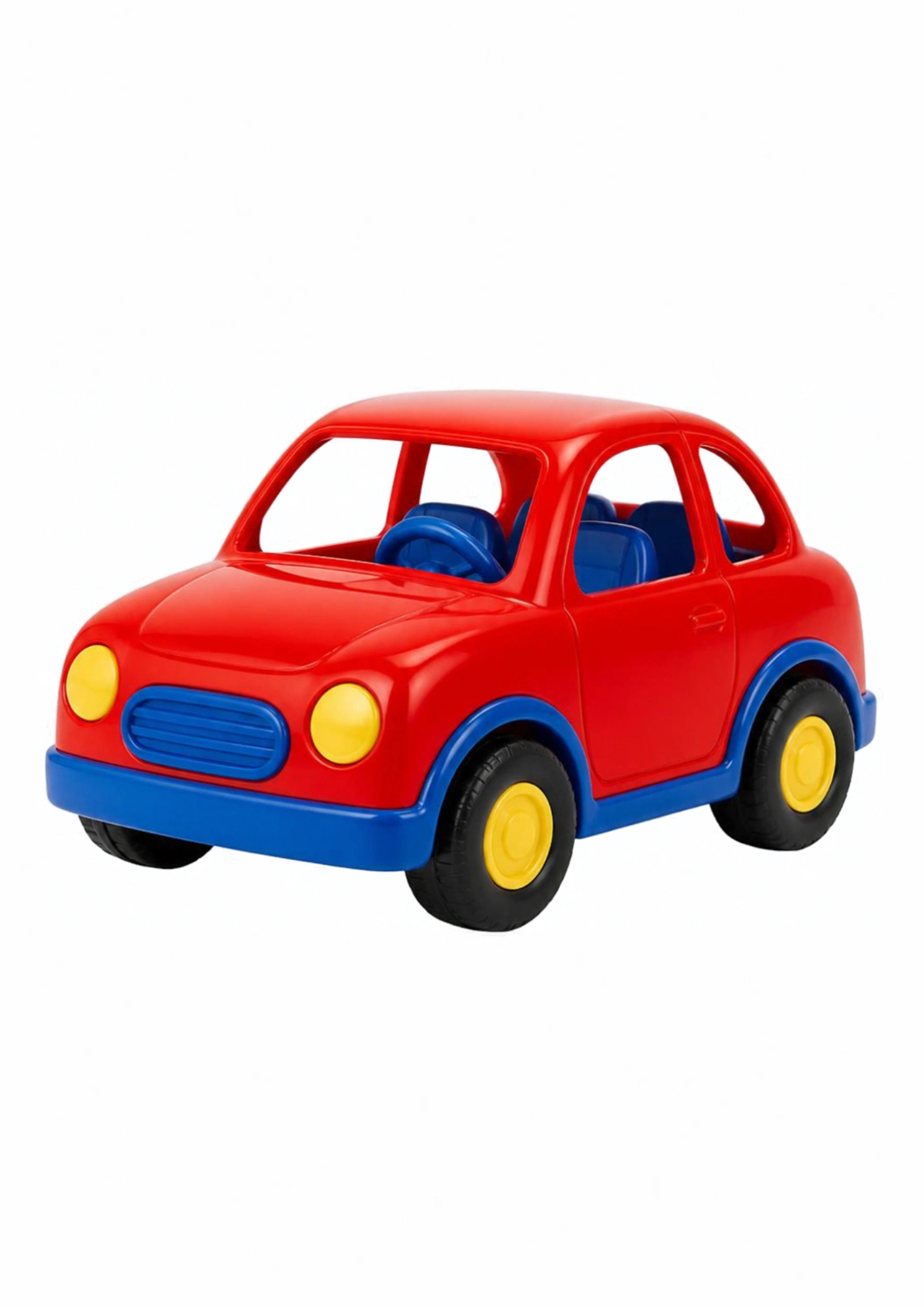
What is this?
A car is a wheeled machine that carries people — fast, bright, endlessly passing. The card gives one a portrait; your hand gives it a slow flight across your baby’s view; the window supplies the real fleet, free of charge.
What does it mean?
A slow pass is better than a fast one at this stage: your baby’s tracking can now follow something quite quick, but comprehension lives in the slow. And the parking — the card landing to rest — is a concept worth naming: rides end, engines stop, things arrive.
What does the child need to know?
Fly the card in one slow pass across the view, then park it deliberately on your lap and say so: parked. Later, at any window, name the real cars — one word per pass, not per minute. Watch for your baby tracking real cars outside; that look is this card, alive.
Why this matters
Car is a word your baby will hear for the rest of their life, several times a day, in every country and language on earth. Building the picture-sound-word package now means every future sighting lands on an old friend — few words repay their lesson so often.
What it teaches
Smooth tracking of slow and fast passes, event naming in real time, the parking concept (movement has endings), and visual attention out at distance.
Words to learn
carvroomslowfastparkstop
Say this to your child
““Car! Watch it go — vroom, across the sky... and park. See? The car stopped right here on my knee. Rides always end somewhere. And look outside — more cars! Going past, one after another. Each one is the same word: car.””
Step by step
- Bring the card up and open the show: “Car! Ready to drive.”
- Fly it in one slow, level pass across your baby’s view, left to right, with a soft vroom at the end.
- Land it gently on your lap and name the landing: “Parked. The car stopped.” Then lift off again if the eyes ask for more.
- At the window or on a walk, name real cars one at a time as they pass — word per event, not per minute.
- End with the card parked, so the session itself has a proper stopping place.
Look closer at the picture
The artwork is a speedy little car — say that much. The live noticing: does your baby’s gaze stay with the slow pass all the way, and does the parking earn a look? The stop is the underrated half — movement is easy to watch; endings have to be learned.
Ask your child
Watch the pass: fast or slow today — which holds better? Does your baby look back to the parked card, hoping for another flight? Wonder aloud: “I wonder if you are waiting for the vroom now. I think you know it is coming.”
What your child can say or do
Smooth head-tracking through the whole pass, a bounce at the vroom, eyes returning to the lap for the restart, or a head-turn at real engines outside — the last one is the word escaping into the wild, which is where every card eventually wants to live.
Out in the real world
Cars never stop coming: the street outside, the car park, the drive home, the delivery van. Naming real traffic one car at a time is the world’s most generous vocabulary drill, and your baby is enrolled in it permanently.
Try it together
Red-light game: fly the card, then stop it mid-air — “red light, stop!” — hold, then release — “green light, go!” The stop-and-go is object permanence plus cause-and-effect with wheels on, and it becomes a toddler car-game later. Plant it now.
Understanding check
Parent self-check: did the pass actually run slow today, and did the parking get named? Fast is flashy, slow is learnable — and the named stop is the concept most parents forget to teach, which makes it the most valuable half of this lesson.
Parent tips
Vary pass direction and height across days; predictable is boring for the thrower, unpredictable is rich for the watcher. If real cars outside outshine the card, follow the stare — the card taught the word, the street gets to perform it.
Staying safe
Traffic naming happens from the pushchair or your arms, well back from the road edge — the lesson is at windows and pavements, never driveways. Card flights stay indoors; paper does not belong in car parks.
This lesson pairs with the Car flashcard in the library — print it, show it, keep it on the fridge. Back to Animals & Everyday Objects (Baby 1).