

Teddy bear — a step-by-step lesson for grown-up and child
The last card of the Baby 1 stage names, for many families, a real resident: the bear on the shelf, the hugged, gummed, dragged-everywhere friend. This lesson gives that friend a formal role.
What is this?
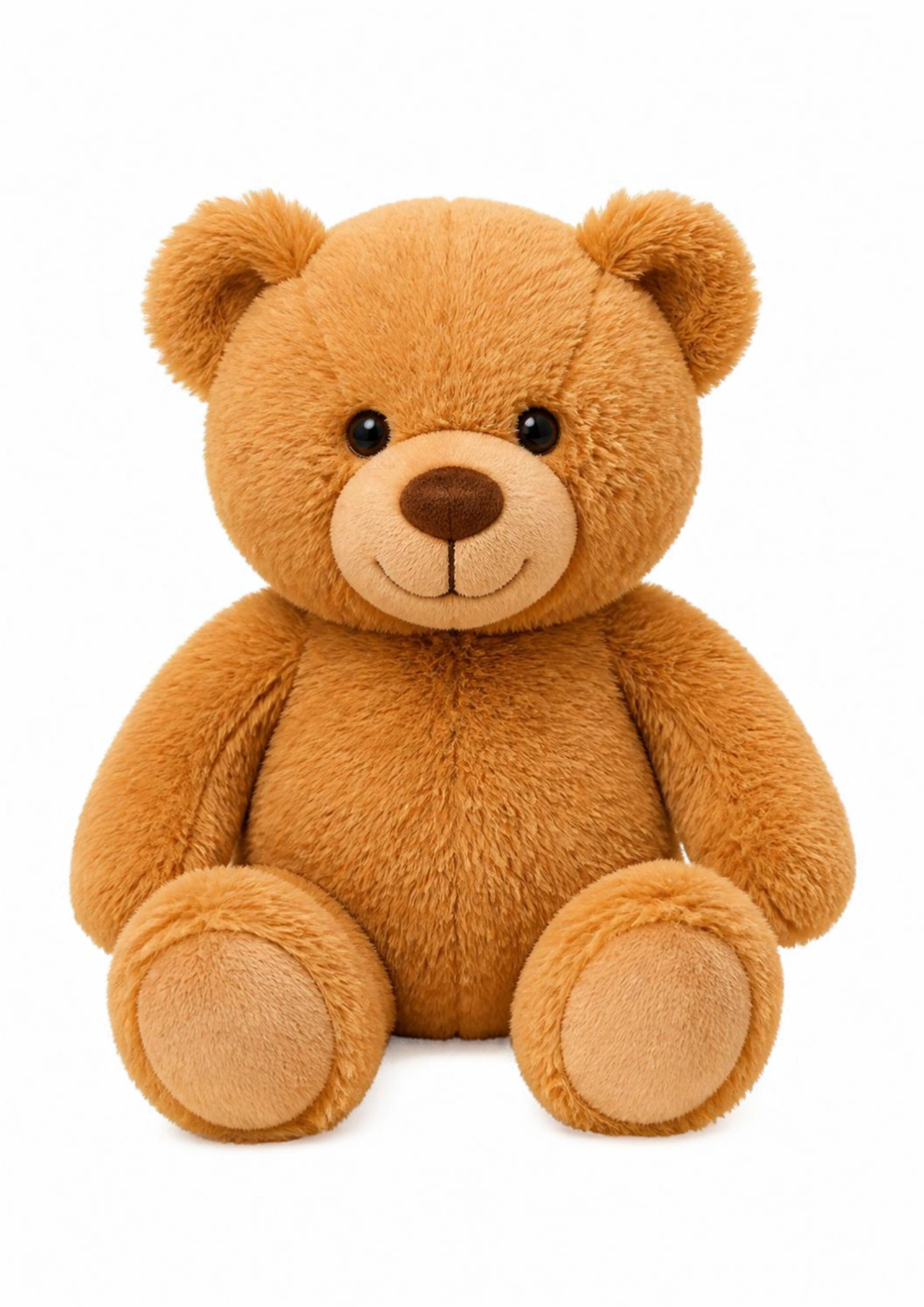
A teddy bear is a soft toy companion — and at 6–9 months, a baby can reach for it, clutch it and make it part of every game. The card is the friend’s portrait; the session makes the friend a participant.
What does it mean?
A comfort object in the routine does double duty: it holds the word (teddy) and it holds the feeling (safe). Babies this age are building attachment structures as fast as they build vocabulary, and the two builds share the same scaffolding.
What does the child need to know?
Bring the real bear to meet the card, then hand over a promotion: from now on, teddy picks which card comes next — your hand operates the paw. When a comfort object joins the routine, sessions often stretch happily longer. Follow that warmth wherever it goes.
Why this matters
Ending this stage with the warmest word is good sequencing: the set closes on security, not novelty. Babies who finish card time with their friend beside them file the whole ritual under good things — and good things get requested, reached for, and remembered.
What it teaches
Attachment behaviour (reaching for the comfort object), word-object mapping for a beloved thing, social ritual-building, and the reach-and-clutch skills that teddy makes worth practising.
Words to learn
teddybearsoftfriendpickcuddle
Say this to your child
““Teddy bear! Here is the picture bear — and here is YOUR bear, come to sit with us. Hold on tight. Now watch: teddy gets to choose our next card. What will it be? Teddy says... this one! A very good choice, teddy. You are part of the class now.””
Step by step
- Show the card and greet it like a mutual acquaintance: “Teddy bear! I think you two know each other.”
- Fetch the real bear and bring it face to face with the card, letting your baby look between them.
- Offer the real bear into your baby’s reach — at this age they can clutch it themselves, and will.
- Give teddy its new job: the paw taps the next card, your voice announces the choice, and the session continues under new management.
- Close with teddy present and the cards away — the friend attends the whole class from now on.
Look closer at the picture
The artwork is a soft teddy bear in the set’s realistic-friendly style — say that much. The live noticing: does your baby clutch the bear unprompted, and do their eyes run the triangle — card bear, real bear, your face? The triangle is attachment and vocabulary sharing one loop.
Ask your child
Watch the attachment: does the bear get sought out at session time now, before the cards even appear? Does the word alone collect a look towards the shelf? Wonder aloud: “I wonder if you think the card bear and the shelf bear are the same bear. Honestly — so do I.”
What your child can say or do
An immediate grab-and-clutch of the real bear, dragging it close against the chest, eyes swinging between the two bears, or babbling happily at the teddy-voice — and eventually, the reach towards the bear when the word is said. That reach is the word, arriving.
Out in the real world
Teddy keeps a fuller diary than anyone: the cot, the pram, the car seat, grandma’s, the washing line. Each appearance is a replay — and from this week, each appearance can also include a naming by your baby’s own reach: the bear they fetch is the word they know.
Try it together
Teddy picks, extended: let the paw choose which two cards face off, and name the winner with drama — “teddy chose... the dog!” The selection ceremony makes your baby a spectator at a game with stakes, which is the most attention-compelling format there is.
Understanding check
Parent self-check: did the bear get promoted today — from prop to participant — and did the session actually run warmer with them present? If yes, keep the promotion permanent; the ritual is doing more work than any single card in the set.
Parent tips
If your family runs no comfort object, this card still teaches a beloved animal-word — borrow the nearest plush and promote them instead. Keep the teddy-voice stable across weeks; your baby is mapping that voice to the word as surely as to the fur.
Staying safe
The promoted bear passes the baby-safety check: embroidered features, no small parts, nothing shedding, washed sometimes. Cot-sleep rules stay theirs — the bear’s new job is card time, and the two roles never have to merge.
This lesson pairs with the Teddy bear flashcard in the library — print it, show it, keep it on the fridge. Back to Animals & Everyday Objects (Baby 1).