
Chef’s Knife — a step-by-step lesson for grown-up and child
This lesson teaches the chef’s knife by teaching the rule: knives are for grown-ups. Named, respected, never hidden — and matched with the real tools the child DOES own.
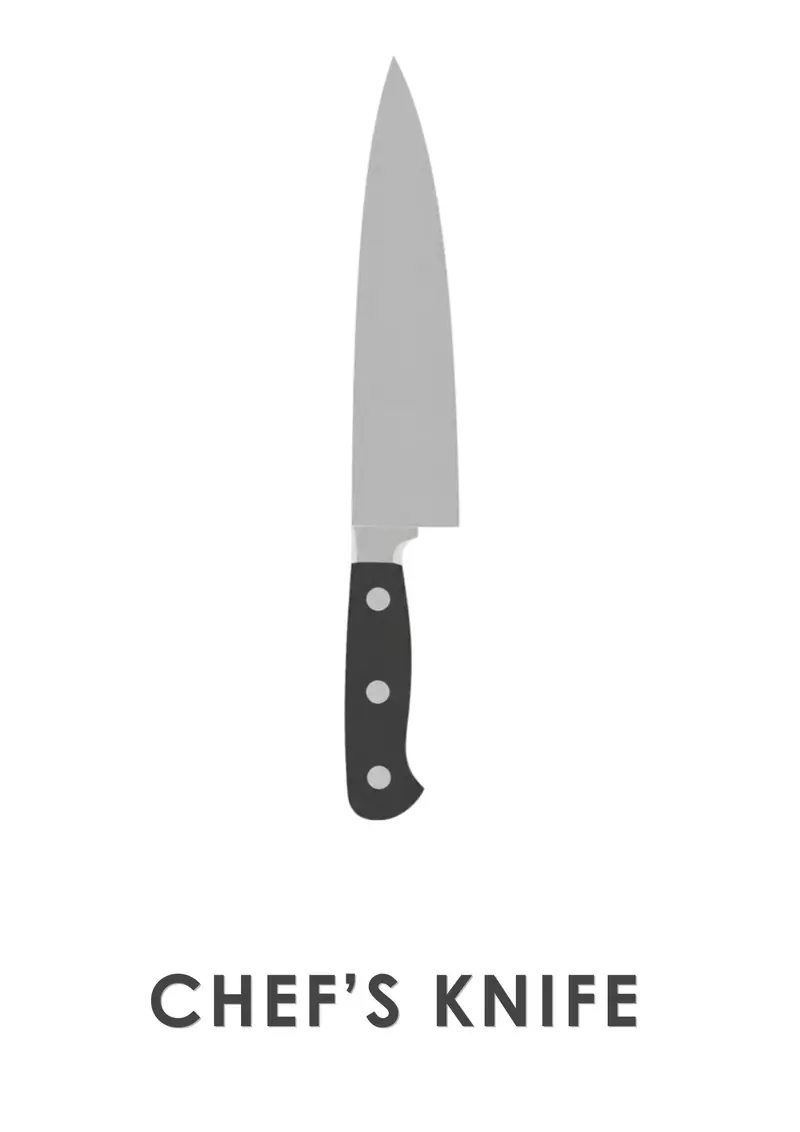
What is this?
A chef’s knife is the kitchen’s sharpest, biggest knife — the one that does the serious chopping — and the one tool in this set that is not for children at any age here.
What does it mean?
Hiding sharp things makes them fascinating; naming them makes them understood. The rule said kindly and repeatedly — "knives are for grown-ups" — builds respect without fear.
What does the child need to know?
You need the drawer where the knife lives and the same sentence every time it comes out. Then the counter-offer: the child’s own tools — butter knife, board, banana to slice. Helping never stops; it uses the right tools.
Why this matters
A child who knows the rule, the reason and their own safe tools is the safest child in the kitchen. The ban is small; the safety system around it is generous.
What it teaches
Rule internalisation (the child says it first), tool taxonomy (mine vs grown-ups’), and the patience of a cook-in-training who knows their path forward.
Words to learn
chef’s knifesharpgrown-upsrulebutter knifesomeday
Say this to your child
“"Chef’s knife! The big, sharp knife. Here is the kitchen’s biggest rule: KNIVES ARE FOR GROWN-UPS. Your tools are the butter knife and the board — and they are real tools, too. Watch: banana coins! The chef’s knife waits for big hands, years from now."”
Step by step
- At the drawer, name it plainly: "chef’s knife — the big, sharp one."
- The rule, same words every time: "KNIVES ARE FOR GROWN-UPS. Not today, not with help — grown-ups only."
- Give the why: "the knife is a great tool — and it is sharp enough to need big, trained hands. Yours are growing."
- The counter-offer, same lesson: "YOUR tools: the butter knife, the board, the banana. Watch!" — and slice.
- Return the knife together, drawer closed, rule repeated by the child if they will. Lesson done in ninety seconds, working for years.
Look closer at the picture
On this card the words "chef’s knife" sit over a long blade with a black handle — shown plainly, never hidden, because named things are respected things.
Ask your child
"Who uses the chef’s knife?" (grown-ups) "What are YOUR tools?" (butter knife, board) "Why do knives wait?" (sharp — big trained hands)
What your child can say or do
Your child might say the rule at the drawer unprompted, or announce "knives are for grown-ups!" to a visiting cousin — the household’s safety officer, elected.
Out in the real world
Knives appear in every kitchen on Earth, and the rule travels with the child — grandma’s, the holiday flat, the friend’s house. One sentence, portable safety.
Try it together
Tool Sort: kitchen tools face-up on the table — "mine" pile and "grown-ups’" pile. The butter knife and whisk land in MY pile; the chef’s knife rules its own. Sorting IS the safety lesson.
Understanding check
Ask: "Who uses knives?" (grown-ups) "What is YOUR slicing tool?" (the butter knife) "Say the biggest rule…" (knives are for grown-ups!)
Staying safe
The owner’s rule, taught straight: knives are for grown-ups. The knife stays on the card so the rule can be taught, not hidden — and the child’s own tools (butter knife, board, soft food) keep the helping alive.
This lesson pairs with the Chef’s Knife flashcard in the library — print it, show it, keep it on the fridge. Back to Kitchen Things.