
Bagpipes — a step-by-step lesson for grown-up and child
This lesson teaches the bagpipes’ clever trick: fill a bag with air first, then squeeze the bag steadily — which is why the sound never has to stop for a breath.
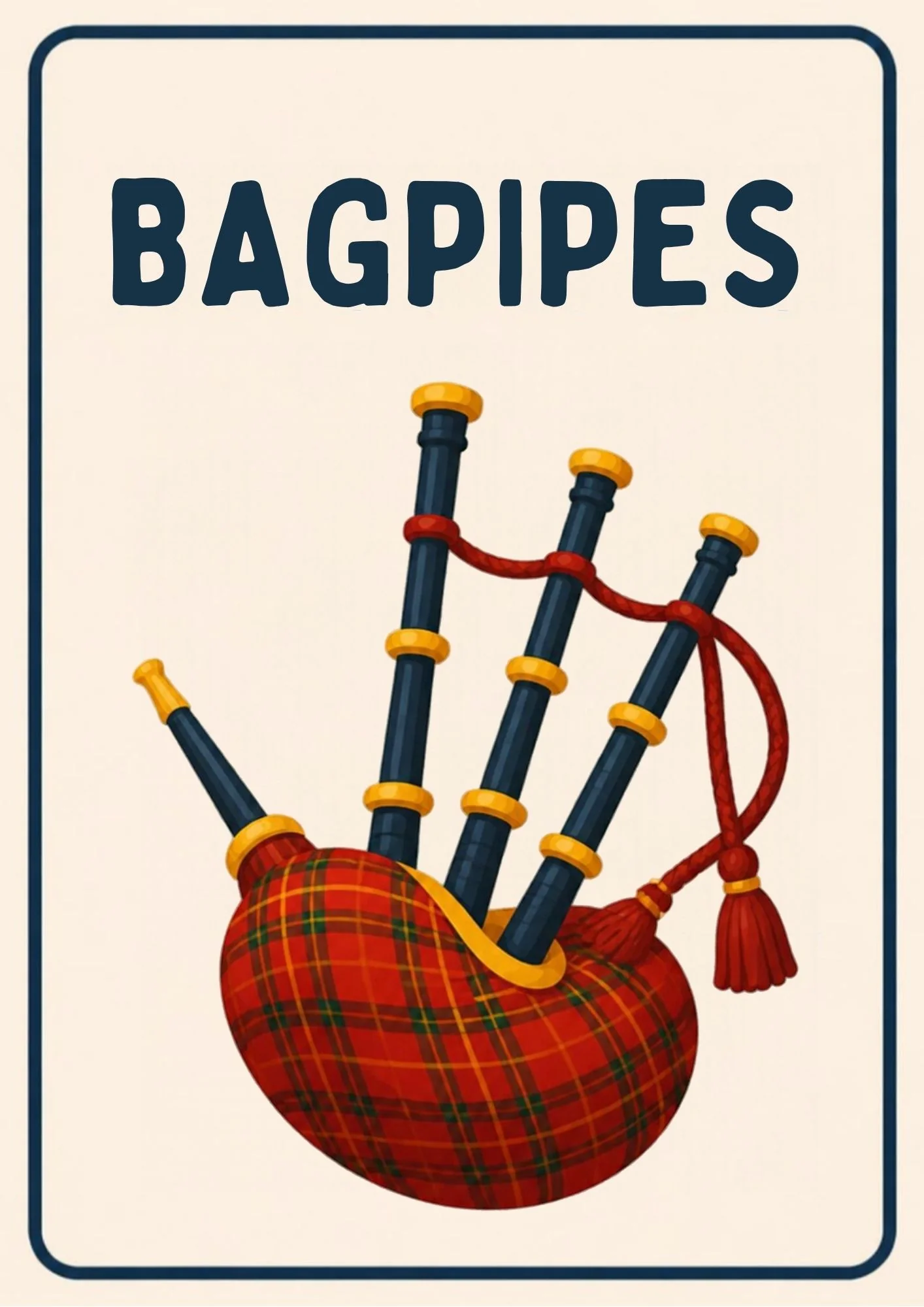
What is this?
Bagpipes are a wind instrument with a bag: the player blows air into the bag through a pipe, tucks the bag under the arm, and squeezes it to push air through the melody pipe and the long drone pipes that hum one steady note.
What does it mean?
Most wind instruments breathe note-by-note. The bagpipe BANKS its breath: fill the reservoir, then squeeze it out evenly. That banking is why a piper can play without pausing — and why the sound rolls across a whole valley.
What does the child need to know?
Your child needs three bagpipe ideas: the bag is an air piggy-bank — blow it full first, squeeze it second; the long pipes are drones — they hum ONE deep steady note the whole time, like a musical shadow; and the little melody pipe on top plays the tune over the drone.
Why this matters
The drone is the lesson’s gift: one note that never stops, under everything. Children who can hear the drone have learned harmony’s first secret — a sound can sit UNDER a sound.
What it teaches
Air storage thinking (fill-then-use), sustained-versus-moving sound layers, arm-squeeze pressure control, and the great fun of a sound you can argue about.
Words to learn
bagpipesbagdronesqueezeblowsteadypipes
Say this to your child
“"Bagpipes work in two steps! Step one: blow the bag FULL of air — a piggy-bank of breath. Step two: squeeze the bag with your arm, nice and steady, and the air sings through the pipes. The long pipes hum ONE deep note that never stops — the drone — and the little pipe on top plays the tune over it. Fill first, squeeze steady!"”
Step by step
- Show the card: "This is bagpipes — a bag of air with pipes sticking out."
- The banking trick: blow up a paper bag, squeeze it slowly — the air comes out LONG after the breath ended. That is the piper’s secret pocket of air.
- The drone: hum one low note and HOLD it while a partner taps a rhythm — the held hum is the drone, the taps are the tune. Both at once = bagpipes.
- The squeeze: steady arm pressure keeps the sound even — squeeze-everything-out-fast and the song dies. Pipers are patient squeezers.
- Play the fill-and-squeeze game below and close: "fill first, squeeze steady."
Look closer at the picture
On this card the word "Bagpipes" is printed in big navy capitals inside the frame, with a friendly bagpipe illustration below — the bag and its pipes exactly as the instrument looks.
Ask your child
"What does the player do first — squeeze or fill?" "What do the long pipes hum?" "Why does the sound never need to stop for breath?"
What your child can say or do
Your child might say: "The bag is an air piggy-bank!" "The drone hums under the tune!" or the classic: "It sounds like singing AND complaining!"
Out in the real world
Pipers lead parades in Scotland, New Zealand and Canada — listen for the drone across a park: one long note under everything, unmissable. And the air-bag trick lives in every air mattress and whoopee cushion: banking air is a household physics.
Try it together
Cushion Bagpipes: a cushion under the arm is the bag. Fill it: three big pretend breaths, patting it fatter. Then squeeze steadily while HUMMING one drone note — and a partner taps the melody on a pot lid. Swap: the hummer drones, the squeezer taps. The drone under the tune — Scotland’s great sound, built from a cushion.
Understanding check
Ask: "What is filled first? What hums one steady note? What plays the tune?" The bag, the drones, the melody pipe — three answers and the pipes are ready.
Parent tips
The drone game needs no instrument and no noise-tolerance: humming is free. And embrace the argument the card starts — lovely or loud, the piper does not care; the valley hears it either way.
This lesson pairs with the Bagpipes flashcard in the library — print it, show it, keep it on the fridge. Back to Music Room (Class 23).