
Banjo — a step-by-step lesson for grown-up and child
This lesson teaches the banjo as a drum wearing strings: its round skin face is why every plink is brighter and bouncier than a guitar’s — plucking with a drum’s voice.
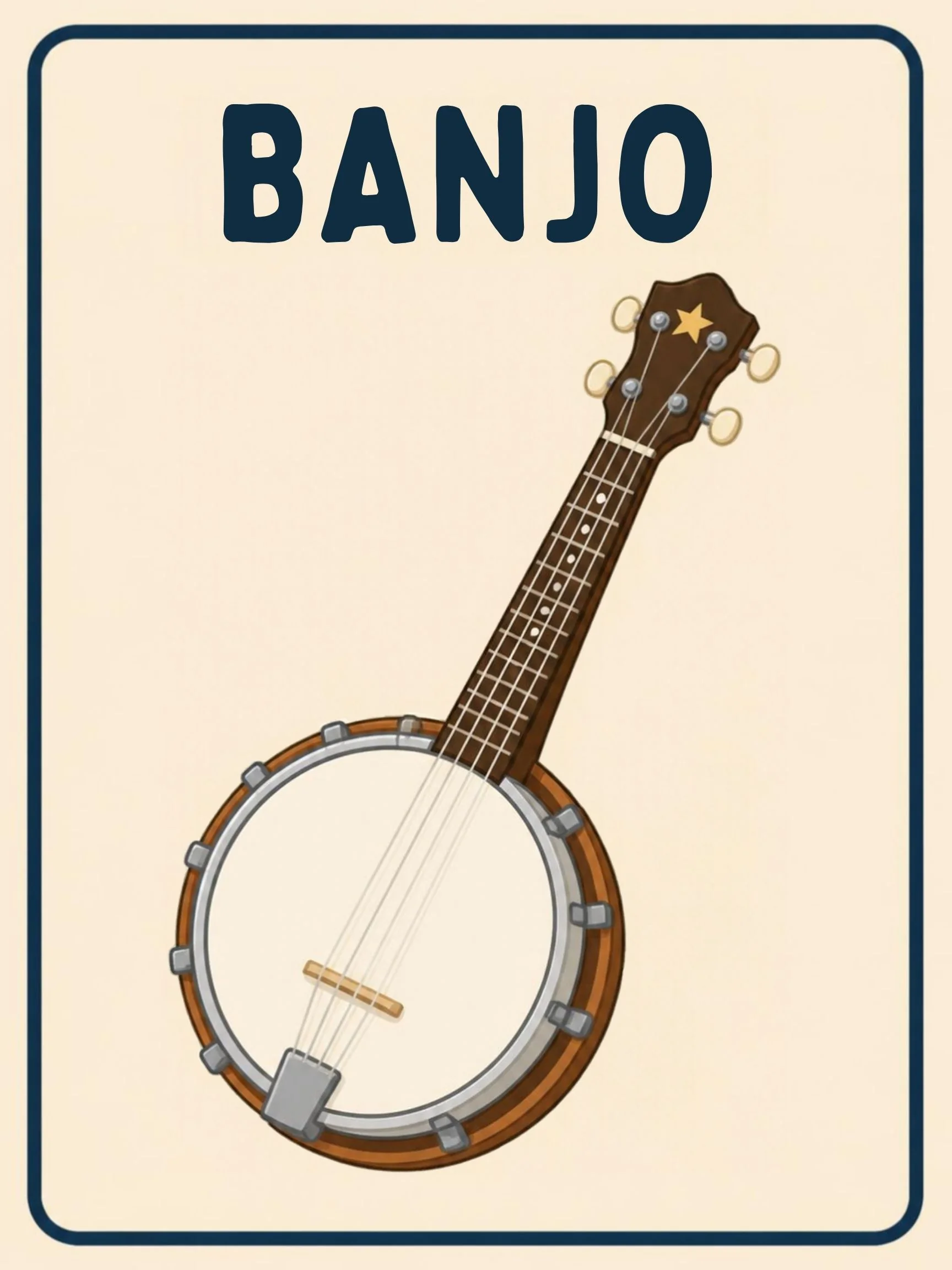
What is this?
A banjo is a string instrument with a round body: a drum-like face stretched over a hoop, a long neck with frets, and strings you pluck or strum. The tight face makes the sound ring out bright and fast.
What does it mean?
Plucking is the skill here — but the banjo adds a physics surprise: the same pluck sounds different on a drum face. Children learn that the BODY of an instrument is part of the sound, not just the strings.
What does the child need to know?
Your child needs three banjo ideas: the face is a drum — tight, round, bright; plucking is one string, one finger, one plink; strumming is all the strings, one sweep — plink versus swish.
Why this matters
The banjo’s build-it-yourself cousin (rubber bands on a box) is the most famous home instrument in the world for a reason: plucking a tightened band teaches pitch, tension and the twang in one afternoon.
What it teaches
Pincer-grip plucking (fine motor), one-versus-all-strings contrast, rhythm patterns, and the tension-pitch idea — tighter band, higher plink.
Words to learn
banjopluckstrumtwangstringsfacebright
Say this to your child
“"The banjo is a drum wearing strings! Its face is round and tight like a drum — that is why every plink is bright as a bell. Pluck ONE string with one finger: plink. Strum ALL the strings with one sweep: swish! And you can build one today — rubber bands on a box, pencil bridge, and you are in the band."”
Step by step
- Show the card: "This is a banjo — a drum with strings on its face."
- Point out the round face: "like a drum, right? Tight and round. That is why the banjo BRIGHTLY twangs while a guitar hums deeper."
- Pluck versus strum: one finger, one string, plink — all the strings, one sweep, swish. Do both on the card picture.
- Build the box banjo: an empty tissue box or shoebox, three rubber bands around it — plink! Slide a pencil under the bands as a bridge: plinker and louder!
- Play the plink pattern game below and close: "one string plinks, all strings swish."
Look closer at the picture
On this card the word "Banjo" stands in big navy capitals in the rounded frame, with a friendly banjo illustration below — the round body and long neck exactly as the instrument looks.
Ask your child
"What is the banjo’s body like — a drum or a box of tissue?" "What is one string called? All the strings together?" "What happens to the plink if the band is tighter?"
What your child can say or do
Your child might say: "It’s a drum with strings!" "Plink is one, swish is all!" or the builder’s pride: "My box banjo has a pencil bridge!"
Out in the real world
Banjos drive bluegrass, folk and old-time dance music across the US — and their box-banjo cousins live in every kitchen drawer: rubber bands on a tin. Strum one today; the twang teaches itself.
Try it together
Plink-Pattern Band: box banjo ready. Call patterns: "plink-plink-PLINK" (two soft, one loud), then "plink… plink… swish!" The player follows the calls; the listener dances. Swap caller and player. Every pattern lands because plucking is instant — the fastest sound-to-hand connection on the whole shelf.
Understanding check
Ask: "What is the body like? One string or all strings — which is plink? What tightens to raise the plink?" A drum face, one string, the rubber band — three answers and the twang is yours.
Parent tips
Tighter rubber bands genuinely sound higher — let the child retune by ear and discover pitch-tension themselves. And a pencil bridge under the bands is the magic upgrade; do not skip it.
This lesson pairs with the Banjo flashcard in the library — print it, show it, keep it on the fridge. Back to Music Room (Class 23).