
Accordion — a step-by-step lesson for grown-up and child
This lesson teaches the accordion’s one big secret: nothing is plucked or hit — the player BREATHES the instrument, squeezing air through little metal tongues called reeds.
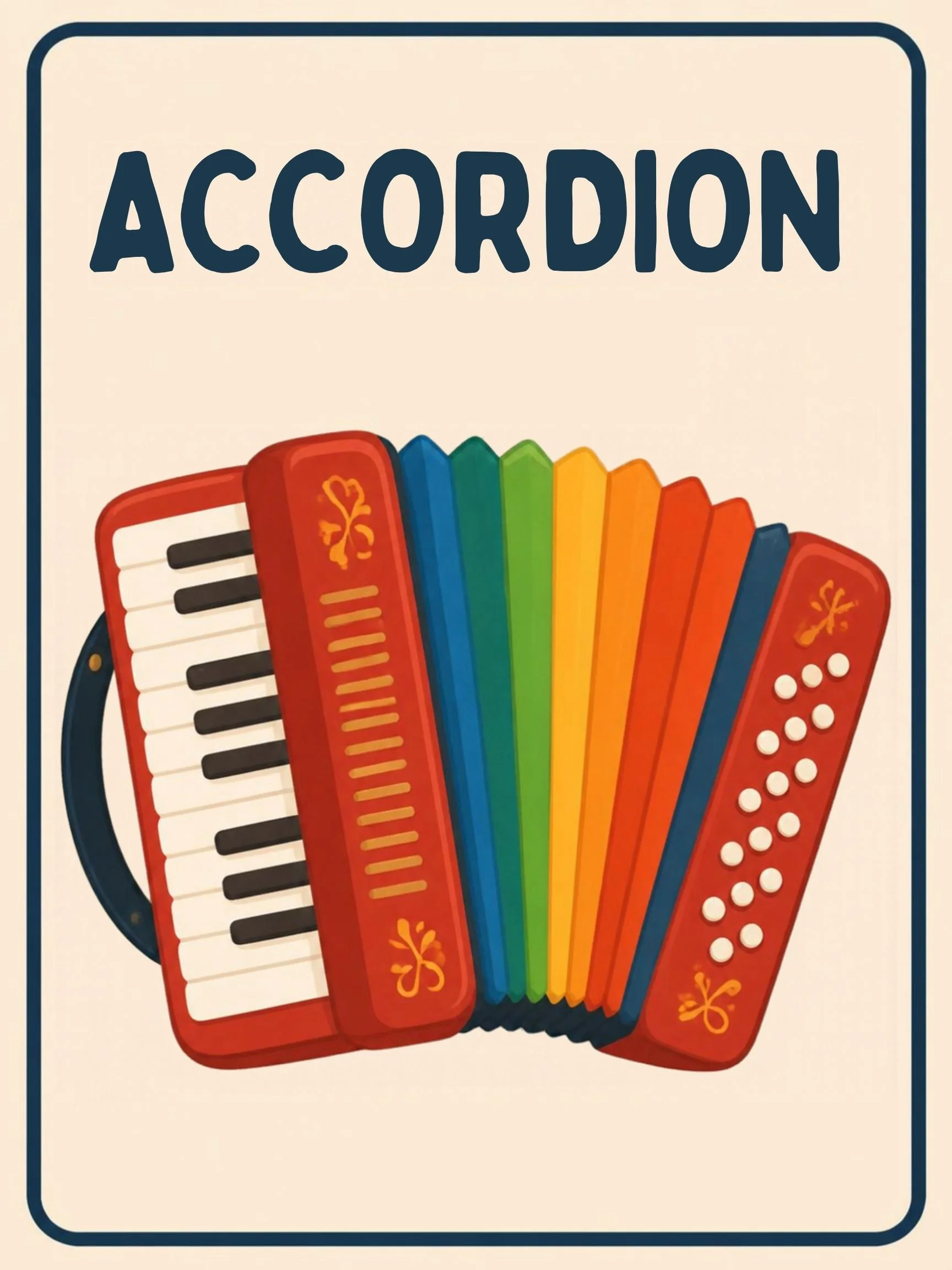
What is this?
An accordion is a squeeze-box: two wooden ends joined by folding bellows, with keys and buttons on the ends. Push and pull the bellows while pressing keys, and air rushes past reeds — the reeds hum, and that is the music.
What does it mean?
Every other instrument on the shelf waits for the player’s hands alone. The accordion waits for AIR — and the hands’ job is to be the lungs. Squeeze slowly for long sleepy sounds, fast for short jumpy ones: the same notes, two entirely different moods.
What does the child need to know?
Your child needs three accordion ideas: the bellows are the lungs — no squeeze, no sound, ever; inside are reeds, tiny metal tongues that hum when air brushes them; and push-pull makes the shape of the song — long squeezes for slow, quick pumps for jumpy.
Why this matters
The accordion teaches air flow better than any instrument a child can hold: you can SEE the lung. Once squeezing makes sound make sense, the flute, trumpet and every breath instrument arrive pre-understood.
What it teaches
Cause-and-effect with continuous control (squeeze strength = volume and length), push-pull bilateral rhythm, and the breath connection — the first instrument on the shelf that breathes.
Words to learn
accordionbellowssqueezereedpushpullair
Say this to your child
“"The accordion is a squeeze-box! See the folded middle — the bellows? That is its lung. Squeeze it shut and the air runs through little metal tongues called reeds — and the reeds SING. Squeeze slowly for a long, sleepy note… pump quickly for a short, jumpy one. Your hands are the breath!"”
Step by step
- Show the card: "This is an accordion — the instrument you breathe by squeezing."
- Paper bellows: fold a paper fan, squeeze it shut slowly, open it slowly — that closing and opening IS the bellows.
- The reed idea: hum with the back of the hand on the throat — feel the buzz. Tiny metal reeds buzz the same way when air brushes them.
- The squeeze game: long slow squeeze = sleepy sound; quick pump-pump = jumpy sound. Same hands, different songs.
- Play the push-pull game below and close: "squeeze to sing."
Look closer at the picture
On this card the word "Accordion" sits in big navy capitals inside the rounded frame, with a friendly accordion illustration below — the folded bellows exactly as the squeeze-box looks.
Ask your child
"What does the accordion use to make air move?" "What are the little metal tongues called?" "What happens if we stop squeezing?"
What your child can say or do
Your child might say: "The bellows are its lungs!" "Squeeze — and the reeds sing!" or the game report: "Slow squeeze is sleepy, pump-pump is jumpy!"
Out in the real world
Accordions live at folk festivals, polka bands and grandma’s cupboard — and their bellows live in every paper fan and camera pump. Fold a fan, pump a foot pump: squeeze-sound is everywhere once you hear it.
Try it together
Push-Pull Duet: one player folds a paper fan "bellows" and pumps slow-slow; the other hums a note only WHILE the fan closes. Squeeze = singing, open = silence. Swap. Then the mood game: "sing me a sleepy squeeze… now a jumpy one!" The hands learn what the lungs do — that is the whole accordion, played on paper.
Understanding check
Ask: "What is the folded middle called? What hums inside? What happens when we stop squeezing?" The bellows, the reeds, silence — three answers and the squeeze-box has sung.
Parent tips
If no accordion is near, the paper fan IS the lesson — the push-pull control transfers perfectly. And name the reed buzzing on the throat first: feeling the buzz turns "reeds" from a word into a sensation.
This lesson pairs with the Accordion flashcard in the library — print it, show it, keep it on the fridge. Back to Music Room (Class 23).