
Bass Drum — a step-by-step lesson for grown-up and child
This lesson teaches the bass drum’s deep truth: it is less a sound than a FEELING — one big boom that everyone’s chest can feel, holding the whole band together like a heartbeat in boots.
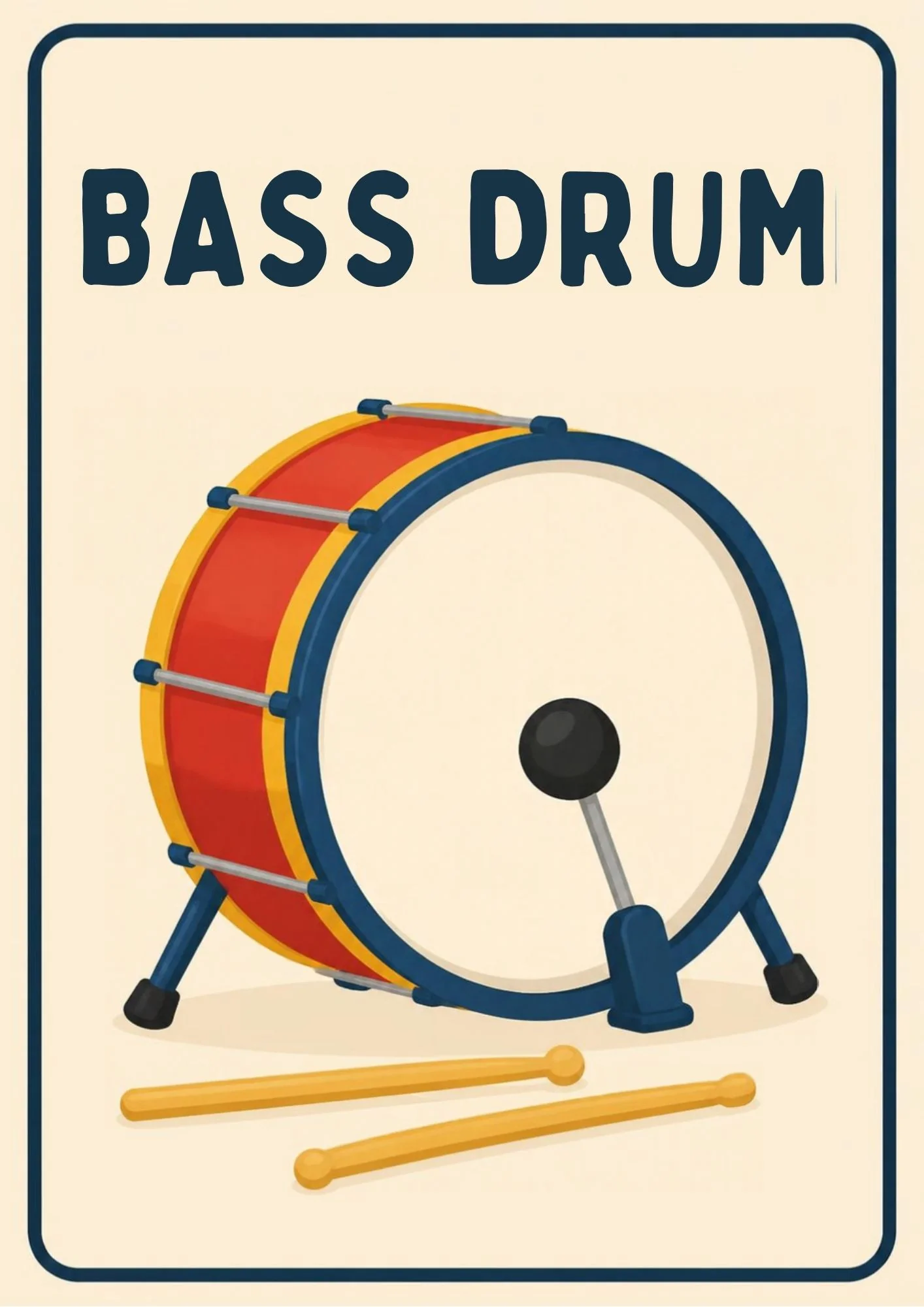
What is this?
A bass drum is the biggest drum in the room: a huge round drum struck with a big soft mallet, booming one deep note at a time. In bands and parades it is the metronome everyone marches to.
What does it mean?
Pitch lives low: the bigger the drum, the deeper the boom — and deep sounds travel through the floor, the chair and your ribs. The bass drum is the first instrument a child plays with their body as well as their ears.
What does the child need to know?
Your child needs three bass-drum ideas: big drum = deep boom (size is pitch); the bass drum does not rush — it lands ONE steady beat and everything else arranges itself around it; and the mallet is big and soft because the drum is a friend, not a foe.
Why this matters
Feeling sound in the chest is the earliest music sense babies have — the bass drum names it, honours it, and hands the child the band’s most powerful job: keeping everyone together.
What it teaches
Steady beat keeping (the skill under all rhythm), size-pitch understanding, sound-vibration sensing through touch, and big-movement striking with control.
Words to learn
bass drumboombeatmalletsteadydeepheartbeat
Say this to your child
“"The bass drum is the biggest drum — and the biggest drum makes the deepest boom! You hear it, and you FEEL it in your chest: BOOM… BOOM… like a giant’s heartbeat. And that boom is the boss of the band: when it lands steady, every foot in the parade lands with it. One boom, all together!"”
Step by step
- Show the card: "This is the bass drum — the biggest boom in the room."
- Size is pitch: tap a big pot, tap a tiny cup — big things boom, small things ting. The bass drum is the biggest, so its boom is the deepest.
- Feel the beat: put a hand gently on a speaker or tap the floor — feel the thud in your palm. Deep sound is touchable.
- The heartbeat: BOOM… BOOM… slow and steady, like the giant’s heart. Steady beats let everyone march together.
- Play the heartbeat game below and close: "one boom, all together."
Look closer at the picture
On this card the words "Bass Drum" sit in big navy capitals inside the rounded frame, with a friendly illustration of the big drum below — exactly as it looks on the parade field.
Ask your child
"Which drum booms deepest — the biggest or the smallest?" "Where else can you FEEL the boom?" "What is the bass drum’s job in the band?"
What your child can say or do
Your child might say: "Big drum, deep boom!" "I felt it in my chest!" or the drummer’s pride: "I keep everybody together!"
Out in the real world
Bass drums march in every parade, thump in every rock band’s kick pedal and roll under every concert — and their deep booms live at home: the big pot, the floor tom of a sofa cushion. Feel for them.
Try it together
Heartbeat Band: one player is the BASS — a floor cushion or big pot with a sock mallet, landing BOOM… BOOM… steady as sleep. Everyone else joins one by one: shaker eggs, claps, table taps — each one landing WITH the boom. The bass player is the boss; when the boom speeds up, everybody does. Keep it going for a whole song. One boom, all together — that is the parade.
Understanding check
Ask: "Big drum makes what kind of sound? What is the bass drum’s job? What do we feel in our chest?" Deep boom, keeping the beat, the thud — three answers and the band marches.
Parent tips
Steady beats slow: four-year-olds rush. Model boom-breathing — in and out with each boom — and the tempo falls into place. And the sock mallet is non-negotiable: pots survive, eardrums thank you.
This lesson pairs with the Bass Drum flashcard in the library — print it, show it, keep it on the fridge. Back to Music Room (Class 23).