
Beat — a step-by-step lesson for grown-up and child
This lesson teaches the beat — music’s hidden heartbeat: the steady pulse that keeps marching under every song, whether anyone notices it or not.
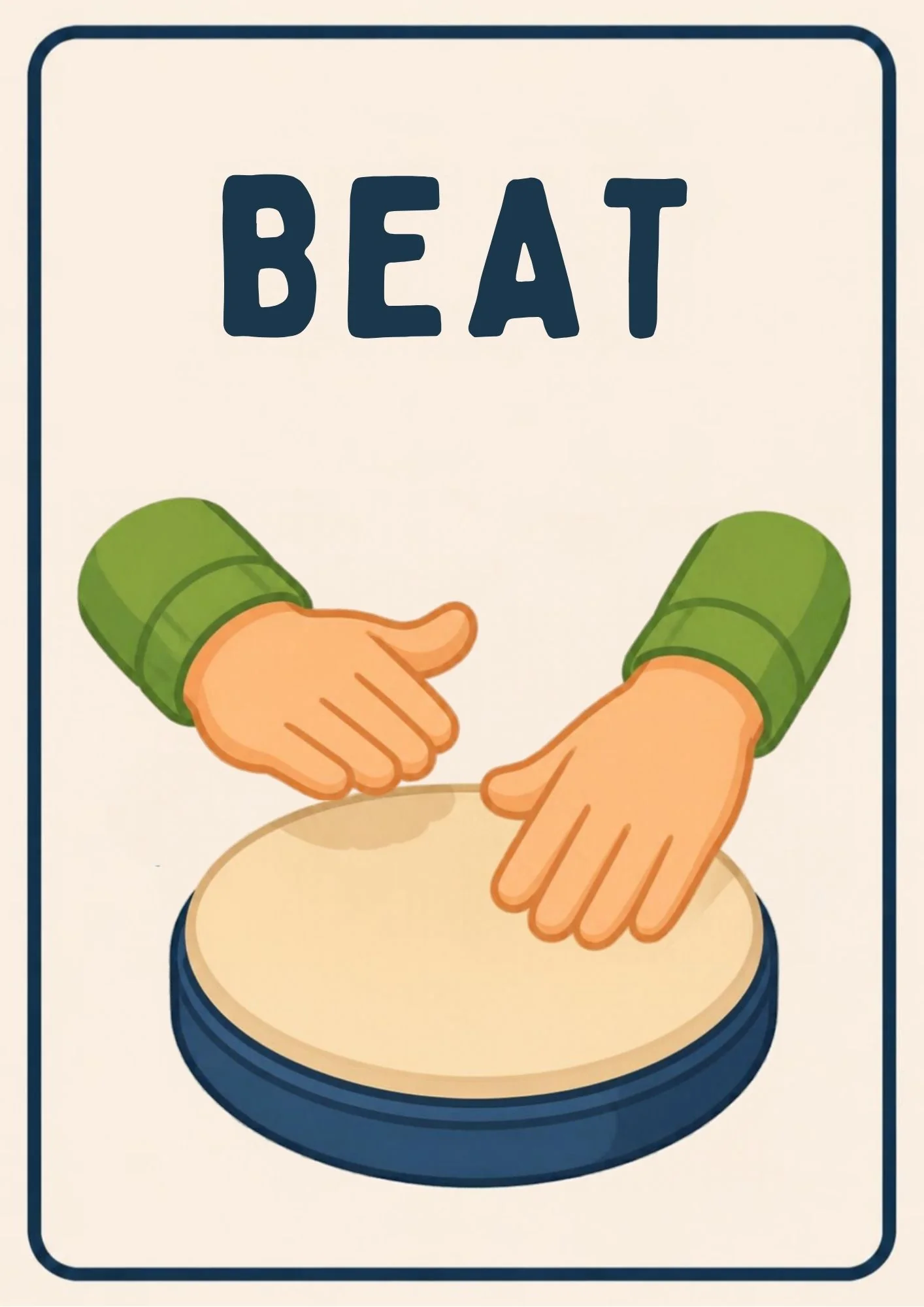
What is this?
The beat is the steady pulse of music — the count you clap along to, the pulse your foot finds all by itself. Melodies wiggle above it, drums decorate it, but the beat just keeps walking: one, two, three, four.
What does it mean?
The beat is the difference between sounds and MUSIC: notes without a beat are a wind chime; notes WITH a beat are a song. Finding it — really feeling it — is the first and most permanent musical skill there is.
What does the child need to know?
Your child needs three beat ideas: the beat is STEADY — it does not speed up for excitement or stop for rests; your body finds it by itself — claps, stomps, head-bobs; and keeping it steady while others wiggle is a real job — the beat is music’s clock.
Why this matters
Steady beat underlies walking, reading rhythm, cutting with scissors and every instrument on the shelf. It is measurable, trainable, and four is exactly when the body wants to learn it.
What it teaches
Steady pulse keeping, tempo maintenance under distraction, body percussion, and the difference between beat (the clock) and rhythm (the pattern).
Words to learn
beatpulsesteadyclapstompclockheartbeat
Say this to your child
“"The beat is music’s heartbeat — the steady pulse underneath every song! Clap along with our song — feel it? Your hands found the pulse all by themselves. And the beat’s one law: STEADY. It does not rush, it does not stop, it just walks: one, two, three, four. Keep the clock, and the whole song has somewhere to live."”
Step by step
- Show the card: "This is the beat — music’s heartbeat."
- Feel it: play any favourite song and clap ONLY on the pulse — not the words, the pulse underneath. "Your hands found it by themselves — that is the beat!"
- The steadiness law: the beat never rushes. March it slowly — one, two, three, four — the same speed, ten steps. Rushing is the one crime.
- Beat versus rhythm: the beat is the clock; the rhythm is the pattern danced ON the clock. Pat the beat while tapping a pattern — both live at once.
- Play the clock games below and close: "steady, steady, steady."
Look closer at the picture
On this card the word "Beat" stands in big navy capitals inside the rounded frame, with a friendly music illustration below — exactly as the pulse looks on the wall of the Music Room.
Ask your child
"What does the beat never do? What did your hands find in the song? What is the difference between the beat and the pattern on top?"
What your child can say or do
Your child might say: "The beat is the heartbeat!" "My hands found it by themselves!" or the steady one: "One, two, three, four — never rushing!"
Out in the real world
Beats tick everywhere: clocks, footsteps, windscreen wipers, skipping ropes. And every song on every radio carries one — find it together in the car: clap the pulse, hold it steady, arrive home in rhythm.
Try it together
Body Clock: pat knees on the beat to any song — steady, steady. Then split the body: feet STOMP the beat while hands clap a pattern on top — the clock and the dance at once. Finish with Beat Police: one player marches the beat; if the beat speeds up or stalls, the police call "STEADY!" and reset it. The clock is honoured; the song is safe.
Understanding check
Ask: "What is the beat? What is its one law? What do our feet keep while our hands dance?" The heartbeat, steady, the clock — three answers and the song has a home.
Parent tips
Model slowness — children’s beats always rush; march like a sleepy giant. And praise the STEADY, never the fancy: a plain, unbroken beat is the trophy.
This lesson pairs with the Beat flashcard in the library — print it, show it, keep it on the fridge. Back to Music Room (Class 23).