
Cello — a step-by-step lesson for grown-up and child
This lesson teaches the cello as the instrument you sit BEHIND and HUG — the only one on the shelf that rests against your body like a tall wooden friend, singing when the bow strokes it.
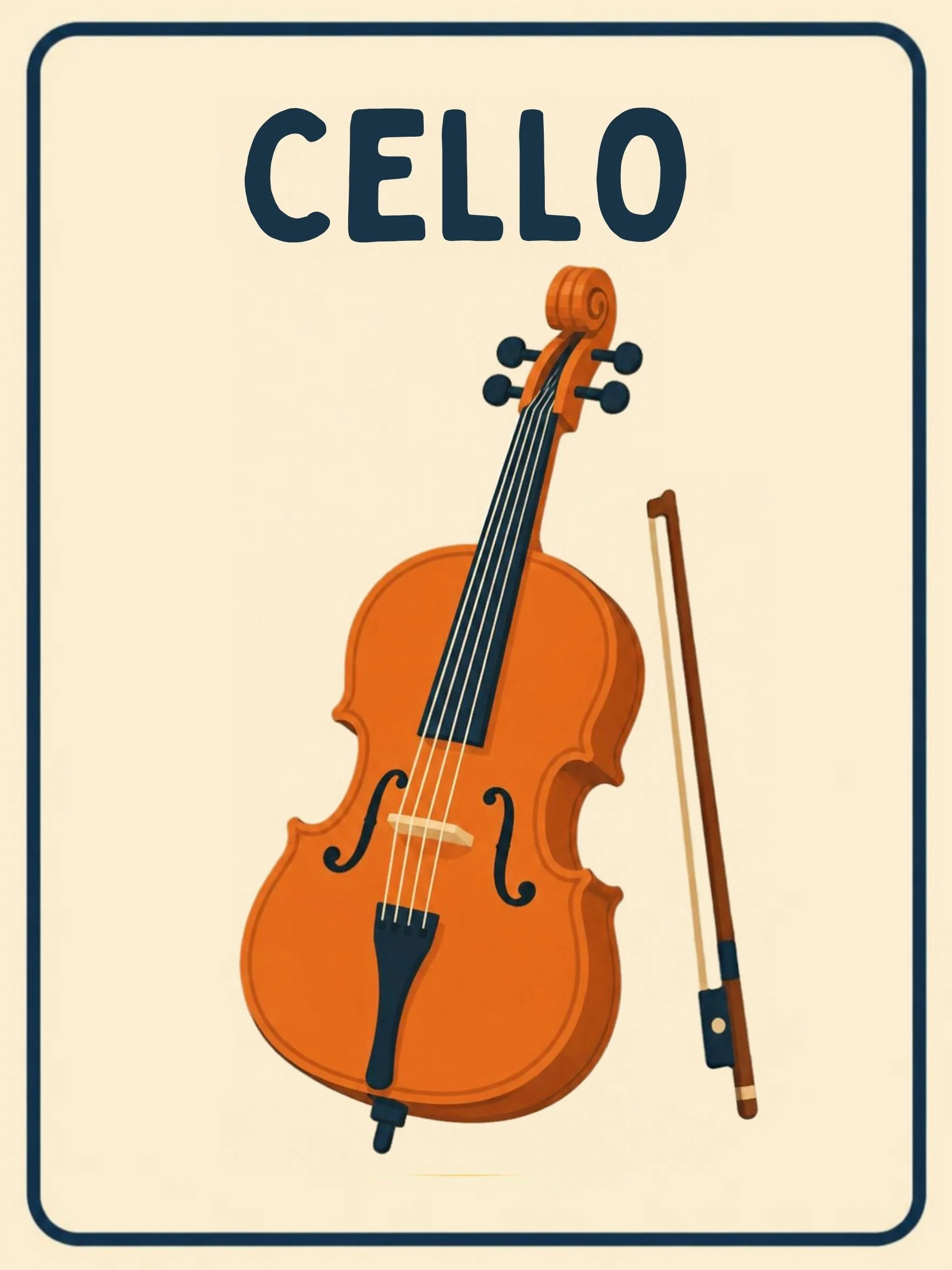
What is this?
A cello is the big low member of the violin family: you sit with it standing between your knees, its body resting against your chest, and draw a bow across the strings — or pluck them — to make deep, singing notes.
What does it mean?
Strings make sound two ways — pluck (short) and bow (long) — and the cello’s size makes the difference unmistakable: a plucked cello goes brrring, a bowed one goes oooooooh for as long as the arm lasts. The bow is a breath made of horsehair.
What does the child need to know?
Your child needs three cello ideas: you sit BEHIND it and it leans on you — the cello hug; the bow is horsehair drawn SLOWLY across the strings — slow bow, long song; and plucking (pizzicato!) is the string’s short way of talking.
Why this matters
The cello’s voice is the closest thing on the shelf to a human singing voice — deep enough to hum along with. Children who hum with a cello have found the instrument that most sounds like feelings.
What it teaches
Slow continuous bow control (a genuine fine-motor marvel), the two-voices contrast — pluck versus bow — posture with a big object, and low-pitch listening.
Words to learn
cellobowstringspluckpizzicatohugdeep
Say this to your child
“"The cello is the big singing string! You sit behind it and HUG it — it leans on your chest like a tall wooden friend. Pluck the string: brrring, short and spiky. Draw the bow slowly: oooooh — the string SINGS for as long as your arm keeps going slow. The bow is a breath made of horsehair."”
Step by step
- Show the card: "This is a cello — the big string you sit behind and hug."
- The hug: sit on a chair, spread the knees, lean a cushion "cello" against the chest — that is the playing position, the cello hug.
- Two voices: pluck a rubber band on a box — brrring, short. Then "bow" it with a finger drawn slowly — ooooooh, long. Pluck is short, bow is long.
- The slow arm: real bows sing only when they travel SLOW and straight — glide a finger along the band at snail pace. Rush it and the sound stumbles.
- Play the long-song game below and close: "slow bow, long song."
Look closer at the picture
On this card the word "Cello" stands in big navy capitals inside the rounded frame, with a friendly illustration of the cello and its bow below — exactly as the big string looks.
Ask your child
"Where does the cello sit when you play — on the floor or hugging you?" "Which is longer, pluck or bow?" "What is the bow made of?"
What your child can say or do
Your child might say: "I hug the cello!" "Pluck is short, bow is looong!" or the hum-along: "It sounds like a big person singing!"
Out in the real world
Cellos sit in every orchestra’s front row and hum under almost every movie’s saddest scene — and the hug position lives in every cushions-and-boxes cello a child builds. Hum with one on screen: the low friend sings back.
Try it together
Long-Song Contest: rubber-band box cello ready. One player plucks — count how short it was. Then bows (a slow finger) — how LONG can the oooh last? Beat yesterday’s record. Then the feelings game: "bow me a sleepy sound… a marching sound… a sad one." The same string says all three — the arm decides. That is the cello’s whole secret.
Understanding check
Ask: "How does the cello sit with you? What makes the long sound? What is plucking called?" The hug, the slow bow, pizzicato — three answers and the big string sings.
Parent tips
The slow arm is hard and wonderful — glide along the band at snail pace and count the seconds out loud. And honour pizzicato: naming the pluck with its Italian word makes children own it forever.
This lesson pairs with the Cello flashcard in the library — print it, show it, keep it on the fridge. Back to Music Room (Class 23).