
Clarinet — a step-by-step lesson for grown-up and child
This lesson teaches the clarinet’s clever tongue: a thin sliver of cane called a reed sits against the player’s lip, and when breath rushes past — the reed quacks, honks and sings.
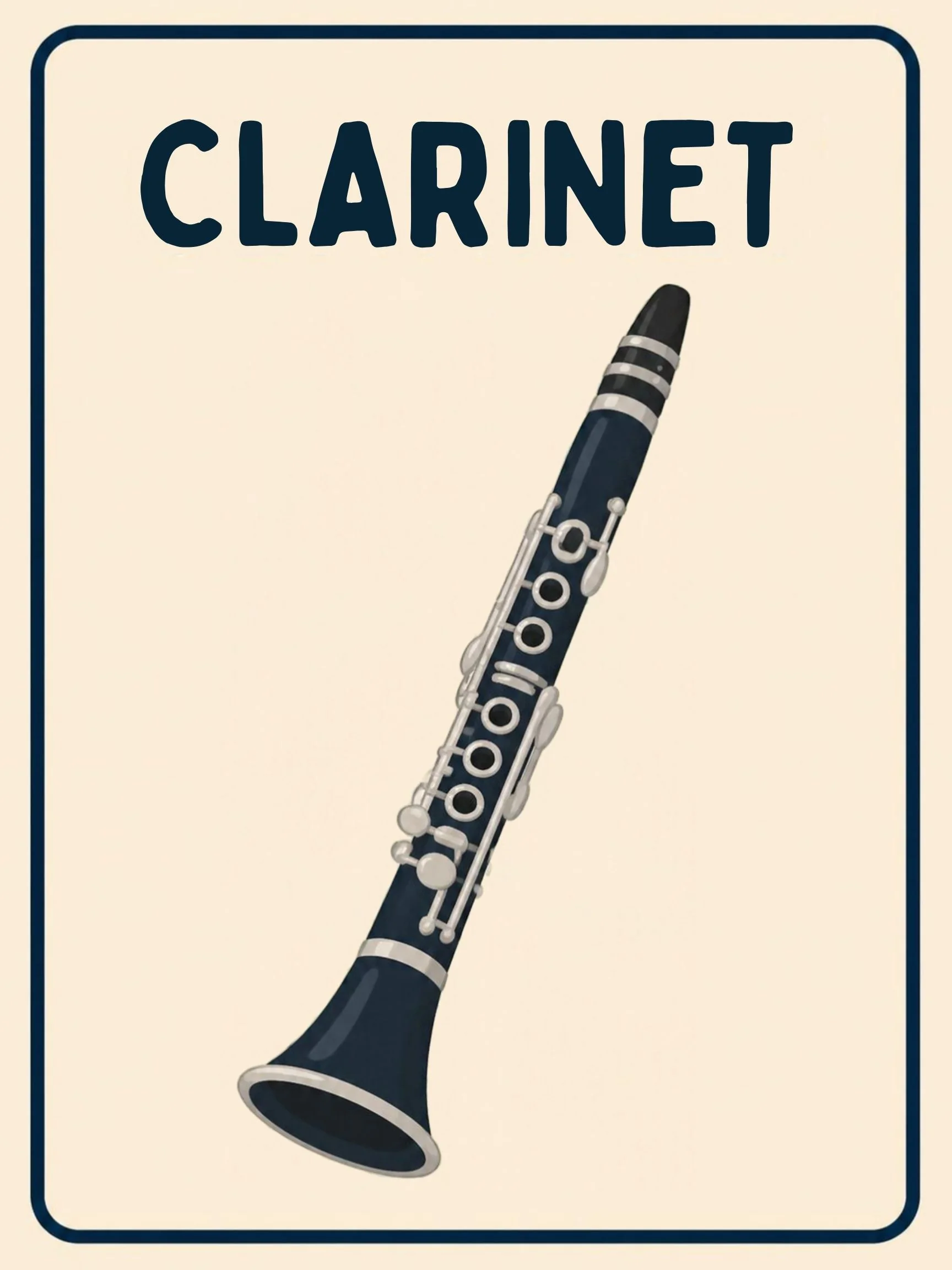
What is this?
A clarinet is a long black tube with silver keys and a mouthpiece holding one thin reed. Blow air past the reed and it vibrates — hundreds of times a second — and the tube turns the buzz into a warm, woody note.
What does it mean?
The reed is the lesson: a piece of wood that sings because air makes it flutter. Straw-demo it and the flutter is visible and audible in ten seconds — the clarinet’s whole magic, demystified at a kitchen table.
What does the child need to know?
Your child needs three clarinet ideas: the reed is a thin wooden tongue that flutters when you blow; the long black tube makes the flutter into a note — longer tube, lower honk; and the keys open and close holes to change the note as you play.
Why this matters
The straw-clarinet is the perfect first instrument build: cut the tip, blow, and it QUACKS. The child who hears their own straw reed has met the oboe, clarinet, saxophone and bassoon’s shared secret in one afternoon.
What it teaches
Breath control (long steady air), the vibration idea made audible, hole-covering sequencing, and straw-scissors fine motor for the build.
Words to learn
clarinetreedblowvibratekeystubehonk
Say this to your child
“"The clarinet has a secret tongue — a thin wooden sliver called a reed! When you blow, the reed flutters like a flag in the wind — flutter-flutter, hundreds of times a second — and the long black tube turns that buzz into a beautiful note. Want to meet a reed today? A drinking straw, cut to a point, will HONK for you."”
Step by step
- Show the card: "This is a clarinet — a long black stick that sings with a wooden tongue."
- The reed: a thin sliver of cane on the mouthpiece. Blow past it — it flutters, or vibrates, faster than a hummingbird’s wing. That flutter IS the sound.
- Straw demo: flatten one end of a drinking straw, cut it to a point, blow — HONK! A straw reed, quacking. Trim the straw shorter: higher honk!
- The tube rule: longer tube, lower note — point at the long black tube on the card, then at the tiny piccolo card: opposites.
- Play the long-breath game below and close: "blow steady, reed sings."
Look closer at the picture
On this card the word "Clarinet" leads in big navy capitals inside the rounded frame, with a friendly illustration of the clarinet and its keys below — exactly as the black tube looks.
Ask your child
"What flutters inside the mouthpiece? What does the tube turn the flutter into? Which sings lower — a long tube or a short one?"
What your child can say or do
Your child might say: "The reed flutters like a flag!" "My straw HONKS!" or the tube law: "Longer is lower!"
Out in the real world
Clarinets swing in jazz bands, march in school bands and bark comically in cartoons — and their reed-cousins live in every kitchen drawer: cut a straw’s tip to a point and blow. The woodwind family’s secret costs two cents.
Try it together
Straw-Reed Orchestra: everyone cuts a straw reed. Honk the long straws — deep and silly. Trim them shorter — higher and sillier. Line them up longest to shortest: a straw clarinet choir! Then the long-breath contest: one steady honk, no gulps — who can hold it longest? Steady air is the woodwind superpower, and the straw teaches it for free.
Understanding check
Ask: "What is the wooden tongue called? What makes it flutter? Long straw or short — which honks lower?" The reed, your breath, the long one — three answers and the honk is music.
Parent tips
Cut the straw tip for them the first time — two small triangles snipped flat make the reed. And keep honks SHORT in shared rooms; the neighbours will assume a duck has moved in.
This lesson pairs with the Clarinet flashcard in the library — print it, show it, keep it on the fridge. Back to Music Room (Class 23).