
Drum — a step-by-step lesson for grown-up and child
This lesson teaches the drum’s three voices — the big boom, the quick tap, the rumbling roll — and the oldest music game on Earth: I play a rhythm, you answer it.
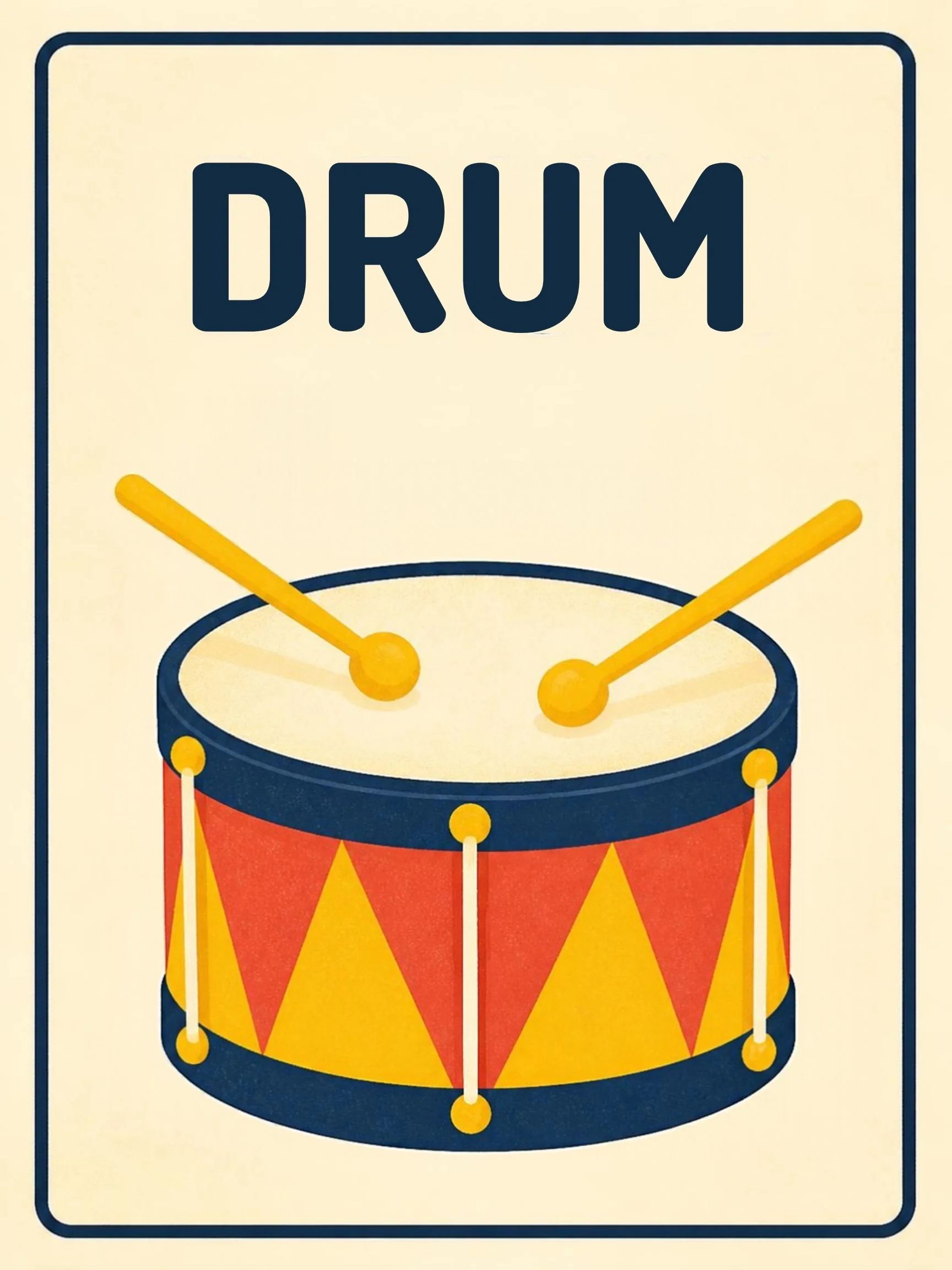
What is this?
A drum is a skin or membrane stretched tight over a hollow body: strike it with hands or mallets and it speaks. Big hits boom, finger taps patter, and the roll — fast alternating strikes — makes one long thunder.
What does it mean?
The drum is the conversation starter of all music: it asks a rhythm question and waits for an answer. Echo games on a drum are the earliest and best listening training there is — ears first, hands second.
What does the child need to know?
Your child needs three drum ideas: one drum, many voices — boom (whole hand, big), tap (fingertips, quick), roll (alternating hands, rrrrr); the skin needs to be TIGHT to speak clearly; and the echo is the game — say it back exactly as you heard it.
Why this matters
Drums need no pitch, no notes, no setup — the first instrument and still the fastest way into music. And the echo game builds listening memory that every later melody will borrow.
What it teaches
Striking dynamics (big versus small force), alternating-hand rolls, echo memory (aural working memory), and the discipline of waiting for the question before answering.
Words to learn
drumboomtaprollechorhythmanswer
Say this to your child
“"The drum has three voices! BOOM — the whole hand, big and deep. Tap-tap-tap — fingertips, quick as rain. And rrrrroll — both hands taking turns so fast it becomes one long thunder. And the oldest game in music: I play a rhythm, and YOU answer it back, exactly the same. The drum is the first conversation!"”
Step by step
- Show the card: "This is a drum — the first instrument ever, and still the friendliest."
- Three voices: BOOM (whole hand, let it sink), tap-tap-tap (fingertips, quick as rain), rrrroll (hands alternating fast — one long thunder). Say each, play each.
- Tight skin rule: a floppy drum mumbles — real drums are pulled TIGHT. Tap the card’s drum: tight skin, clear voice.
- The echo game: I play two booms — you play two booms. I play tap-tap-boom — you play tap-tap-boom. The drum talks; you answer.
- Play the echo game below and close: "boom, tap, roll — and answer back."
Look closer at the picture
On this card the word "Drum" stands in big navy capitals inside the rounded frame, with a friendly illustration of the drum and its two mallets below — exactly as it looks.
Ask your child
"Name the drum’s three voices. Which voice uses both hands fastest? What do we do after the drum asks a question?"
What your child can say or do
Your child might say: "BOOM, tap, rrrroll!" "I echoed it exactly!" or the leader’s joy: "Now MY rhythm for YOU to answer!"
Out in the real world
Drums open every parade, power every band, and live at home as pots, boxes, overturned buckets and sofa cushions. The echo game needs nothing at all: clap a pattern on your knees — the kitchen is a drum circle.
Try it together
Echo Drum Circle: one pot-drum, two players. The leader plays one bar — boom-boom-tap — and the echoer answers it exactly. Trade the leader crown each round. Then the trick level: leader plays a ROLL — the echoer rolls back. When echoes get perfect, both play TOGETHER — the conversation becomes a duet. That is every drum circle on Earth, at kitchen scale.
Understanding check
Ask: "What are the three voices? What does the echo game start with? What makes a roll?" Boom-tap-roll, the drum’s question, hands alternating — three answers and the circle is open.
Parent tips
Model the waiting: the echoer’s hands stay STILL until the question ends — the pause is the listening. And celebrate imperfect echoes warmly: near-misses mean the ears are working exactly hard enough.
This lesson pairs with the Drum flashcard in the library — print it, show it, keep it on the fridge. Back to Music Room (Class 23).