
Flute — a step-by-step lesson for grown-up and child
This lesson teaches the flute’s gentle secret: no reed, no string — just breath blown across a hole’s edge, split in two, humming. The same magic as blowing across a bottle top.
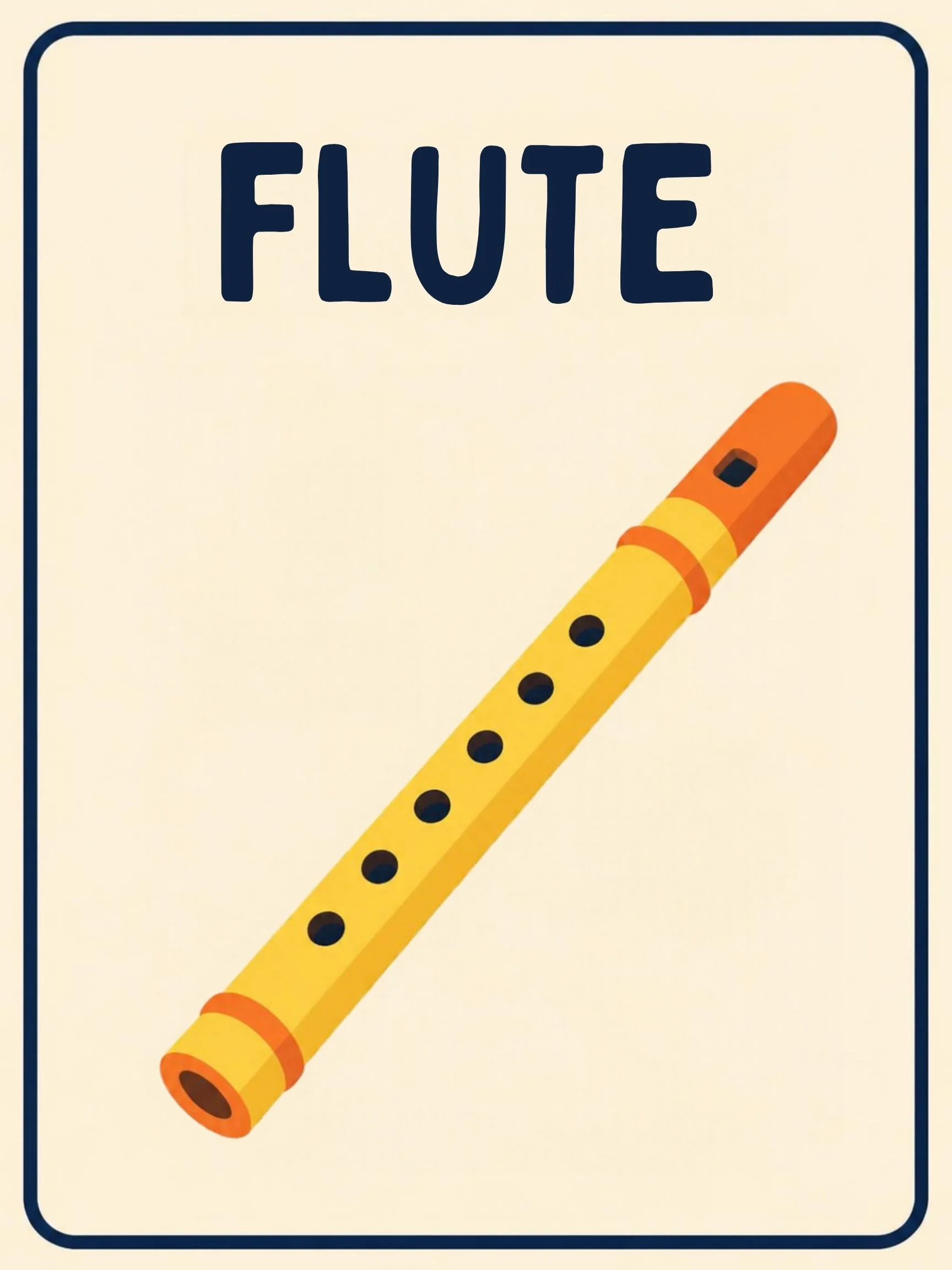
What is this?
A flute is a long silver tube: blow air ACROSS the mouth-hole (not into it), the breath splits on the edge, and the tube rings with a clear, airy note. Fingers open and close holes along the tube to climb the scale.
What does it mean?
The flute is breath made audible — the most direct instrument there is: your out-breath, singing. Edge-blowing is a small physical marvel (aim too low and it’s silent, too high and it’s just wind), and bottles teach it free.
What does the child need to know?
Your child needs three flute ideas: the breath goes ACROSS the hole, not into it — like blowing across a bottle top; the edge splits the breath and half of it hums; and long songs need long breath — flutists are the great breath-savers.
Why this matters
Bottle-blowing is the cheapest lab in music: aim, adjust, hum. A child who coaxes a note from a bottle has genuinely played a flute’s physics — and learned that tiny aim-changes change everything.
What it teaches
Directed breath control (the aim is a fine-motor skill of the lips), sustained out-breath, cause-and-effect micro-adjustment, and soft dynamics — the flute whispers before it sings.
Words to learn
flutebreathedgeblow acrossbottlesilveraim
Say this to your child
“"The flute is breath turned to silver! No reed, no strings — you just blow GENTLY ACROSS the hole, like cooling soup, and the edge splits your breath: half flies away, half hums inside the tube — and the tube SINGS. Try it on a bottle tonight: across the top, softly… there it is. Your own breath, turned into music."”
Step by step
- Show the card: "This is a flute — breath made of silver."
- The across trick: pretend to cool soup — blow GENTLY ACROSS, not down. The flute’s mouth-hole works the same way: across the edge, never into the hole.
- Bottle lab: an empty bottle, blow gently across its top — fwoo! A note! Tilt the aim up and down until it hums clear. That hunting IS flute-playing.
- The water trick: pour a little water in — the note DROPS lower. Bottle flutes tune themselves.
- Play the breath game below and close: "across the edge, gently."
Look closer at the picture
On this card the word "Flute" stands in big navy capitals inside the rounded frame, with a friendly illustration of the silver flute below — exactly as the long tube looks.
Ask your child
"Which way does the breath go — into the hole or across it? What happens if we blow too hard? What does water in the bottle do to the note?"
What your child can say or do
Your child might say: "Across, like cooling soup!" "My bottle sang!" or the flutist’s discovery: "Gentle works — big blows are just wind!"
Out in the real world
Flutes are the world’s oldest instruments — bone flutes are forty thousand years old — and they live in every orchestra, band and school hall. Their bottles sit in every recycling bin: free flutes, waiting.
Try it together
Bottle Flute Choir: three bottles, water at three levels — low, middle, high. Hunt each note with gentle across-breath, then play calls: leader "sings" two bottle notes, echoer answers. Finish with the breath-length contest: one steady bottle note, no wobble — the longest gentle breath wins. Silver-song physics, at recycling prices.
Understanding check
Ask: "Which way does breath cross the hole? What splits the breath? What makes the bottle note lower?" Across, the edge, more water — three answers and the breath is silver.
Parent tips
Gentle is the whole game — model soup-cooling breath and the note arrives in seconds. And let the aim-hunt take its time: the searching IS the lesson; the note is the receipt.
This lesson pairs with the Flute flashcard in the library — print it, show it, keep it on the fridge. Back to Music Room (Class 23).