
Duet — a step-by-step lesson for grown-up and child
This lesson teaches the duet — music built for exactly two: one part and another part, taking turns, answering each other, and joining forces for the final chord.
What is this?
A duet is a piece written for two players: piano duets at one keyboard, vocal duets sharing verses, instrument pairs trading melodies. Each part matters; neither is complete alone.
What does it mean?
The duet is the conversation lesson: I play, you answer; you lead, I follow. Between the solo (one voice) and the band (a crew) sits the duet — the smallest, most personal music team, where listening to ONE partner is the whole skill.
What does the child need to know?
Your child needs three duet ideas: a duet is exactly TWO players sharing ONE piece; the parts trade — one leads, one answers, then swap; and the ending is TOGETHER — duets finish on a shared chord, both hands (or voices) landing as one.
Why this matters
Turn-taking with sound is the duet’s gift — a musical version of conversation, with the same rule: listen first, then speak. It is the gentlest ensemble training there is.
What it teaches
Two-part turn-taking, musical question-and-answer, leading-and-following in pairs, and the shared final chord — landing together as the goal of every partnership.
Words to learn
duettwoparttradeanswertogetherfinal chord
Say this to your child
“"A duet is music for exactly TWO — one part for me, one part for you! I hum a question, you hum the answer. You lead, I follow, then we swap. And the ending is the best part: on the last note we both land TOGETHER — one shared chord, two players, one piece. That is a duet: the smallest team in music."”
Step by step
- Show the card: "This is a duet — two players, one piece."
- The trade: I hum two notes — you hum two notes back. Question, answer! The duet’s oldest shape.
- The swap: now YOU lead the question and I answer. In a duet, both players do both jobs.
- The together-ending: play your part, I play mine — and on the last note, we BOTH land together: the shared chord. The duet’s whole point.
- Play the duet games below and close: "two parts, one landing."
Look closer at the picture
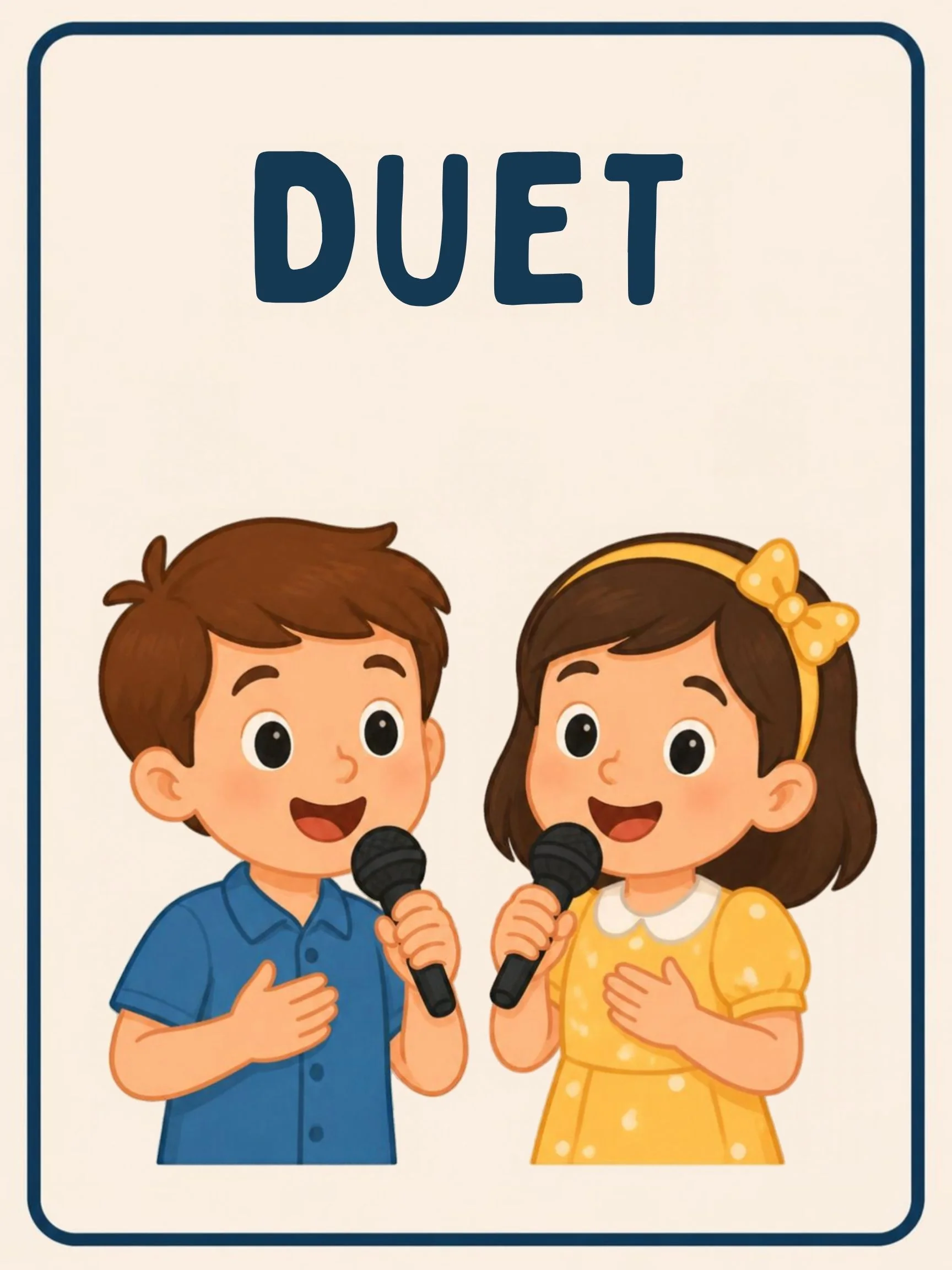
On this card the word "Duet" stands in big navy capitals inside the rounded frame, with a friendly two-player illustration below — exactly as the pair looks.
Ask your child
"How many players in a duet? What do the parts do — trade or play both at once? How does a duet end?"
What your child can say or do
Your child might say: "Two players, one piece!" "I asked, you answered — then we swapped!" or the lander: "Our final chord landed together!"
Out in the real world
Duets sit at every piano bench (four hands, one keyboard), harmonise in every pop chorus and trade solos in every jazz tune — and the question-answer game works with just two hums and two people.
Try it together
Question-and-Answer Duet: one player hums a two-note question; the partner answers with their own two notes — then they SWAP roles for four rounds. Then the shared-piece duet: player one holds a long hum (the floor), player two sings the tune on top — then swap. Finish with the landing: both parts glide to the SAME final note and hold it — one chord, two people, applause. Two parts, one landing.
Understanding check
Ask: "How many players? What is the oldest duet shape? Where do both parts land?" Two, question-and-answer, the final chord — three answers and the duet is played.
Parent tips
Keep the questions short — two to four notes: conversations need breathing room. And the shared final chord is non-negotiable: practise the landing until it is clean, then enjoy the pride.
This lesson pairs with the Duet flashcard in the library — print it, show it, keep it on the fridge. Back to Music Room (Class 23).