
Maracas — a step-by-step lesson for grown-up and child
This lesson teaches the maracas — two gourds of rattling seeds that speak in shakes: big shake, small shake, and the secret third sound, the still-and-silent one.
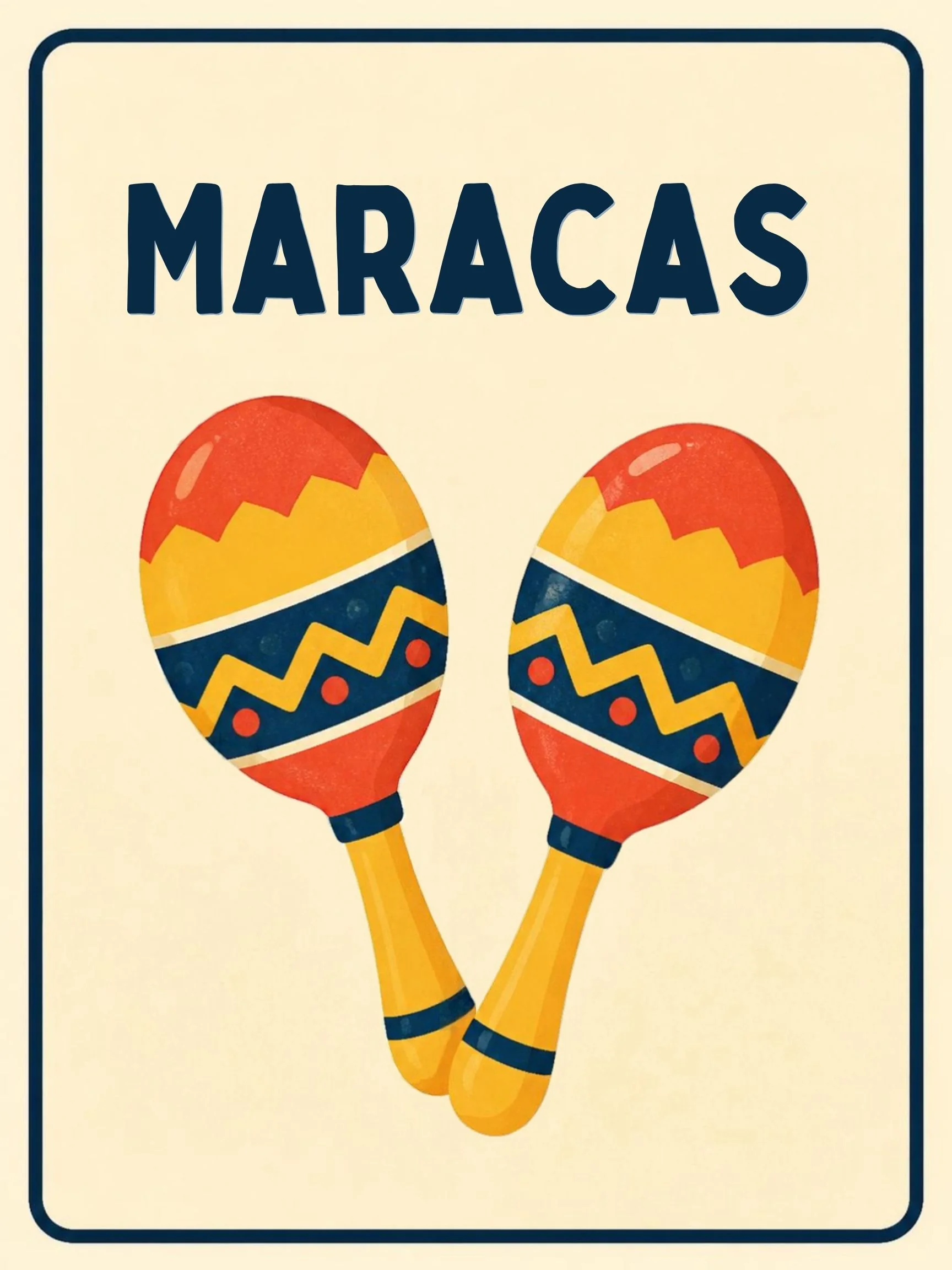
What is this?
Maracas are shakers: dried gourds (or any hollow shell) holding seeds or beads — shake once and they rattle, hold still and they hush. Latin American music leans on them, and every kitchen owns their cousins.
What does it mean?
The maracas’ third sound is the lesson: STOPPING is part of rhythm. Shake-shake-REST — the silence between shakes is as musical as the rattle. Children who can hold a still maracas have found rhythm’s quiet half.
What does the child need to know?
Your child needs three maracas ideas: the shake comes from the WRIST — a flick, not a whole-arm windmill; three sounds exist — big shake, small shake, stillness; and patterns make sentences: shake-shake-still, shake-shake-still.
Why this matters
Wrist-shaking builds the small-motor beat that claves, castanets and drum kits all ask for — and the stillness pattern teaches the rest note, the skill every ensemble player needs and few beginners own.
What it teaches
Wrist-flick control, pattern memory with rests, loud-soft dynamics in one hand, and ensemble stillness — shaking together, stopping together.
Words to learn
maracasshakerattlewriststillpatternrest
Say this to your child
“"Maracas are gourds full of seeds — and they talk in shakes! Flick from the wrist: chh! Big shake for the loud part, small shake for the soft part… and the secret third sound: STILLNESS. Hands frozen, not a peep. Shake, shake, still… shake, shake, still — the silence is part of the song!"”
Step by step
- Show the card: "These are maracas — gourds of rattling seeds."
- The wrist flick: hold the arm still, flick the wrist — chh. Small move, big sound. Windmilling arms are tiring; wrist flicks go all night.
- Three sounds: BIG shake (chh!), small shake (chh), and STILL — hands frozen, silence. All three are music.
- Build home maracas: rice or beans in a bottle or egg cup, lid taped — a family band’s worth in five minutes.
- Play the freeze game below and close: "shake, shake, still."
Look closer at the picture
On this card the word "Maracas" stands in big navy capitals inside the rounded frame, with a friendly illustration of the pair below — exactly as the rattling gourds look.
Ask your child
"Where does the shake come from — the arm or the wrist? What is the maracas’ third sound? What goes inside a home-made pair?"
What your child can say or do
Your child might say: "Wrist flick — chh!" "Stillness is a sound too!" or the builder’s pride: "My bottle has rice in it — shake!"
Out in the real world
Maracas drive salsa, samba and every Latin beach song — and their cousins rattle in every kitchen: rice in a bottle, beads in a tin, a pill box of pasta. The wrist flick costs nothing.
Try it together
Freeze-Shake: everyone shakes a steady wrist-flick beat — chh-chh-chh — until the leader calls FREEZE! Total stillness, no single rattle. Restart on the clap. Then patterns: "shake-shake-still" in unison — a whole band silent on the same beat is the game’s magic. Shake together, stop together: that is an orchestra’s discipline in a bottle of rice.
Understanding check
Ask: "Where does the flick live? Name the three sounds. What freezes on FREEZE?" The wrist, big-small-still, everything — three answers and the band is steady.
Parent tips
The freeze is the point — praise the silent freeze louder than the shake. And rice-before-beans: rice rattles softer and sweeps up easier.
This lesson pairs with the Maracas flashcard in the library — print it, show it, keep it on the fridge. Back to Music Room (Class 23).