
Microphone — a step-by-step lesson for grown-up and child
This lesson teaches the microphone’s friendly contract: it lifts your voice — but it also broadcasts every giggle and whisper, so the star’s job is calm breath and a steady mouth.
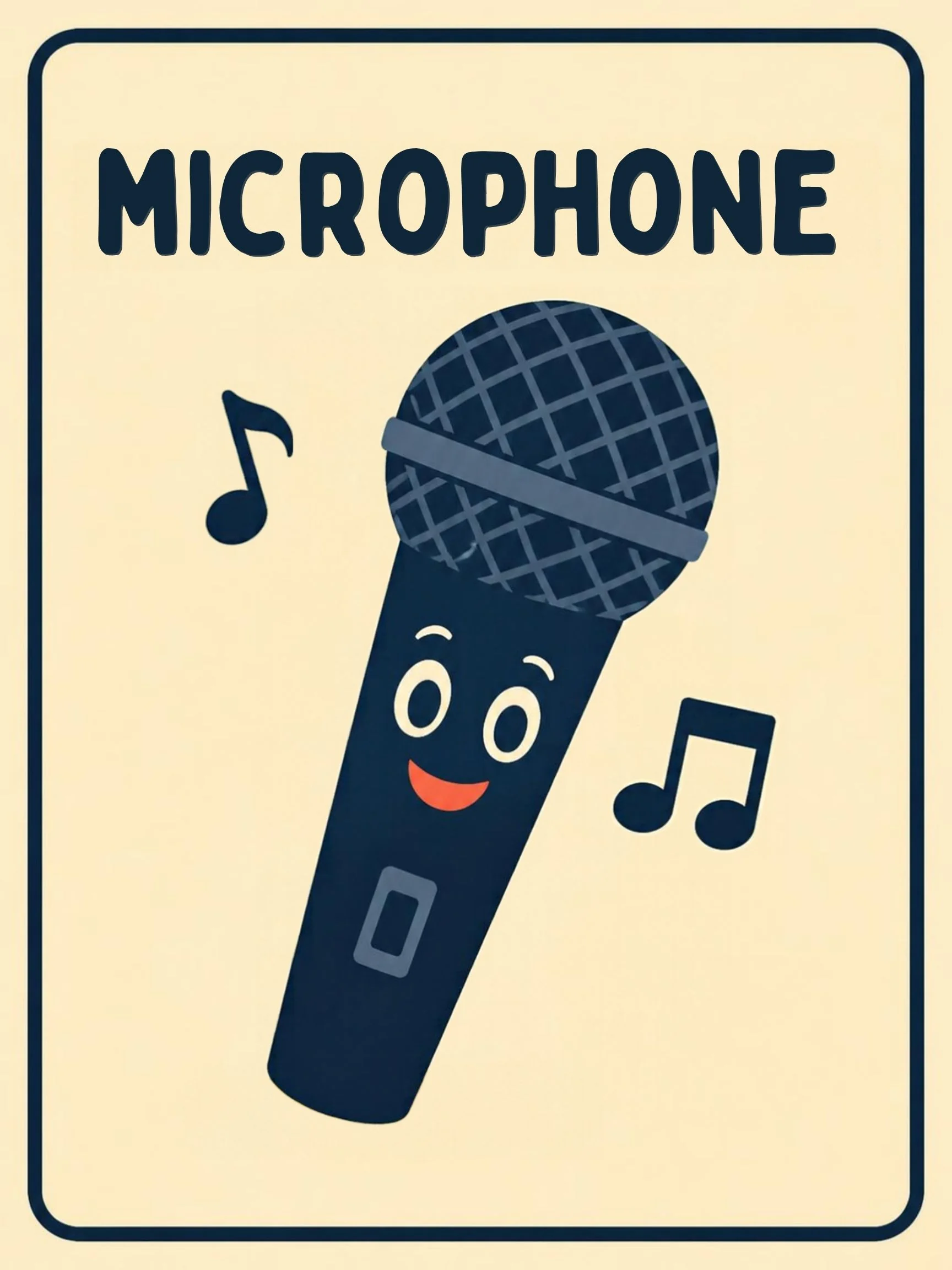
What is this?
A microphone turns sound waves into tiny electrical signals, sends them to a speaker, and the speaker plays them back BIG. Singers, reporters and radio hosts all speak into one — softly, and close.
What does it mean?
The microphone rewards the small voice: whisper into it and the room hears you; shout into it and the speakers shout back, distorted and grumpy. Quiet-in, big-out is the whole technique — power comes from the machine, not the throat.
What does the child need to know?
Your child needs three microphone ideas: hold it a hand’s width from the mouth — close enough to catch, far enough to breathe; do NOT shout — the speakers do the shouting; and keep it steady — wobbling microphones make wobbling sound.
Why this matters
Speaking into a microphone is a confidence skill every school assembly eventually asks for — and learning it as a game, at four, with a toilet-roll mic, makes the real one feel like an old friend.
What it teaches
Voice modulation (soft in, big out), distance awareness, steady-hand holding, and performance confidence — announcing to a room is brave, and games make it safe.
Words to learn
microphonespeakeramplifywhisperannouncesteadyvoice
Say this to your child
“"The microphone is the voice-lifter! Speak SOFTLY into it — the speaker does the shouting for you. Hold it a hand’s width from your mouth, steady like an ice-cream cone, and announce: GOOD MORNING, EVERYONE! Your whisper, the room’s giant — that is the microphone’s magic."”
Step by step
- Show the card: "This is a microphone — the voice-lifter!"
- The contract: it makes SMALL voices BIG. So the trick is: speak SOFTLY into it, and let the speaker do the shouting.
- The distance: a hand’s width from the mouth. Too far — the sound hides; touching the lips — the speakers go BOOM and grumble. Hand’s width is just right.
- The steady hold: one hand, cupped loosely, mic like an ice-cream cone — no wobbling, no swinging.
- Play the announcer game below and close: "soft in, big out."
Look closer at the picture
On this card the word "Microphone" stands in big navy capitals inside the rounded frame, with a smiling microphone illustration below and music notes around it — exactly as the voice-lifter looks.
Ask your child
"Should we shout into the microphone or whisper? How far from the mouth? What does the speaker do with our small voice?"
What your child can say or do
Your child might say: "Soft in, big out!" "A hand’s width away!" or the star’s line: "GOOD MORNING, EVERYONE!"
Out in the real world
Microphones stand in every school hall, radio station and stage — and their game-twin is every toilet roll and hairbrush on Earth. Announce into one tonight: the confidence transfers word for word.
Try it together
The Announcer: a toilet-roll "mic," held a hand’s width away, steady. Announcements in your softest voice: "WELCOME TO DINNER!" "THE SOAP IS… SOAPY!" The "speaker" (a partner) repeats it back at giant volume with cupped hands around their mouth. Whisper in, giant out — the whole broadcast chain, played by two people.
Understanding check
Ask: "Shout or whisper in? How far from the mouth? What does the speaker do?" Whisper, a hand’s width, shouts it back — three answers and the show is on.
Parent tips
Model the too-close boom once — the grumpy speaker sound teaches distance faster than any rule. And praise steady hands over loud voices: the mic does the volume; the star does the calm.
This lesson pairs with the Microphone flashcard in the library — print it, show it, keep it on the fridge. Back to Music Room (Class 23).