
Singer — a step-by-step lesson for grown-up and child
This lesson teaches the singer — the musician whose instrument is already inside them: breath for power, words for meaning, feeling for everything else.
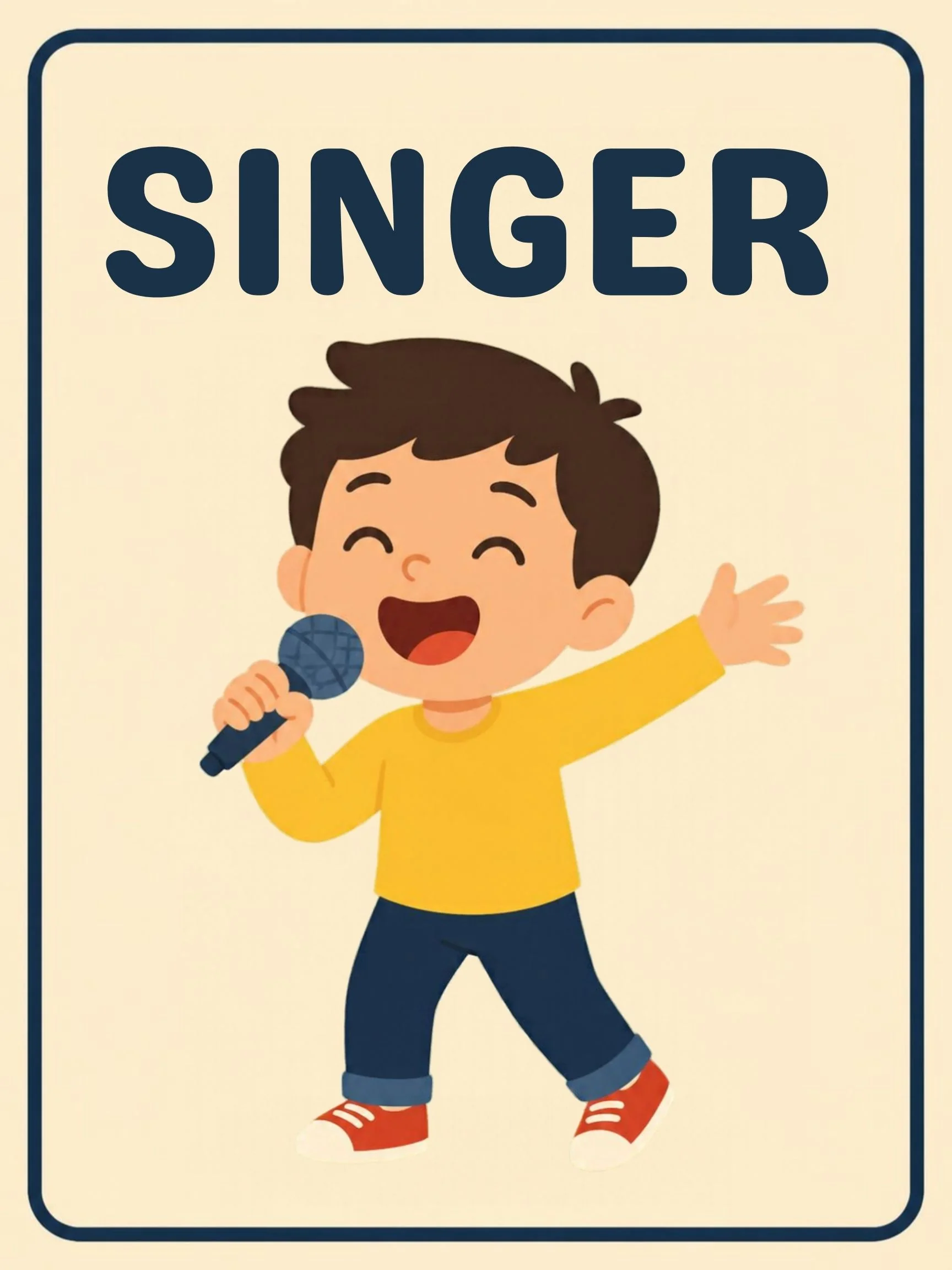
What is this?
A singer is a musician who sings: they carry the melody AND the words AND the feeling — breath from the belly, words shaped clear, the story told face-first. Every culture’s first instrument was a voice.
What does it mean?
The singer completes the music-word chain: the lyrics lesson gave words their meaning, the melody gave them their path — the singer WALKS it, out loud, in front of people. Singing out is a courage skill as much as a music skill.
What does the child need to know?
Your child needs three singer ideas: the singer’s instrument is their own body — breath is the power, from the belly not the throat; words must be CLEAR — the story only lands if the words land; and singing OUT means singing to someone — the audience is part of the song.
Why this matters
The voice is the one instrument a child never leaves home without — and the confidence to sing OUT (not mumble-toward) transfers to every reading-aloud, show-and-tell and stage day of their life.
What it teaches
Breath support (belly breaths), clear diction through song, performing TO an audience, and the melody-plus-words integration the whole room has been building.
Words to learn
singervoicebreathbellywordssing outaudience
Say this to your child
“"The singer’s instrument is inside them — their own body! Breathe from the BELLY — hand on tummy, feel it move; that breath carries whole verses. Sing the words CLEARLY — the story only lands if the words land. And sing OUT — to someone, across the room! A shy mumble hides; a singer arrives. The voice: the instrument you never leave at home."”
Step by step
- Show the card: "This is the singer — the musician whose instrument is inside them."
- The belly breath: hand on tummy, breathe so the hand moves — that is singing breath, deep and calm. Throat-breath runs out; belly-breath carries verses.
- The clear words: sing "the dog runs round" as mumble — nobody hears the story! Sing it CLEAR — every word lands. Singers tell stories; stories need words.
- Sing OUT: mumble-singing hides; out-singing ARRIVES. Pick someone across the room and sing TO them — the sound grows all by itself.
- Play the stage-singer game below and close: "breath, words, out."
Look closer at the picture
On this card the word "Singer" stands in big navy capitals inside the rounded frame, with a friendly singing illustration below — exactly as the story voice looks.
Ask your child
"Where does singing breath come from — throat or belly? Why must the words be clear? What does sing OUT mean?"
What your child can say or do
Your child might say: "Belly breath — feel my hand move!" "Clear words so the story lands!" or the performer: "I sang TO the whole sofa!"
Out in the real world
Singers lead every anthem, lullaby and birthday song on Earth — and the belly breath is the same one swimmers and storytellers use. Sing any favourite tonight TO someone: the arrival is the skill.
Try it together
The Stage Singer: sofa-arm stage, toilet-roll mic from the microphone lessons. Belly breath in, then sing a two-line story-song — any words, clear as bells — TO the audience, not at the floor. Audience job: applaud the clear words by name ("I heard DOG and ROUND!"). Three singers, three stories, one warm stage. Breath, words, out — the singer’s whole craft, at four.
Understanding check
Ask: "Where does singing breath live? What must the words be? Where does the voice arrive?" The belly, clear, to the audience — three answers and the stage is yours.
Parent tips
Name-the-word applause trains diction better than "sing louder" ever will. And TO someone is the trick: giving the voice a destination makes it arrive.
This lesson pairs with the Singer flashcard in the library — print it, show it, keep it on the fridge. Back to Music Room (Class 23).