
Tempo — a step-by-step lesson for grown-up and child
This lesson teaches tempo — the speed knob of music: the same beat walking slowly like an elephant or sprinting like a mouse, and the whole mood of a song changing with it.
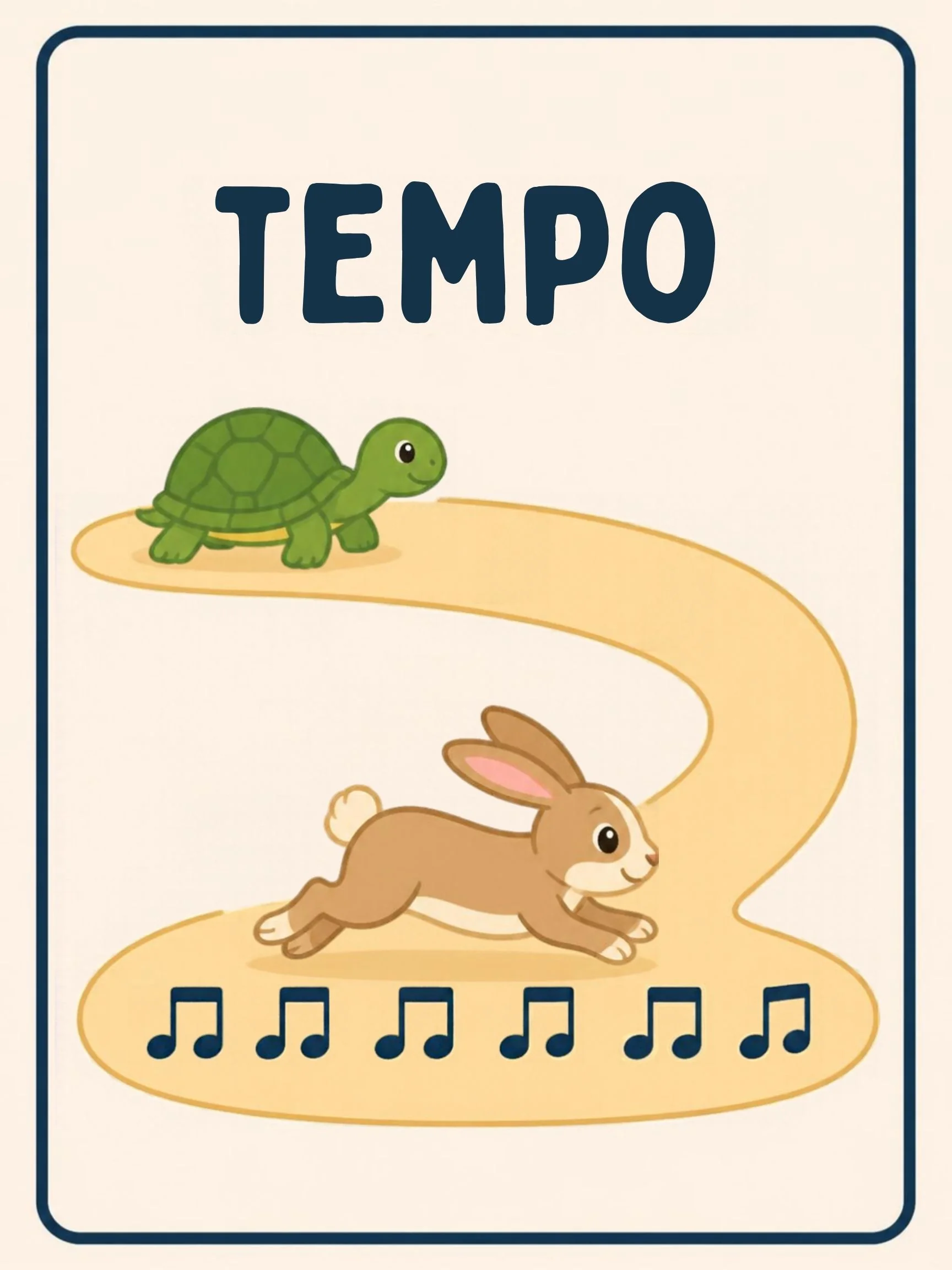
What is this?
Tempo is how fast or slow the beat goes: the pulse’s speed dial. Lullabies crawl, marches walk, dance songs sprint — same notes, different tempo, entirely different feeling.
What does it mean?
Tempo proves the beat is a law with one adjustable part: the speed. Slow a song down and it sighs; speed it up and it giggles. The notes stay home — the feeling travels.
What does the child need to know?
Your child needs three tempo ideas: tempo is the beat’s SPEED — fast, slow and every step between; the same song changes mood with tempo — sleepy slow, giggly fast; and tempo needs a boss — the leader sets the speed and everyone follows it together.
Why this matters
Tempo control is the first ensemble skill — a group marching at one agreed speed is a small miracle of listening — and the tempo-dial game makes the boss-and-follow structure hilarious instead of hard.
What it teaches
Speed modulation on a steady beat, mood-tempo mapping, leading-and-following (the tempo boss), and stopping at speed changes without collapsing.
Words to learn
tempospeedfastslowdialleadermarch
Say this to your child
“"Tempo is the beat’s speed knob! Elephant tempo — sloooow pat pat. Mouse tempo — quick-quick-quick! And here is the magic: sing our song slow and it sighs, sing it fast and it giggles — same song, new mood. One player is the tempo boss: hands up, slow… hands down, sprint! Everyone follows one dial."”
Step by step
- Show the card: "This is tempo — the speed knob of the beat."
- The dial: pat the beat slowly — elephant tempo. Pat it fast — mouse tempo. Same beat, different dial.
- The mood change: sing any song slow — it sighs. Sing it fast — it giggles! The notes stayed home; the feeling travelled.
- The boss: one player is the tempo leader — hands high means slow, hands low-fast means sprint. Everyone follows ONE dial.
- Play the dial games below and close: "same beat, new speed."
Look closer at the picture
On this card the word "Tempo" stands in big navy capitals inside the rounded frame, with a friendly fast-slow illustration below — exactly as the speed knob looks.
Ask your child
"What does tempo change — the notes or the speed? What does a slow tempo make a song feel? Who sets the speed?"
What your child can say or do
Your child might say: "The speed knob!" "Slow song sighs, fast song giggles!" or the boss: "Hands up — elephant tempo, follow me!"
Out in the real world
Tempos rule every day: the walk-to-school tempo, the fire-drill sprint, the bedtime lullaby crawl — and every song on the radio carries one. Change the tempo of any family song tonight: the mood flips.
Try it together
Tempo Boss: one leader, everyone patting the beat. The leader’s hands are the dial: high and floating — elephant slow; low and dashing — mouse fast; frozen — STOP! Change tempos every eight beats — the band follows the dial through walk, crawl and sprint without dropping the beat. Then the mood test: our family song at three tempos — sleepy, walking, silly — and the room votes on the best one. Same beat, new speed, every time.
Understanding check
Ask: "What is tempo? What changes when the dial turns? Who does everyone follow?" The beat’s speed, the mood, the tempo boss — three answers and the band has a dial.
Parent tips
The freeze at tempo changes is the skill — model the STOP as part of the game. And let every child be the boss once: leading the dial is as musical as following it.
This lesson pairs with the Tempo flashcard in the library — print it, show it, keep it on the fridge. Back to Music Room (Class 23).