
Tune — a step-by-step lesson for grown-up and child
This lesson teaches the tune — the melody’s pet name: the specific line of notes that makes a song ITSELF, recognisable in as few as three notes.
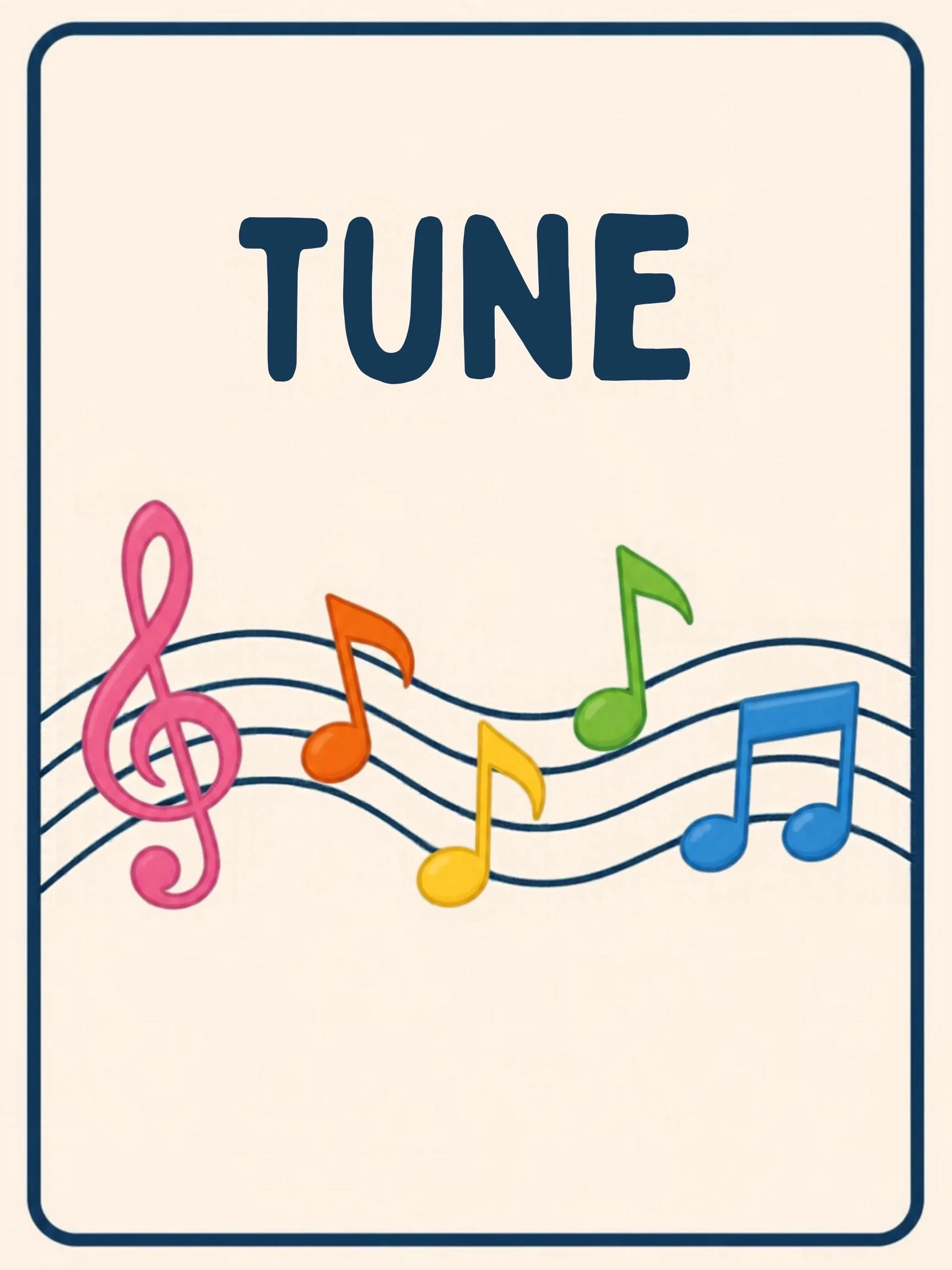
What is this?
A tune is a song’s identifying melody: the exact line of notes that makes THIS song and no other. Hum three notes of a famous song and everyone knows it — the tune is the song’s fingerprint.
What does it mean?
Tunes are identity: hundreds of songs share the same twelve notes, but the ORDER makes each one itself. Recognising a tune in three notes is genuine ear skill — the child is matching sound-prints like a detective.
What does the child need to know?
Your child needs three tune ideas: the tune is a song’s own melody — its fingerprint; three notes can give it away — ears are brilliant detectives; and tunes can be hummed, whistled, tapped or played — the notes stay the same on any instrument.
Why this matters
Tune-matching is ear training wearing a game show costume — and it builds the recognition memory that language, faces and reading all quietly reuse.
What it teaches
Melodic recognition, short-sequence memory, transferring tunes across instruments (hum-to-tap-to-bell), and the delight of identification — ears as detectives.
Words to learn
tunefingerprintrecognisethree noteshumwhistlename
Say this to your child
“"A tune is a song’s fingerprint — its very own melody! Hum three notes of our favourite song… which one is it? See — your ears are DETECTIVES! And the tune survives any messenger: hum it, tap it on a pot, ring it on a bell, whistle it — different voices, same tune. The notes in a row are the identity!"”
Step by step
- Show the card: "This is a tune — the song’s own fingerprint."
- The fingerprint: hum three notes of a family-favourite song — "which song?" That is tune-recognition: three notes, whole identification.
- Same tune, new voice: hum the tune, then TAP it on a pot, then ring it on a bell — different sounds, SAME tune. The notes are the identity, not the instrument.
- The whistle test: whistled tunes still count — the tune survives any messenger.
- Play the detective games below and close: "three notes and I know it!"
Look closer at the picture
On this card the word "Tune" stands in big navy capitals inside the rounded frame, with a friendly illustration below — exactly as the fingerprint melody looks.
Ask your child
"How few notes can give a tune away? What stays the same when the tune moves from voice to pot to bell? What are our ears doing in the game?"
What your child can say or do
Your child might say: "Three notes — I know it!" "Same tune on the pot!" or the detective: "My ears solved it!"
Out in the real world
Tunes are the world’s ID cards: three notes of any cartoon theme and every child in the room spins round. And the messenger-swap works everywhere: tap the family song on the table tonight — recognition will roar.
Try it together
Name That Tune (family edition): one player hums THREE notes of a family-favourite song — the others guess. Too hard? Four notes. Too easy? Two! Then the messenger round: the same tune arrives hummed, then pot-tapped, then bell-rung — three deliveries, one fingerprint, endless delight. Ears as detectives, songs as suspects, the family as game show.
Understanding check
Ask: "What is a tune? How many notes can give it away? What stays the same across voice, pot and bell?" The song’s fingerprint, three, the tune itself — three answers and the detective ears are on.
Parent tips
Start with the family’s OWN songs — recognition needs familiarity first. And two-note rounds are the boss level: save them for the grand finale.
This lesson pairs with the Tune flashcard in the library — print it, show it, keep it on the fridge. Back to Music Room (Class 23).