
Ukulele — a step-by-step lesson for grown-up and child
This lesson teaches the ukulele — the guitar’s small, sunny cousin: four soft nylon strings, a body that fits small arms, and the friendliest first chord in all of music.
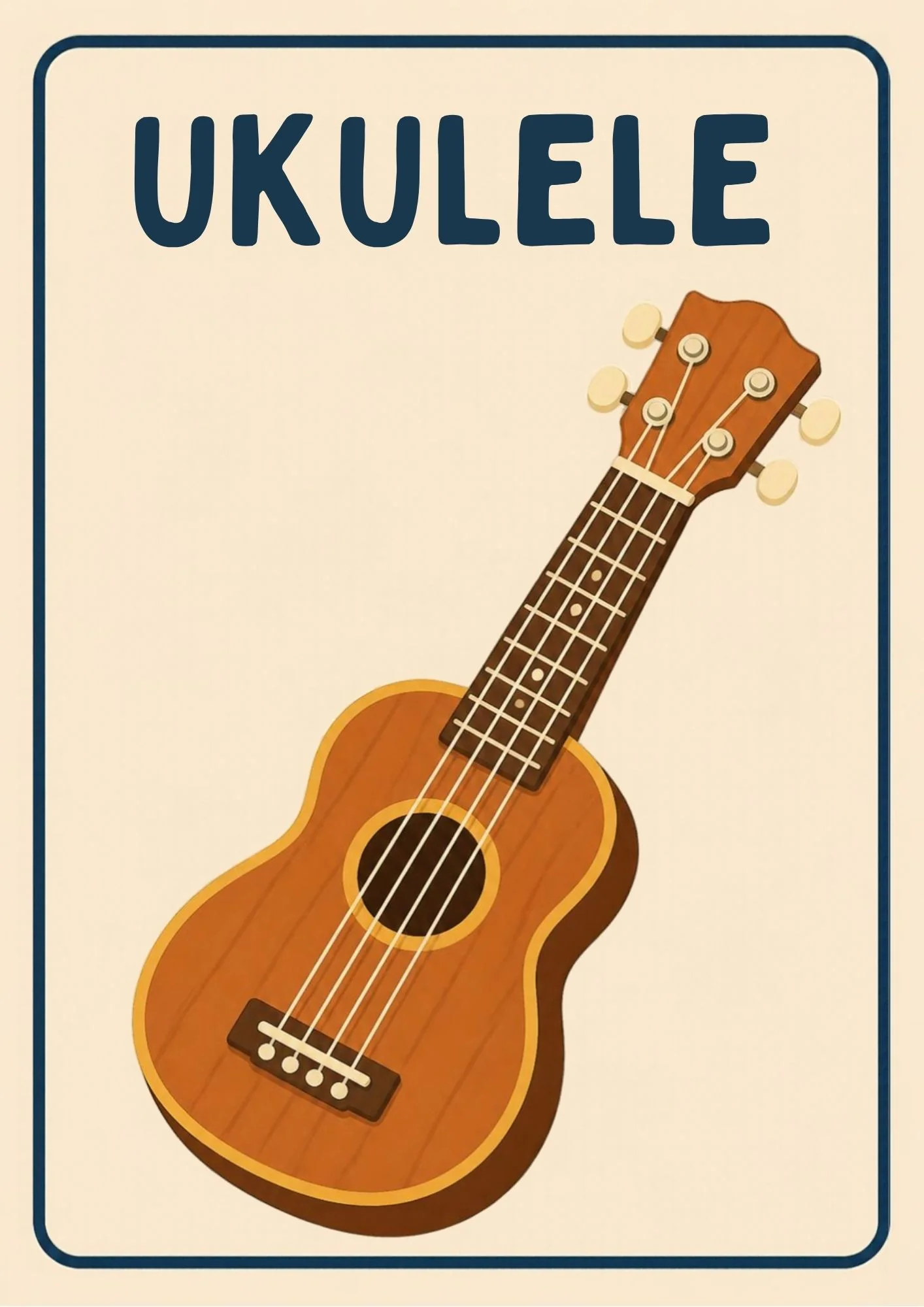
What is this?
A ukulele is a small four-string guitar from Hawaii: nylon strings that are kind to small fingers, a short neck that fits small hands, and a bright, sunny strum. Its name means "jumping flea" — the fingers dance that fast.
What does it mean?
The ukulele is the guitar’s lesson at half the difficulty: strum-pick lives here too, but the strings are soft, the stretches are small, and ONE finger can hold a whole chord. First real songs arrive in days, not months.
What does the child need to know?
Your child needs three ukulele ideas: four strings, soft NYLON — gentle on fingertips, unlike steel; one finger can press a whole chord — the famous one-finger wonder; and the strum is a relaxed wrist brush — swish — the island heartbeat.
Why this matters
First-song-in-a-week is the ukulele’s superpower — and the confidence of actually PLAYING a song, tiny hands and all, is the musical milestone families remember.
What it teaches
One-finger chording (real harmony, immediately), wrist strumming, four-string tracking, and the joy of singing WHILE strumming — two-track, island style.
Words to learn
ukulelefour stringsnylonchordstrumHawaiiflea
Say this to your child
“"The ukulele is the guitar’s small, sunny cousin! Four soft nylon strings, a body that fits your arms — and the one-finger wonder: press one finger down and you hold a whole CHORD! Then the island strum: swish, swish, loose wrist — and suddenly you are playing a real song. Its name means jumping flea: your fingers dance that fast!"”
Step by step
- Show the card: "This is a ukulele — the guitar’s small, sunny cousin from Hawaii."
- The four strings: fewer than the guitar’s six, softer nylon, shorter neck — everything child-sized, on purpose.
- The one-finger wonder: lay ONE finger flat across a string pair — a chord! Harmony with one finger; the guitar asks for two or three.
- The island strum: loose wrist, brush down — swish. Brush up — swish. Swish-swish is the ukulele’s heartbeat.
- Play the first-song game below and close: "four strings, one finger, sunny swish."
Look closer at the picture
On this card the word "Ukulele" stands in big navy capitals inside the rounded frame, with a friendly illustration of the small ukulele below — exactly as the sunny four-string looks.
Ask your child
"How many strings does a ukulele have? What are they made of — steel or soft nylon? How many fingers for the first chord?"
What your child can say or do
Your child might say: "Four strings, soft nylon!" "One finger — a whole chord!" or the strummer: "Swish-swish — I’m playing a song!"
Out in the real world
Ukuleles fill classrooms from Hawaii to Auckland to Vancouver — soft strings, small necks, fast songs. And the one-finger chord lives on every rubber-band box: one finger, one harmony, one very proud musician.
Try it together
First Song Tonight: box ukulele or real one. One-finger chord held, island strum going — swish, swish — while everyone sings a two-line song together (any favourite works). The strummer holds the chord the WHOLE song: one finger, real harmony, full song. Then the flea race: strum faster — swishy-swishy — the flea jumps! Sung, strummed, done: first concert, first encore.
Understanding check
Ask: "How many strings? Why are nylon strings friendly? What is the one-finger wonder?" Four, soft on fingers, the one-finger chord — three answers and the island sings.
Parent tips
Nylon before steel, always — finger-kind strings keep beginners strumming. And hold the chord FOR them the first song if needed: the strum plus the sing is the memory; the fingering follows.
This lesson pairs with the Ukulele flashcard in the library — print it, show it, keep it on the fridge. Back to Music Room (Class 23).