
Climb — a step-by-step lesson for grown-up and child
This lesson teaches climbing the way playground teachers wish every child learned it: three points touching, legs doing the pushing, and the down-climb respected as much as the up.
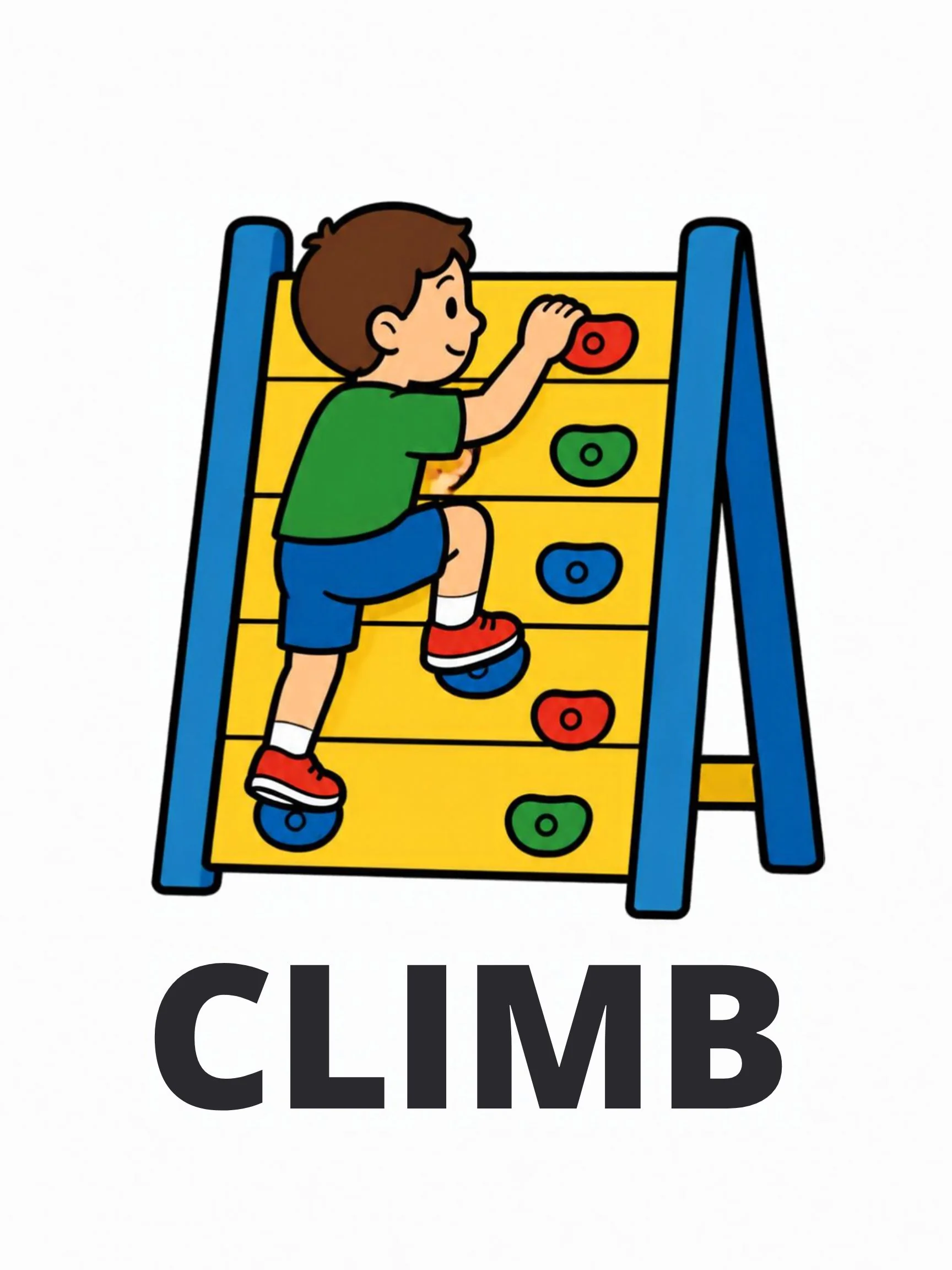
What is this?
Climbing is going up using hands and feet together: grip with the hands, push with the legs, and keep three of the four touching the ladder or frame while one limb moves.
What does it mean?
The three-point rule is climbing’s safety spine — one move at a time, three holds always. And the down-climb is the hidden curriculum: children who practise coming down carefully never make the panicked drop.
What does the child need to know?
Your child needs three climb ideas: three points touch while ONE moves — count them out loud; the legs PUSH more than the arms pull — strong climber legs; and down is climbed, not jumped — feet find the rung below by looking.
Why this matters
Climbing builds grip, sequencing and nerve — and the three-point habit, learned at two on a low ladder, is the same habit that keeps five-year-olds sensible on the high frame.
What it teaches
Alternating grip strength, cross-lateral stepping, rule-keeping under excitement, and the down-skill — planning the descent.
Words to learn
climbgripthree pointsrungdownsteadyup
Say this to your child
“"Climbing is hands and feet together up the ladder — with the three-point rule! Three points always touch: two hands and a foot, or two feet and a hand — and only ONE limb moves at a time. Your legs do the pushing, your hands do the gripping. And coming down? Down is climbed too — slower than up!"”
Step by step
- Show the card: "This is climb — up the ladder with hands and feet together."
- Three points: hands and feet on the ladder — count them: one hand, two hands, one foot, two feet… FOUR points! Now move ONE — three points stay. That is the rule.
- Legs push: the arms grip, the LEGS lift — "your legs are the strong ones." Practise a step where the foot does the work.
- The count-climb: climb slowly, saying "three points… move… three points… move."
- Practise the DOWN slowly too, then play the climb games below: "up slow, down slower."
Look closer at the picture
On this card the word "Climb" stands in big navy capitals inside the rounded frame, with a friendly climbing illustration below — exactly as the ladder climb looks.
Ask your child
"How many points stay touching? Which muscles push — arms or legs? How do we come down — jump or climb?"
What your child can say or do
Your child might say: "Three points touch!" "My legs are the strong ones!" or the down-climber: "Down slower than up!"
Out in the real world
Climbing frames, ladders, stairs and big couches — the three-point rule transfers to every one. Count the points on the stairs tonight: the habit walks home.
Try it together
Count-Climb Ladder: a low ladder or playground rungs. Climb up with the count out loud — "three points… move… three points" — then climb DOWN with the same count, feet finding each rung by looking. Then the soft-step game: from the lowest rung, place both feet back on the ground one at a time — no jumps, just placement. Up slow, down slower: the rule that grows with the frame.
Understanding check
Ask: "How many points touch? What do the legs do? Jump or climb down?" Three, push, climb — three answers and the ladder is safe.
Parent tips
Stay below and slightly behind on early climbs — a spotting shadow, not a crane. And never rush the down: the child who can down-climb will never freeze at height.
This lesson pairs with the Climb flashcard in the library — print it, show it, keep it on the fridge. Back to Playground.