
Push — a step-by-step lesson for grown-up and child
This lesson teaches pushing — force that goes AWAY from you: hands flat, knees bent, and the power arriving from the legs, not the shoulders.
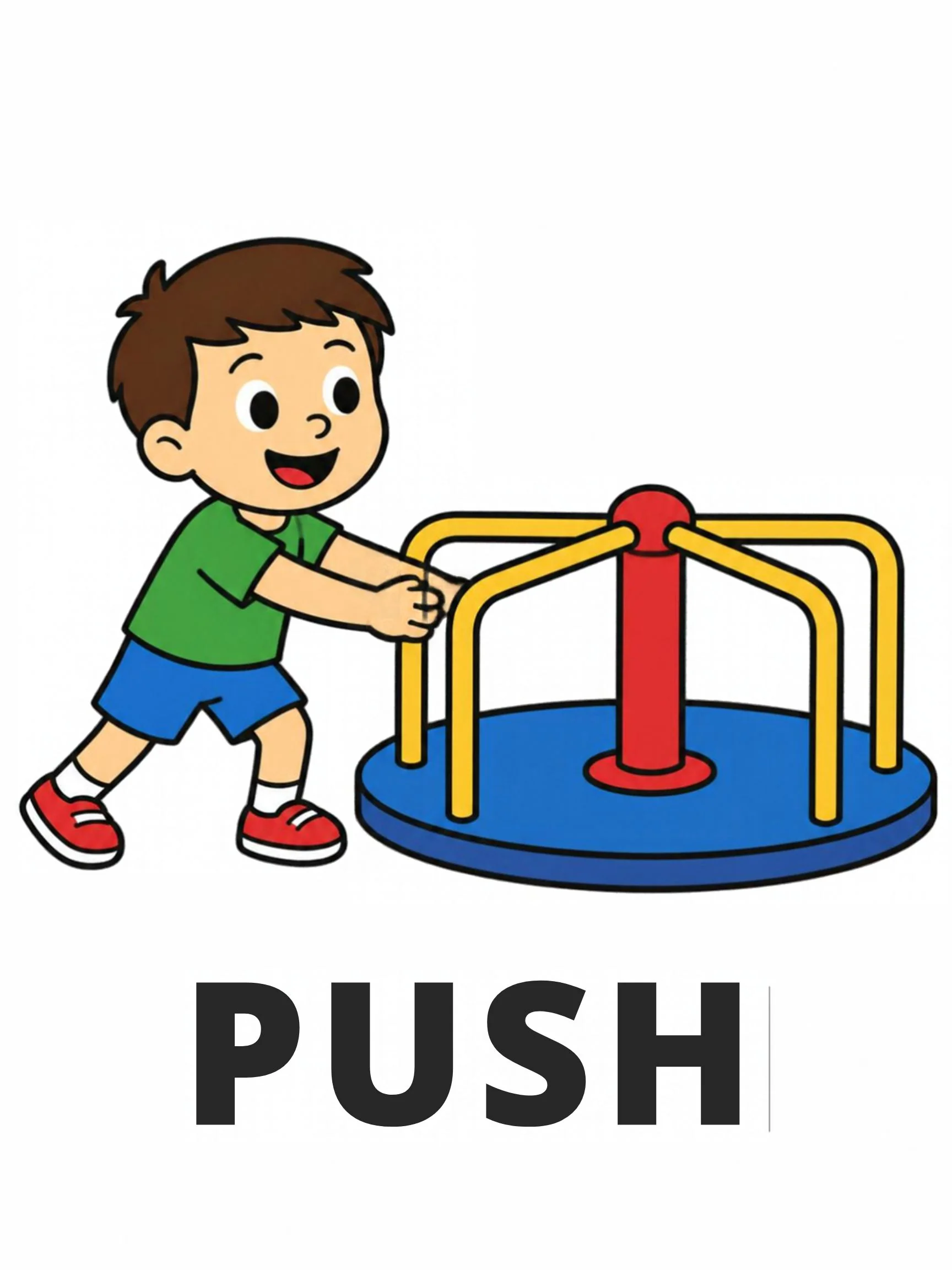
What is this?
Push is sending something away from the body: the swing start, the box across the floor, the door opening, the merry-go-round — flat hands, bent knees, steady force.
What does it mean?
Pushing is the wall’s every-day strength move, and its secret is the same as pulling’s mirror: the legs supply the force, the arms just aim it. And gentle steady pushes beat wild shoves — especially on swings and little brothers.
What does the child need to know?
Your child needs three push ideas: push travels AWAY — from the chest or the hands, out into the world; the knees bend so the LEGS can help — straight-arm shoulder-shoving is weak and wobbly; and steady beats wild — three gentle pushes move more than one smash.
Why this matters
Pushing starts every swing ride and merry-go-round, opens every heavy door — and the steady-push habit is also the gentle-hands lesson for smaller siblings.
What it teaches
Pushing force with leg drive, force control (gentle to strong), hand placement (flat, spread), and the swing-timing introduction.
Words to learn
pushawayflat handskneessteadygentleswing
Say this to your child
“"Pushing goes AWAY from you! Flat hands, fingers spread — a steady platform. And bend your knees: the legs are the engine, the arms just aim. Steady beats wild — three gentle pushes make a swing soar where one smash barely moves it. Push away, push steady, push strong!"”
Step by step
- Show the card: "This is push — sending it away from you!"
- The flat hands: palms flat, fingers spread on the target — a steady platform, not fingers poking.
- The legs help: push a box with straight legs (weak!), then with bent knees (strong!). The legs are the engine here too.
- Steady beats wild: one smash moves a swing once; three steady pushes make it soar. Practise the gentle-push rhythm.
- Play the push games below and close: "flat hands, bent knees, steady."
Look closer at the picture
On this card the word "Push" stands in big navy capitals inside the rounded frame, with a friendly pushing illustration below — exactly as the flat hands look.
Ask your child
"Which way does a push go? Where is the engine? What wins — one smash or three steady pushes?"
What your child can say or do
Your child might say: "Away from me!" "Legs help — bent knees!" or the swing-starter: "Three steady pushes — look how high!"
Out in the real world
Pushes open every heavy door, start every swing, load every shopping trolley — and the bent-knee stance transfers to all of them. The gentle-push rhythm is also the little-brother treaty.
Try it together
Swing Starts: at the playground swing or a rope swing at home — three steady pushes from behind, hands flat, knees bent, watching the swing’s rhythm. Count together: push… two, three… push! Then the box relay: push a loaded box around a chair-slalom — steady pushes only, wild ones restart the course. Flat hands, bent knees, steady: the pusher’s whole craft.
Understanding check
Ask: "Away or toward? What is the engine? What wins the swing?" Away, the legs, steady — three answers and the push is smooth.
Parent tips
Watch-the-rhythm is the swing lesson — push WITH the swing, never against. And the wild-push restart rule keeps the box relay honest and hilarious.
This lesson pairs with the Push flashcard in the library — print it, show it, keep it on the fridge. Back to Playground.