
Fence — a step-by-step lesson for grown-up and child
This lesson teaches the fence — the playground’s border that says: inside here, everything is yours; the fence is not a wall against fun, it is the fun’s own edge.
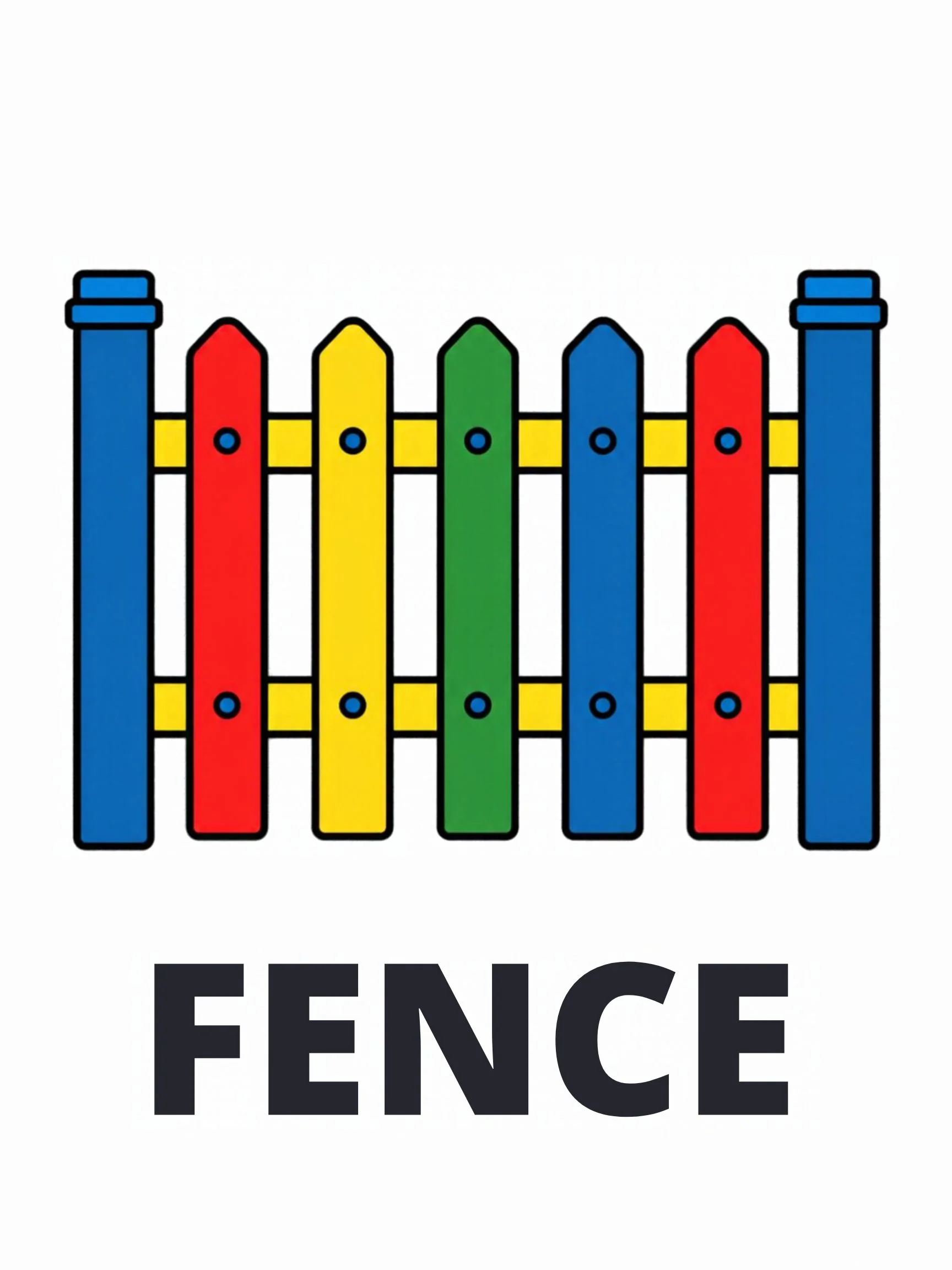
What is this?
A fence is the border around the playground: bars or panels that mark where the play world ends. It keeps riders, runners and roamers inside the safe zone — and the gate is its one polite door.
What does it mean?
The fence teaches boundaries as kindness: inside the fence, every game is allowed; the edge is where children check in with their grown-up. Freedom feels bigger, not smaller, when its edge is known.
What does the child need to know?
Your child needs three fence ideas: the fence marks the play world — inside is yours, explore it all; the edge is a CHECK-IN spot — back to the fence means back to the grown-up’s eyes; and the gate is the one door — opened and closed by grown-ups, never the escape hatch.
Why this matters
Boundary awareness is the safety skill under all free play — a child who knows the edge plays braver INSIDE it, and the check-in habit is the reunification skill every crowded place needs.
What it teaches
Boundary awareness, check-in habit-building, gate manners, and the secure-base idea — edges make exploration brave.
Words to learn
fenceborderedgeinsidegatecheck-inboundary
Say this to your child
“"The fence is the playground’s border — and inside it, everything is YOURS! The swings, the sand, the whole play world. The fence’s one job is the edge: when you reach it, look back and WAVE — a check-in with your grown-up. And the gate is the one polite door — it belongs to the grown-ups. Free inside, waving at the edge: that is how the playground stays kind."”
Step by step
- Show the card: "This is the fence — the playground’s own border."
- Inside is yours: the fence marks the play world — every swing, slide and sandbox inside is yours to explore.
- The edge check-in: when you reach the fence, look back to your grown-up — a wave is a check-in. Edges are for waving.
- The gate rule: the gate is the one door, and it belongs to the grown-ups — players play inside; leaving is a check-in, not a solo mission.
- Play the boundary games below and close: "inside is yours, wave at the edge."
Look closer at the picture
On this card the word "Fence" stands in big navy capitals inside the rounded frame, with a friendly fence illustration below — exactly as the border bars look.
Ask your child
"What does the fence mark? What do we do at the edge? Whose door is the gate?"
What your child can say or do
Your child might say: "Inside is all mine!" "Wave at the edge — check-in!" or the gate-keeper: "The gate belongs to the grown-ups!"
Out in the real world
Fences border every playground, school yard and pool — and the check-in wave works at every beach, party and supermarket too: edge means eyes-to-grown-up. The bravest explorers know their edges.
Try it together
Edge Check-In Game: at the playground or garden, practise the wave-at-the-edge — run an errand to the fence, turn, wave big, run back. Three check-ins, each greeted with a wave back and a cheer. Then the gate walk: approach the gate TOGETHER, name whose door it is, walk away to play. Inside is yours; the edge is friendly; the game is freedom with a wave.
Understanding check
Ask: "What does the fence mark? What happens at the edge? Whose is the gate?" The play world, a wave check-in, the grown-ups’ — three answers and the freedom is safe.
Parent tips
Greet every check-in wave warmly — a dull response trains fewer waves. And name the fence’s job as kindness, not restriction: the edge is why the inside can be wild.
This lesson pairs with the Fence flashcard in the library — print it, show it, keep it on the fridge. Back to Playground.