
Climbing Frame — a step-by-step lesson for grown-up and child
This lesson teaches the climbing frame — the playground’s mountain — crossed with the three-point rule, a planned route, and the proud descent.
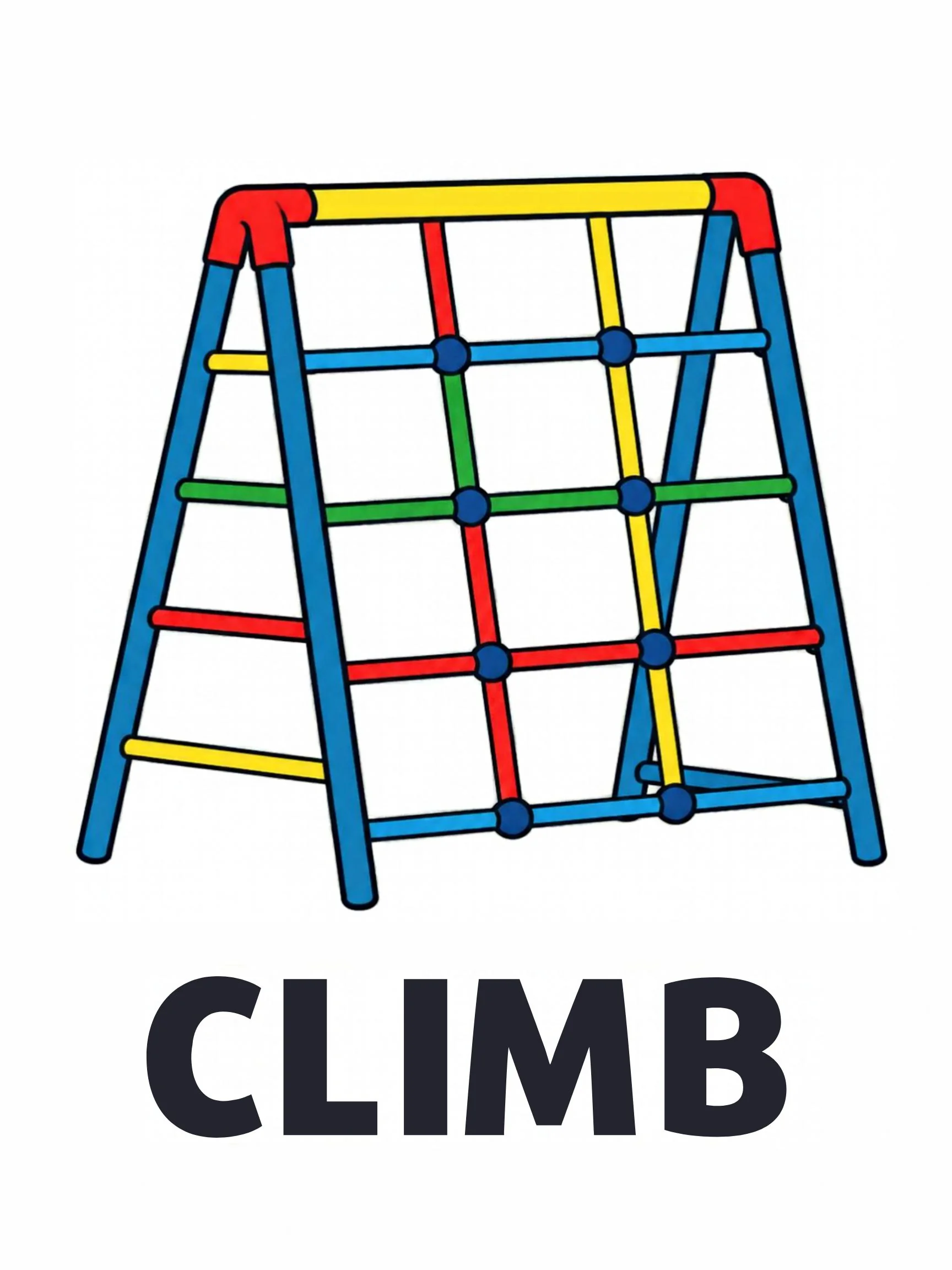
What is this?
A climbing frame is a structure of bars, rungs and platforms built for going up, across and down: ladders, nets and poles joined into one mountain of possibilities.
What does it mean?
The frame is where the action lessons meet: climbing’s three-point rule, balance’s steady beams, the planned route — it is a whole curriculum in steel. And the route-plan is the thinking skill: eyes climb first, body follows.
What does the child need to know?
Your child needs three frame ideas: the three-point rule runs every crossing — three touch, one moves; plan the route BEFORE climbing — eyes climb first; and space your riders — one body per bar-section, no stacking.
Why this matters
Frame play grows real bravery: height, planning and the proud down-climb. A child who plans a route and completes it has done architecture, athletics and courage in one go.
What it teaches
Route planning (visual-motor sequencing), three-point crossing, spacing awareness (others on the frame), and the proud planned descent.
Words to learn
climbing framerouteplanthree pointscrossplatformdown
Say this to your child
“"The climbing frame is the playground’s mountain — and mountains are crossed with a PLAN! Eyes climb first: name your route — ladder, across, down. Then the three-point rule all the way: three points touch, one moves. One rider per section — the frame is big enough when nobody rushes. Plan it, cross it, and come down PROUD!"”
Step by step
- Show the card: "This is the climbing frame — the playground’s mountain!"
- Eyes climb first: look the route over — which ladder, which bar, which platform? Say it out loud: "ladder, across, slide down." Plan before hands.
- Three points, always: on any crossing — three touch, one moves. Count it like the ladder lesson.
- Space the riders: one body per section — if someone is on the bridge, wait at the platform. The frame is big enough when nobody rushes.
- Play the route games below and close: "plan, cross, proud down."
Look closer at the picture
On this card the words "Climbing Frame" stand in big navy capitals inside the rounded frame, with a friendly frame illustration below — exactly as the mountain of bars looks.
Ask your child
"What climbs first — eyes or hands? How many points touch? How many bodies per bar-section?"
What your child can say or do
Your child might say: "Eyes climb first — I named my route!" "Three points, one move!" or the spacer: "I waited at the platform — the bridge was busy!"
Out in the real world
Climbing frames stand in every park and school yard — and the route-plan habit transfers to every new one: eyes first, always. The proud down-climb is the courage certificate.
Try it together
Route-Naming Club: at the frame, each climber NAMES their route aloud — "ladder up, bar-bridge across, pole down" — then climbs it with the three-point count. Then the new-route round: invent a DIFFERENT way across than last time. Finish with the proud descent: down slow, feet landing on purpose, arms up at the bottom: "I planned it, I crossed it!" The mountain respects planners.
Understanding check
Ask: "What climbs first? What is the crossing rule? What does a proud climber do at the bottom?" The eyes, three-points, arms up — three answers and the mountain is crossed.
Parent tips
Name-routes-before-hands every single time — the spoken plan is the safety plan. And celebrate the WAITING at platforms as much as the crossing: spacing is frame-manners.
This lesson pairs with the Climbing Frame flashcard in the library — print it, show it, keep it on the fridge. Back to Playground.