
Help — a step-by-step lesson for grown-up and child
This lesson teaches help — the helper’s eye: spotting someone who needs a hand, offering BEFORE being asked, and helping in a way that feels kind.
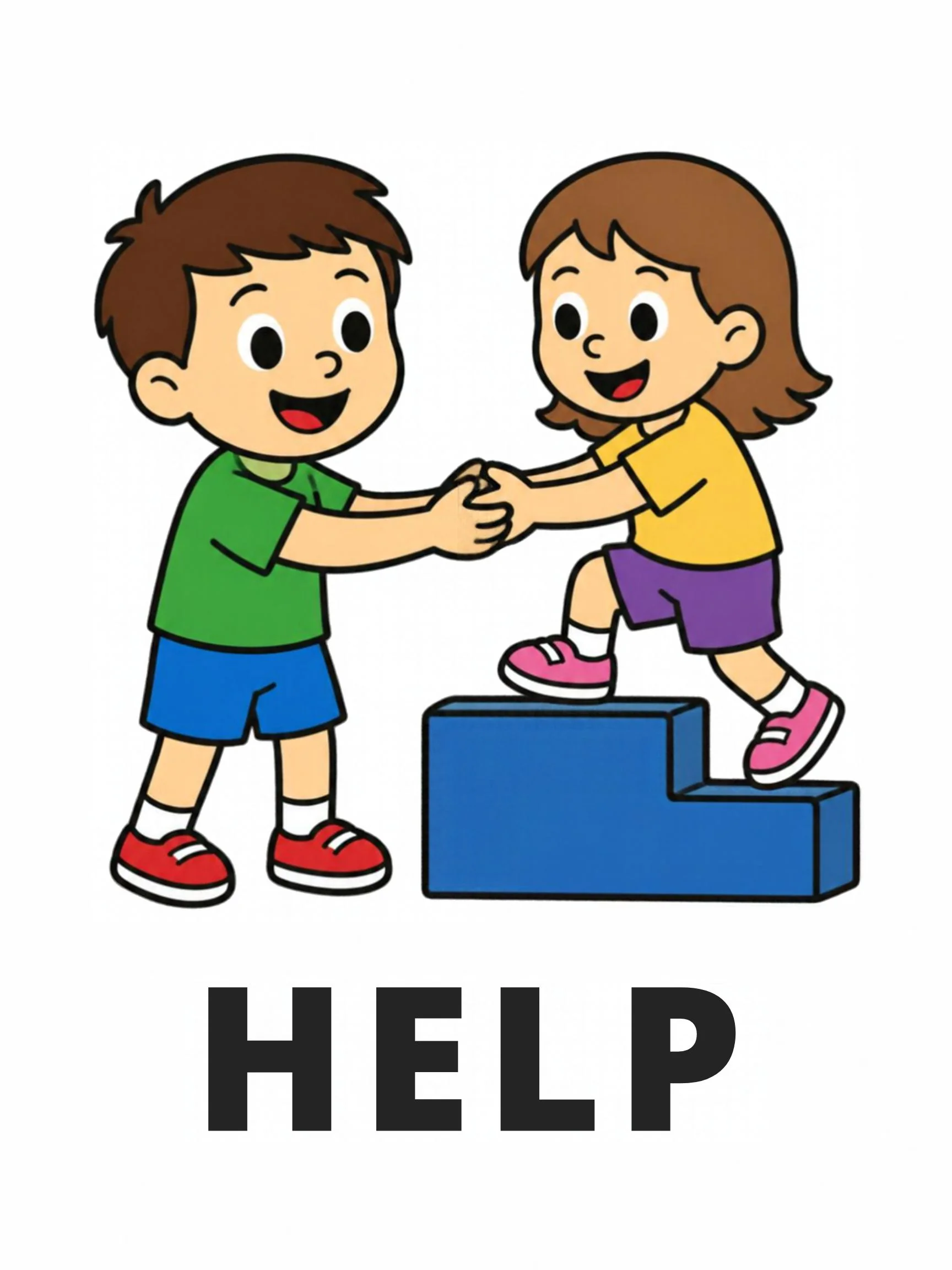
What is this?
Help is giving someone a hand with what they cannot do alone: lifting the heavy bucket, reaching the high bar, picking up the dropped spade — spotted, offered and done kindly.
What does it mean?
Helping is the playground’s quiet hero skill, and it has a craft: the SPOT (look around for the stuck, the dropped, the heavy), the OFFER ("want help?"), and the KIND way (helping WITH, not doing FOR).
What does the child need to know?
Your child needs three help ideas: helpers SPOT — eyes scan for someone stuck, dropped or heavy-laden; helpers OFFER first — "want help?" beats grabbing in; and helping is WITH — carry one side of the bucket, don’t take the whole job over.
Why this matters
A playground with helpers is a different playground — and the offer-first habit is the social skill that makes help land as kindness, not takeover.
What it teaches
Awareness of others’ needs, the offer-before-act habit, cooperative carrying, and the feeling of being useful — pride that invites more helping.
Words to learn
helpspotofferhandcarrytogetherkind
Say this to your child
“"Help is the helper’s eye — spotting who needs a hand! Look around: someone is stuck, someone dropped their spade, someone carries something heavy. Walk over and OFFER: ‘Want help?’ Then help WITH — one side of the bucket, one end of the job — helping together, never taking over. Helpers make the whole playground warmer!"”
Step by step
- Show the card: "This is help — the helper’s eye!"
- The spot: look around the playground — who is stuck? who dropped something? who carries something heavy? The helper’s eye finds them.
- The offer: walk over and ASK — "want help?" Offering first makes help kind.
- Helping WITH: carry ONE side of the bucket, hold ONE end of the ladder — helpers share the job, they don’t steal it.
- Play the helper games below and close: "spot, offer, help with."
Look closer at the picture
On this card the word "Help" stands in big navy capitals inside the rounded frame, with a friendly helping illustration below — exactly as the offered hand looks.
Ask your child
"What does the helper’s eye do? What do we say before helping? What is helping WITH?"
What your child can say or do
Your child might say: "I spotted the stuck one!" "Want help? — I offered first!" or the co-carrier: "I carried one side — helping with!"
Out in the real world
Help moments fill every day: the dropped shopping, the stuck zip, the heavy door — spot, offer, help-with works at every age and every scale. The playground is just the training ground.
Try it together
Helper Scan: walk the playground (or the house) on a helper mission — scan for one thing that needs a hand: a toy on the high shelf, a door, a spilled basket. Offer first, help with, and hear the thank-you. Then the bucket drill: two carriers, one loaded bucket — one side each, walking in step. Three helps a day: the helper’s eye grows on use.
Understanding check
Ask: "What does the helper’s eye do? What comes first — offering or grabbing? What is the WITH rule?" Spots, offering, share the job — three answers and the playground warms up.
Parent tips
Praise the OFFER even when help is refused — "great offering!" builds the habit independently of the outcome. And the WITH rule is the kindness core: helpers share jobs, not confiscate them.
This lesson pairs with the Help flashcard in the library — print it, show it, keep it on the fridge. Back to Playground.