
Share — a step-by-step lesson for grown-up and child
This lesson teaches sharing — the maths of kindness: one toy, two friends, traded time — and the magic sentence that opens every shared game.
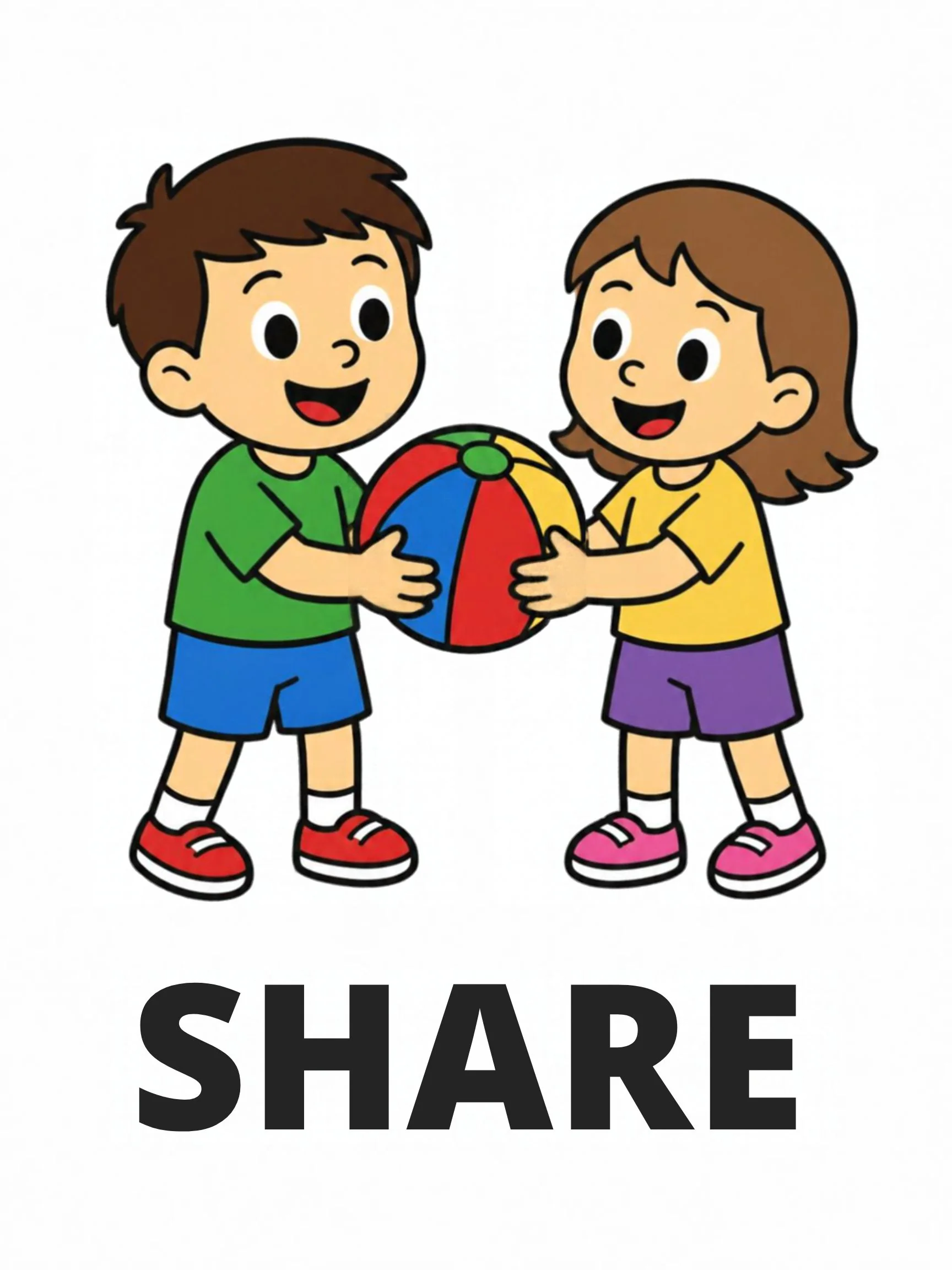
What is this?
Share is letting someone use what you have: trading time on the swing, splitting the sand toys, passing the ball — sharing turns one toy into a two-person game.
What does it mean?
Sharing is not losing — it is the trade that makes games bigger: one ball hoarded is one bored child; one ball shared is a catch game. And the share sentence — "want a go?" — is the whole skill in three words.
What does the child need to know?
Your child needs three share ideas: sharing is TRADED TIME — not giving away forever; the share sentence opens it — "want a go?"; and sharing grows the game — shared toys make shared friends.
Why this matters
The child who shares is never short of playmates — and the traded-time framing (rather than give-it-away) keeps sharing feeling fair, which is why it sticks.
What it teaches
Turn-within-play, the offer sentence, delayed satisfaction (my turn comes back), and the social maths — shared play is bigger play.
Words to learn
sharetradeturnwant a gotogetherfairkind
Say this to your child
“"Sharing is the maths of kindness! It is not giving away — it is TIME TRADES: your go, then my go, then yours again. And the magic sentence is ‘want a go?’ — say it before anyone asks! One ball alone is one game; one ball shared is CATCH — sharing grows the game. Share-first hands have the most friends on the playground."”
Step by step
- Show the card: "This is share — the maths of kindness!"
- Traded time: sharing is not giving away — it is TIME TRADES: your go, then my go, then yours again. Practise the trade out loud.
- The share sentence: "want a go?" — three words that open every toy. Say it before being asked: share-first is the superpower version.
- The maths: one ball alone is one game; one ball shared is catch, and catch is bigger. Sharing grows the game!
- Play the share games below and close: "want a go? — traded time, bigger game."
Look closer at the picture
On this card the word "Share" stands in big navy capitals inside the rounded frame, with a friendly sharing illustration below — exactly as the kind trade looks.
Ask your child
"Is sharing giving away or trading time? What is the magic sentence? What does sharing do to the game?"
What your child can say or do
Your child might say: "Traded time — my go comes back!" "Want a go? I said it first!" or the maths fan: "Shared ball = catch game!"
Out in the real world
Shares run every playdate, family and classroom — traded time works for bikes, tablets and swings alike. And share-first is the playground’s fastest friendship strategy.
Try it together
Trade-Clock: one beloved toy, two players. The holder offers — "want a go?" — and the trade happens on a count (ten swings of the swing, ten sandcastles, ten bounces) — then TRADE BACK. The clock makes the return certain, which is what makes sharing safe. Then share-first round: the toy is offered BEFORE any ask. Ten trades, zero grabbing, one very social toy.
Understanding check
Ask: "What is sharing — giving away or trading? Say the magic sentence. What grows when we share?" Trading, "want a go?", the game — three answers and the hands are kind.
Parent tips
The countable trade is the training wheels — certain return teaches generous offering. And praise share-FIRST louder than share-when-asked: the superpower version deserves the spotlight.
This lesson pairs with the Share flashcard in the library — print it, show it, keep it on the fridge. Back to Playground.