
Ball — a step-by-step lesson for grown-up and child
This lesson puts B straight into the body: your child pops their lips for the b sound, bounces a ball on every b, and traces their way around the roundest letter pair there is.
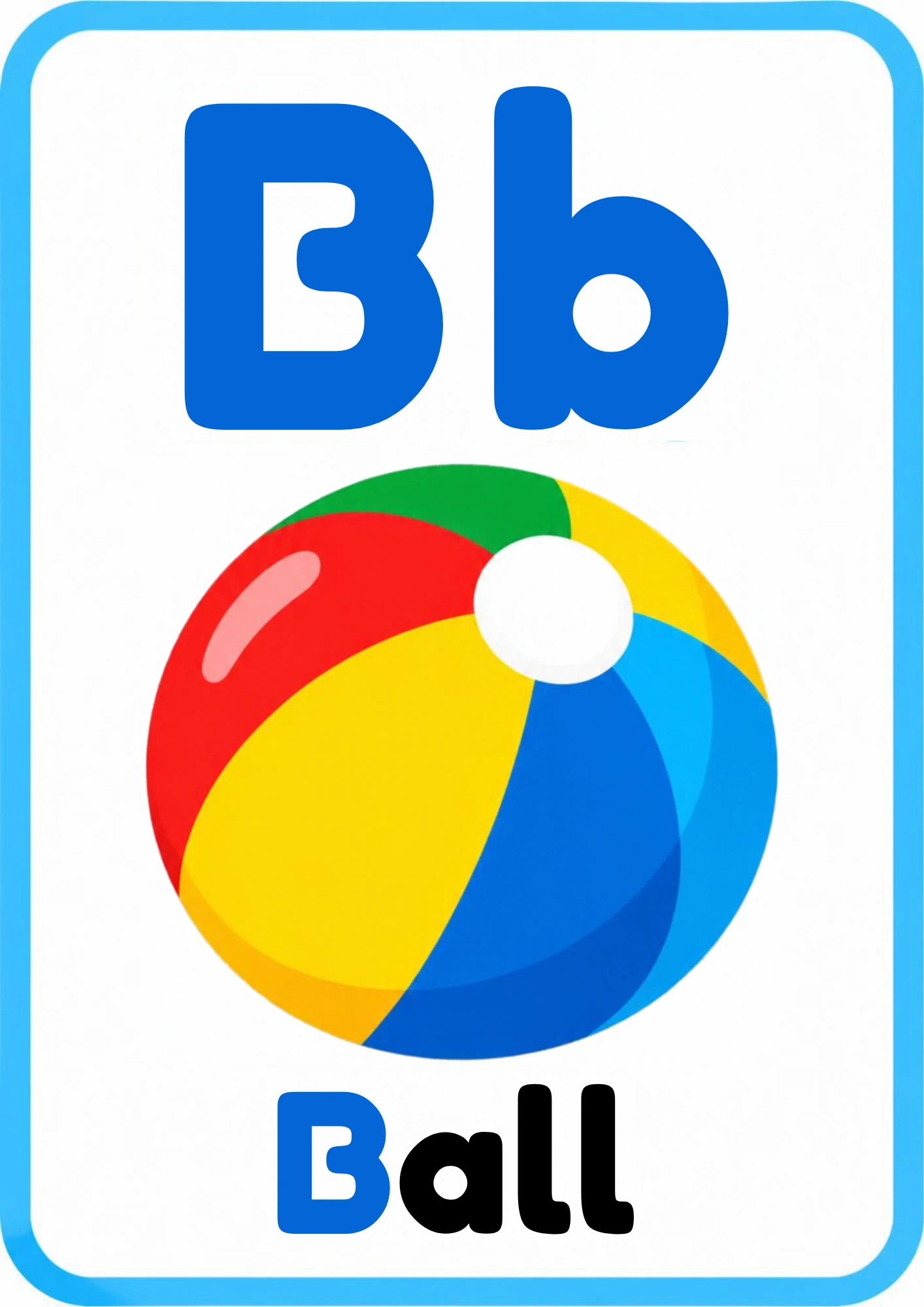
What is this?
B is the second letter of the alphabet. Big B and little b make the b sound — a quick pop made by pressing the lips together and letting them spring open.
What does it mean?
B is one of the sounds children can literally feel — lips together, pop. Sounds with a body-feeling stick fastest, and B’s feeling comes with a ball attached.
What does the child need to know?
The letter is called B; the sound is a clean quick b — say it short, without dragging an uuu behind it. B and d look like mirror twins and get mixed up for years; that is normal, not a problem to fix today.
Why this matters
A sound your child can make, feel and bounce is unforgettably physical. And the early B-d mix-up is worth knowing about calmly in advance, so it never becomes a worry for either of you.
What it teaches
Mouth-muscle awareness (lips pop, voice hums), letter recognition in two cases, sound-and-action pairing, throwing-catching gross motor work, and first sound-hunting in everyday words.
Words to learn
Bballbouncelipspopsound
Say this to your child
“"This is the letter B — hello, B! B says b, like a tiny pop. Lips together... pop it open: b! Can you feel your lips do it? Now trace the big B with me — down, bump, bump — and the little b. Every time we bounce the ball, we say b. Ready? Bounce... b!"”
Step by step
- Show the card and introduce the pair: this is the letter B, and this is a ball — say both, then bounce an imaginary one.
- Make the sound clean: press your lips together and pop them open — b! Short and neat. Try b three times, quieter each time.
- Trace big B — stick down first, then two bumps — and little b: a tall stick with one belly. Your child’s finger does the writing.
- Bounce and say: every time the ball hits the floor, out comes the b sound. Bounce-catch-b — the sound lands with the ball.
- End with a b-hunt around the house: bubble bath, bread, a bear — collect three b things by pointing and naming.
Look closer at the picture
Find the big uppercase B and the little lowercase b on the card, then the ball and the word Ball. Ask which letter is taller — B stands on the line, little b hangs from a stick that reaches up.
Ask your child
"What is this letter called?" "What sound does B make?" "Can you feel your lips pop?" "What b-words can we find in this room?" — answered with a name, a clean b, a lip-touch and an enthusiastic hunt.
What your child can say or do
"B! B-b-b-ball!" Expect lip-pops at strangers’ names, b-sounds attached to every bounced object, and B announced on buses and birthday cards. Bouncing and b may become permanently married. That is the plan working.
Out in the real world
B starts half of childhood: ball, bath, banana, bubble, bath, bed. Every b-word at home is a chance to make the pop — and buses and bats outside are free sightings all day long.
Try it together
Bounce counting: bounce the ball five times, one b sound per bounce, then let your child bounce while you supply the sounds. Swap roles — being the sound-person is the phonics practice; being the bouncer is the reward.
Understanding check
Ask what B says: a quick clean b with lips popping means the sound is honest and installed. A little b traced in the air completes the pair.
Parent tips
If the b gains a trailing uuu (buh), model the short version without correcting — "listen: b!" — and carry on. Keep the bounce game to soft balls and safe floors; the sound survives a missed catch.
Staying safe
Bouncing needs ceiling clearance and no breakables in the arc — hallway or outdoors is best. Balls stay out of faces, and the game ends before frustration turns a phonics lesson into a protest.
This lesson pairs with the Ball flashcard in the library — print it, show it, keep it on the fridge. Back to Alphabet A–Z (Preschool).