
Arms — a step-by-step lesson for grown-up and child
This lesson reaches out. Arms are the long levers between shoulders and hands — they lift, swing, wrap and carry — and they are the body part your child uses most for the things that matter most: holding on and hugging.
What is this?
Arms are the two long parts between the shoulders and the hands. They reach up high, stretch out wide, lift and carry, swing when walking, and wrap around for hugs. At the end of every arm is a hand — the arms deliver it wherever it needs to go.
What does it mean?
Arms are the delivery system for the hands: everything hands do, arms reach for first. They are also the hug machines — the wrap-around part of every cuddle — and the balancers, flung out wide whenever a beam or a curb needs crossing.
What does the child need to know?
Your child needs to know: arms reach, lift, carry, swing and hug, they connect the shoulders to the hands, they stretch in three useful shapes — up like a tree, out like an airplane, around like a hug — and sleeves are the tunnels arms travel through when dressing.
Why this matters
Arm strength and control power the whole preschool day: climbing, carrying chairs, painting big, catching balls. Naming the arms and playing their shapes builds the vocabulary of movement — reach, lift, stretch, wrap — that PE lessons and playgrounds run on.
What it teaches
Gross-motor reach, lift and carry strength, spatial language (up, out, around), dressing independence through sleeve practice, and the emotional work of hugging — arms as the instruments of comfort.
Words to learn
armshugreachliftstretchswing
Say this to your child
“"These are your arms — the long reachers! They lift, they carry, they swing when you walk, and they wrap around for the very best hugs. Up like a tree… out like an airplane… around like a hug! And every sleeve is a tunnel your arm travels through. Ready for cargo?"”
Step by step
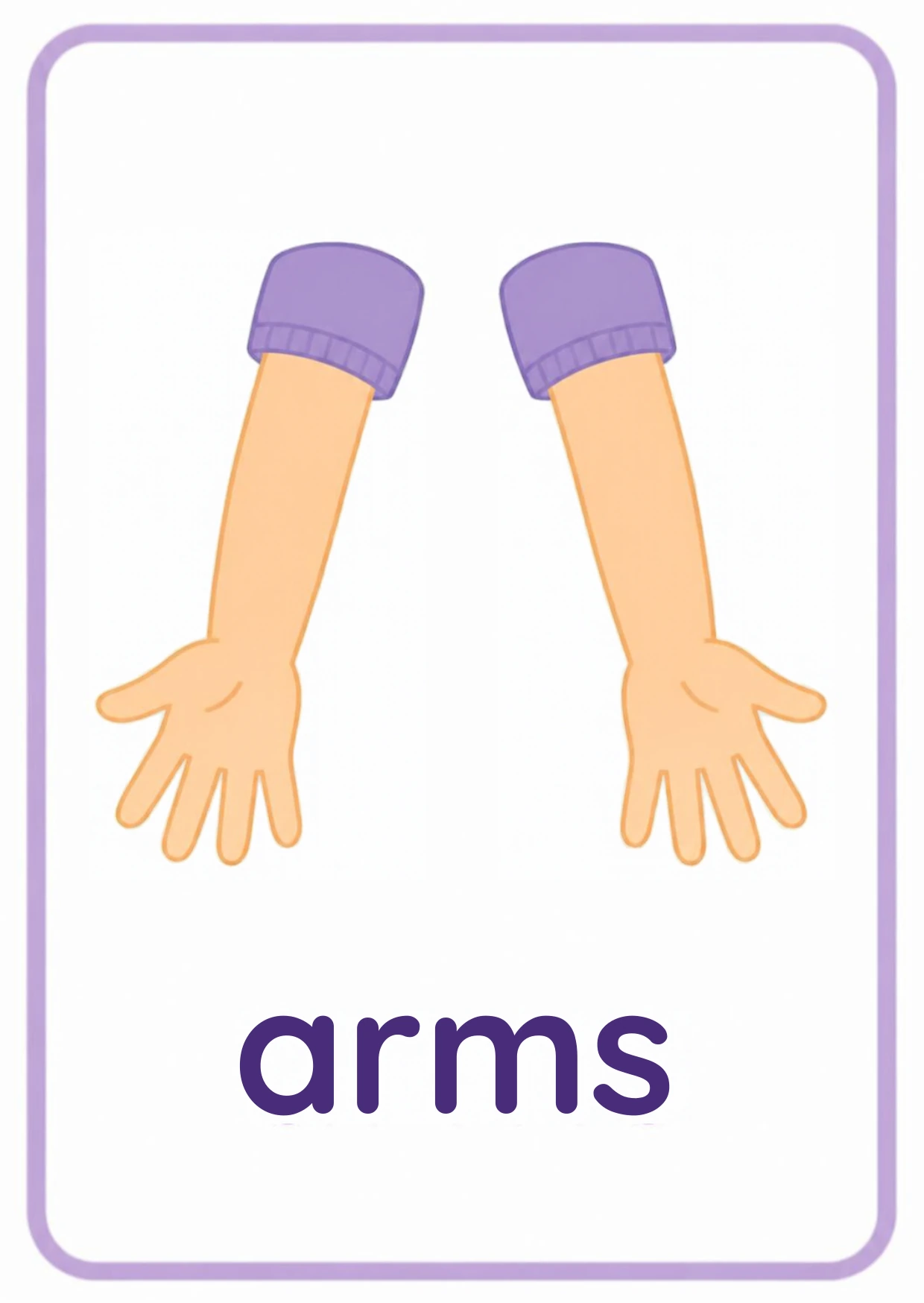
- Show the card: two arms reaching down from purple sleeves, hands open. Ask what they are doing, then name them: arms.
- Find your child’s arms: trace from shoulder to hand. Squeeze gently — the arm is the long part that delivers the hand.
- Play the three shapes: arms up like a tree, arms out like an airplane, arms wrapped around your own body like a self-hug. Hold each one for three seconds.
- Test the lifting: hand your child a light bag, a cushion, a teddy — the arms carry it across the room. Real cargo makes real pride.
- Finish with the sleeve game: push one hand through a sleeve and out the other end — where did it go? Arm in, arm out, arm through: dressing is arms practice.
Look closer at the picture
Look at the picture together: what are the arms doing — reaching down? Are the hands open? What color are the sleeves? What word sits with the arms?
Ask your child
"What do your arms do?" "Show me all three arm shapes — tree, airplane, hug." "What did your arms carry today?" "What is the tunnel arms go through when we dress?"
What your child can say or do
Your child may deliver the three arm shapes as a daily routine, report every carried object as arm-work, or wrap both arms around your neck at pickup with the word attached — hug delivered, by name.
Out in the real world
Arms work everywhere: reaching the top shelf of the cupboard, carrying the shopping bag one seat over, swinging on the monkey bars, wrapping around a friend who fell down. Name the reach, the carry, the wrap — the levers get their credit.
Try it together
Arm-o-rama circuit: five stations around the room — reach up high and touch the doorframe, out wide and spin like an airplane, around for a self-hug, lift the cushion and carry it one lap, swing both arms like a windmill. Ten seconds each, then swap leadership. Every station is a different arm verb.
Understanding check
Ask: "What do arms do? Show me the three shapes. What connects your shoulder to your hand?" The verbs, the shapes and the arm answer — that is the lesson landed.
Parent tips
Let the hug be part of the lesson, not just a shape — arms learn their job by doing it. And use the sleeve tunnel at dressing time every morning: naming the arm going through turns a daily battle into a body-part game with a winner.
Staying safe
Arms are for reaching, lifting and hugging — never for swinging at people or yanking toys; the rule sticks best when the good jobs are praised loudly. Lift with two arms for heavy things, and hands get help from a grown-up for anything hot or sharp.
This lesson pairs with the Arms flashcard in the library — print it, show it, keep it on the fridge. Back to Body Parts & Five Senses Flashcards.