
Listen — a step-by-step lesson for grown-up and child
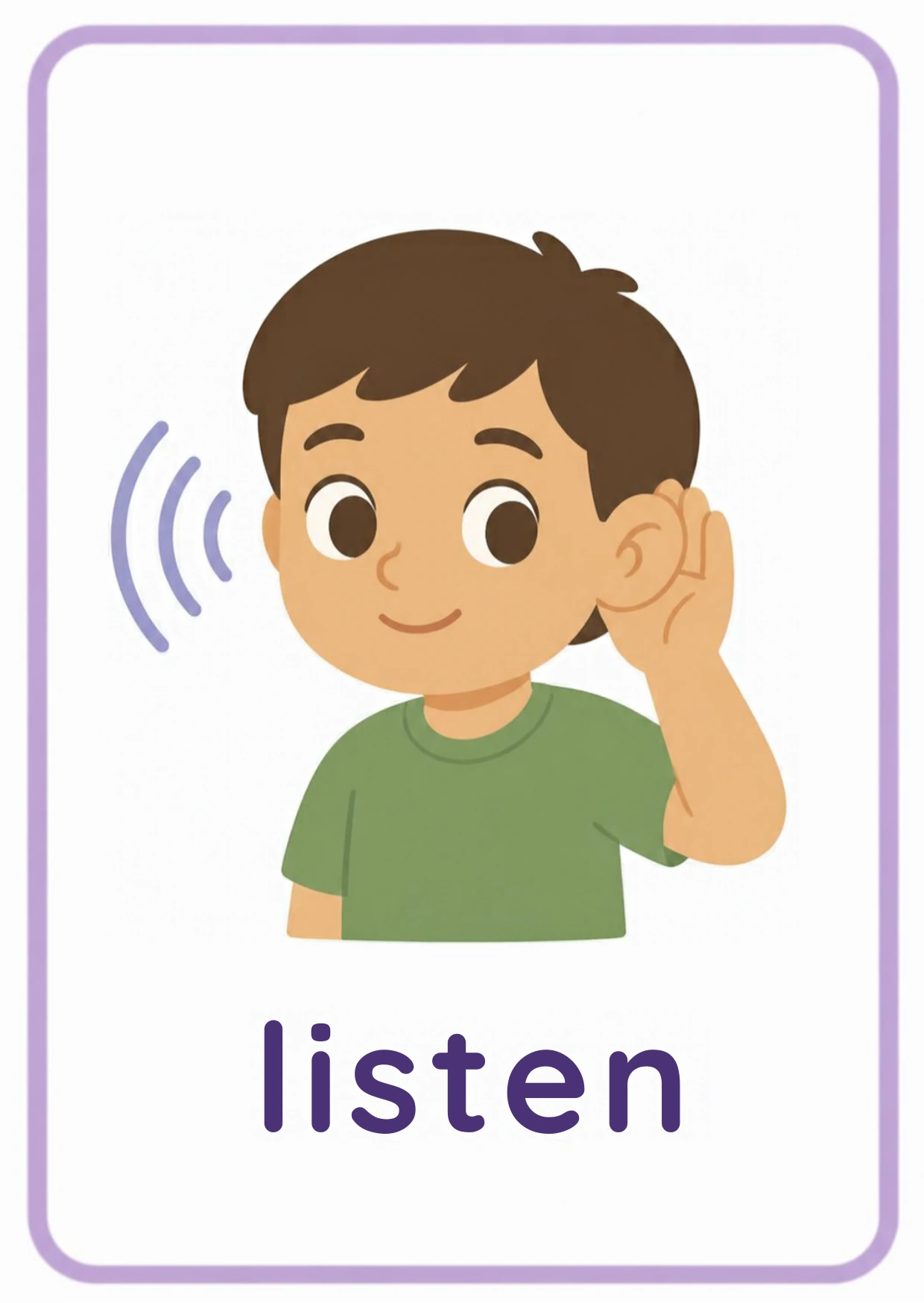
This lesson turns the ears into detectives. Hear is the sense; listen is the decision to use it on purpose — and the card shows the trade’s oldest trick: a hand cupped behind an ear, gathering every sound in the room.
What is this?
Listen is what ears do on purpose: shut out the busy stuff and focus on one sound. The cupped hand behind the ear helps — it gathers sound like a little satellite dish. Listening is hearing with attention added, and it needs a still body to work best.
What does it mean?
Hear is automatic; listen is chosen. The cupped hand makes the choice visible — a pose the whole world reads as paying attention. That pose is worth teaching: it turns waiting into an action, gives fidgety hands a job, and makes a three-year-old’s listening look as serious as it feels.
What does the child need to know?
Your child needs to know: we listen with our ears, listening is hearing with attention — still body, cupped hands if wanted — listening works best when the body holds still, whispers are the best listening practice, and a good listener is a treasure at story time, music time and road-crossing time.
Why this matters
Listening is the classroom skill hiding inside a game: stories, instructions, music and friendship all run on it. Naming listen gives the pose a word, the stillness a reason and the whisper games a purpose — and a child who can listen on request carries the skill straight into circle time.
What it teaches
Auditory attention and focus, the hear-listen distinction (automatic versus chosen), body-stillness and impulse control, whisper-voice play, and the cupped-ear pose as visible attention for group settings.
Words to learn
listenearcupwhisperstillsound
Say this to your child
“"Listen! Your ears have a doing-word too: listen. Cup your hand behind your ear — see, it gathers the sound in! Listening works best when bodies hold still, so feet stop, hands cup, and we catch the sound: my whisper, the clock, a bird outside. What can your cupped ears find right now?"”
Step by step
- Show the card and copy the pose: hand cupped behind the ear. What is the boy doing — listening hard! The cup makes the ears bigger and the listening official.
- Try the cup test: listen to the room with hands down, then hands cupped behind both ears. Louder? Different? The dish trick is real.
- Play the whisper game: send one whispered word across the room — cup the ear, lean in, catch it. Then swap: your child whispers, you listen.
- Prove the stillness rule: stomp once, then freeze — a listening body is a still body. Try listening while wiggling, then while frozen. Frozen wins every time.
- Go on a sound hunt: sit still for one minute, a finger up for each sound caught — clock, fridge, birds, a door somewhere. Compare catches at the end.
Look closer at the picture
Look at the picture together: where is the boy’s hand — cupped behind his ear? Which ear? Is he standing still? What word sits with the picture? Can you make the same listening pose?
Ask your child
"What do we listen with?" "What does the cupped hand do?" "Show me a listening body — what do the feet do?" "What did your cupped ears catch today?"
What your child can say or do
Your child may adopt the cupped-ear pose for every story from here on, whisper everything for a day — secret word included — or freeze mid-game, hand to ear, and announce the post van two streets away before anyone else hears it.
Out in the real world
Listen is a daily instruction: listen to the kettle, listen for the timer, listen to grandma’s story, listen at the road. Each one works better on a child who owns the pose and the stillness — and the road one is the reason the practice matters.
Try it together
Sound catchers: everyone cups their ears and shuts their eyes for one minute, raising a finger for each sound caught, then compares lists — the fridge, the washing machine, a dog, a chair creak. Play it outdoors for bigger catches. Stillness with a mission is the whole trick.
Understanding check
Ask: "What do we listen with? What does the cupped hand do? What do listening bodies hold?" The ears, the dish and the still answer — that is the lesson landed.
Parent tips
Make the cupped-ear pose your signal at story time — hand up, ears cupped, room settles — because a pose works faster than a shout. And keep whispers precious: a voice that only whispers for secrets gets the best listening in the house.
Staying safe
Listening practice has a safety catch: the still-body rule matters most at the road — stop, look and listen is the crossing rhyme, and it works with a grown-up holding hands. Ears stay delicate too: no shouting into cupped ears, even for fun, and loud sounds get stepped away from.
This lesson pairs with the Listen flashcard in the library — print it, show it, keep it on the fridge. Back to Body Parts & Five Senses Flashcards.