
Feel — a step-by-step lesson for grown-up and child
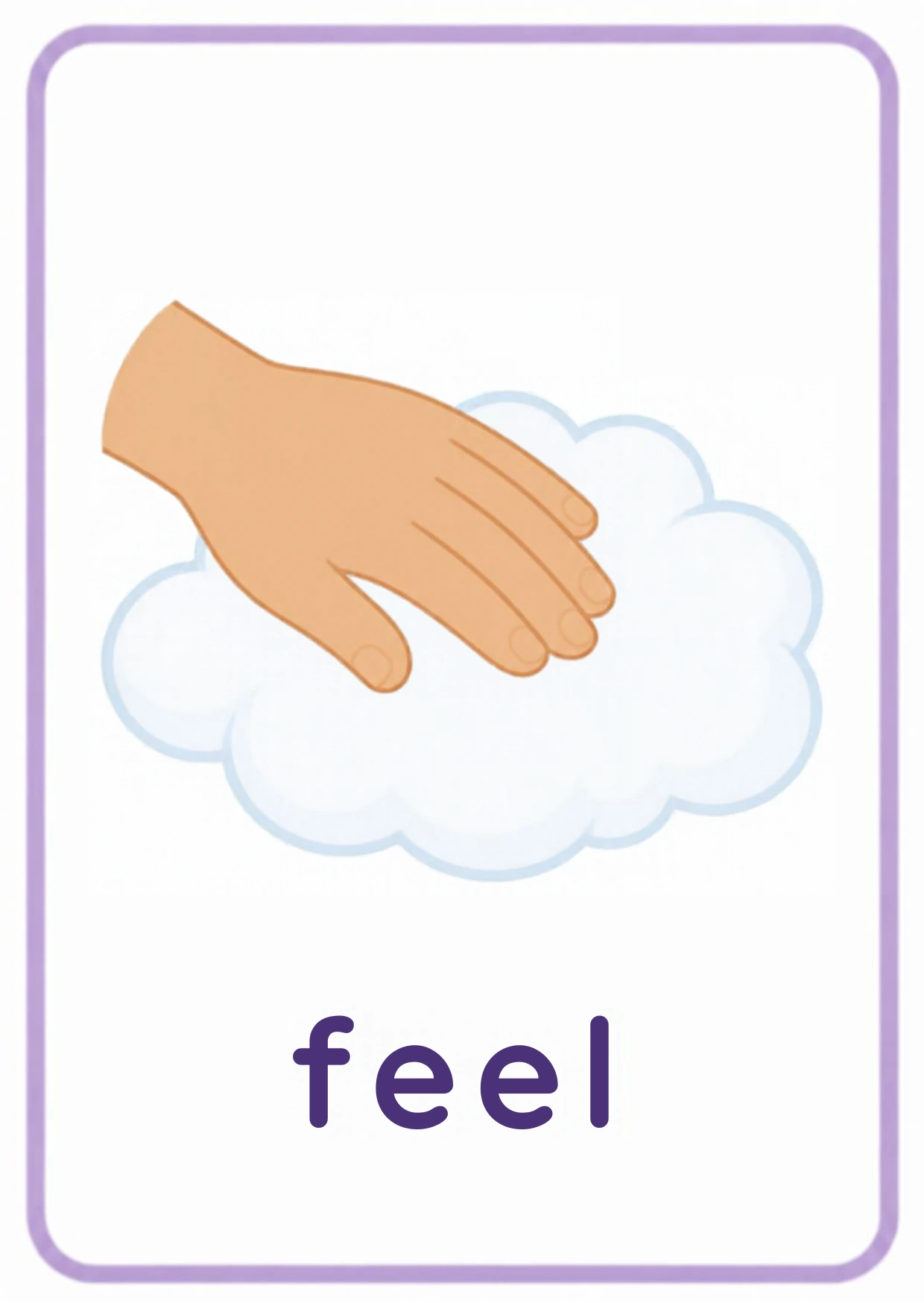
This lesson sends the skin to work. Touch is the sense; feel is the doing-word — and the card keeps it gentle: one hand, moving slowly, reading something soft and white like a story written in texture.
What is this?
Feel is what skin does when it pays attention: a hand settles on something and reads it — soft, smooth, warm, squishy, bumpy. It is the doing-word for the touch sense, and the word wears two hats in your house: I feel the blanket and I feel happy share one useful verb.
What does it mean?
Feel is the slow version of touch — not a grab, a read. The hand moves, the brain collects, the word arrives: soft. And the same verb carries feelings, which is a quiet piece of luck: a child who can say I feel the blanket is one step from saying I feel sad, and both sentences deserve the same listening.
What does the child need to know?
Your child needs to know: we feel with our skin, feeling means slow and careful — a hand that reads, not a hand that grabs — textures have names: soft, smooth, bumpy, warm, squishy — and feel talks about textures and feelings both: I feel the teddy, I feel happy.
Why this matters
Feel is a two-for-one word: texture vocabulary and emotion vocabulary share it. Practising the texture side — blanket, sponge, spoon — builds the describing words preschool runs on, and the feeling side gives your child a ready-made way to name the inside weather: I feel happy, I feel cross, I feel cosy.
What it teaches
Tactile discrimination and texture vocabulary, the touch-feel verb link, emotional naming through the shared word feel, slow deliberate hand movement (reading, not grabbing), and comparison skills across textures.
Words to learn
feelhandsoftsmoothsquishycosy
Say this to your child
“"Feel! Your skin has a doing-word: feel. Put your hand down slow — like this — and read it: soft, smooth, warm, squishy. And feel has two jobs: I feel the soft blanket, and I feel happy — same word! Slow hands read best, and new things get a grown-up check first. What does this cushion feel like?"”
Step by step
- Show the card: what is the hand doing — reading something soft with slow fingers? That careful reading is called feeling.
- Copy the hand: settle your palm on a cushion, shut your eyes, and read it — soft? squishy? warm? Fingertips first, slow as syrup.
- Build the texture corner: a blanket, one spoon and a sponge side by side. Feel each with eyes shut and say its word — soft, cold and smooth, squishy.
- Play the two-hats game: I feel the blanket — texture! I feel happy — feeling! Same word, two jobs. Make three sentences each and giggle at the crossover.
- Set the care rule: feeling hands go slow, and unknown things get a grown-up check first — radiators and bath water are for grown-ups to test, hands to confirm.
Look closer at the picture
Look at the picture together: what is happening — a hand reading something soft and white? Does the touch look slow or quick? What word sits with the picture? What did your fingers read today?
Ask your child
"What do we feel with?" "What did your hand feel today — soft? bumpy? warm?" "How does a feeling hand move — fast or slow?" "Say one sentence about a texture and one about a feeling!"
What your child can say or do
Your child may run a fingertip along every wall and cushion in the house, filing reports — bumpy, smooth, cosy — declare I feel happy, I feel the teddy, I feel lunch, or test the two-hats rule on a grandparent for confirmation.
Out in the real world
Feel works everywhere: the warm bath tested with a toe, the soft jumper pulled close, the cold spoon at breakfast, the squashy sponge at sink time. Name what the hand read — your fingers felt it first — and the doing-word earns its keep twice a day.
Try it together
Texture lucky dip: a pillowcase hiding a wooden block, a scrunch of foil and a soft toy. One hand in, eyes shut: read the mystery with fingertips, guess, then pull it out to check. Swap the cast daily. Fingertip reading is the game; texture vocabulary is the prize.
Understanding check
Ask: "What do we feel with? How does a feeling hand move? Name two textures you read today." The skin, the slowness and the words — that is the lesson landed.
Parent tips
Keep the texture corner to three objects and rotate weekly — three words done well beat ten rushed. And honour the second hat: when your child says I feel sad or I feel happy, treat it as the same skill practised — naming, exactly like the blanket got named.
Staying safe
Feeling hands get a check-first rule: radiators, bath water, oven doors and anything hot or unknown are tested by a grown-up first, then confirmed by careful fingers. Gentle is the touch — no squeezing pets, no prodding babies — and anything sharp or breakable stays on the look-only shelf.
This lesson pairs with the Feel flashcard in the library — print it, show it, keep it on the fridge. Back to Body Parts & Five Senses Flashcards.