
Nose — a step-by-step lesson for grown-up and child
This lesson puts the sniffer centre stage. The nose does three jobs at once — smelling, breathing, and being very good at finding bananas — and the sniffing games that teach it are the guaranteed-giggle kind your child will demand again tomorrow.
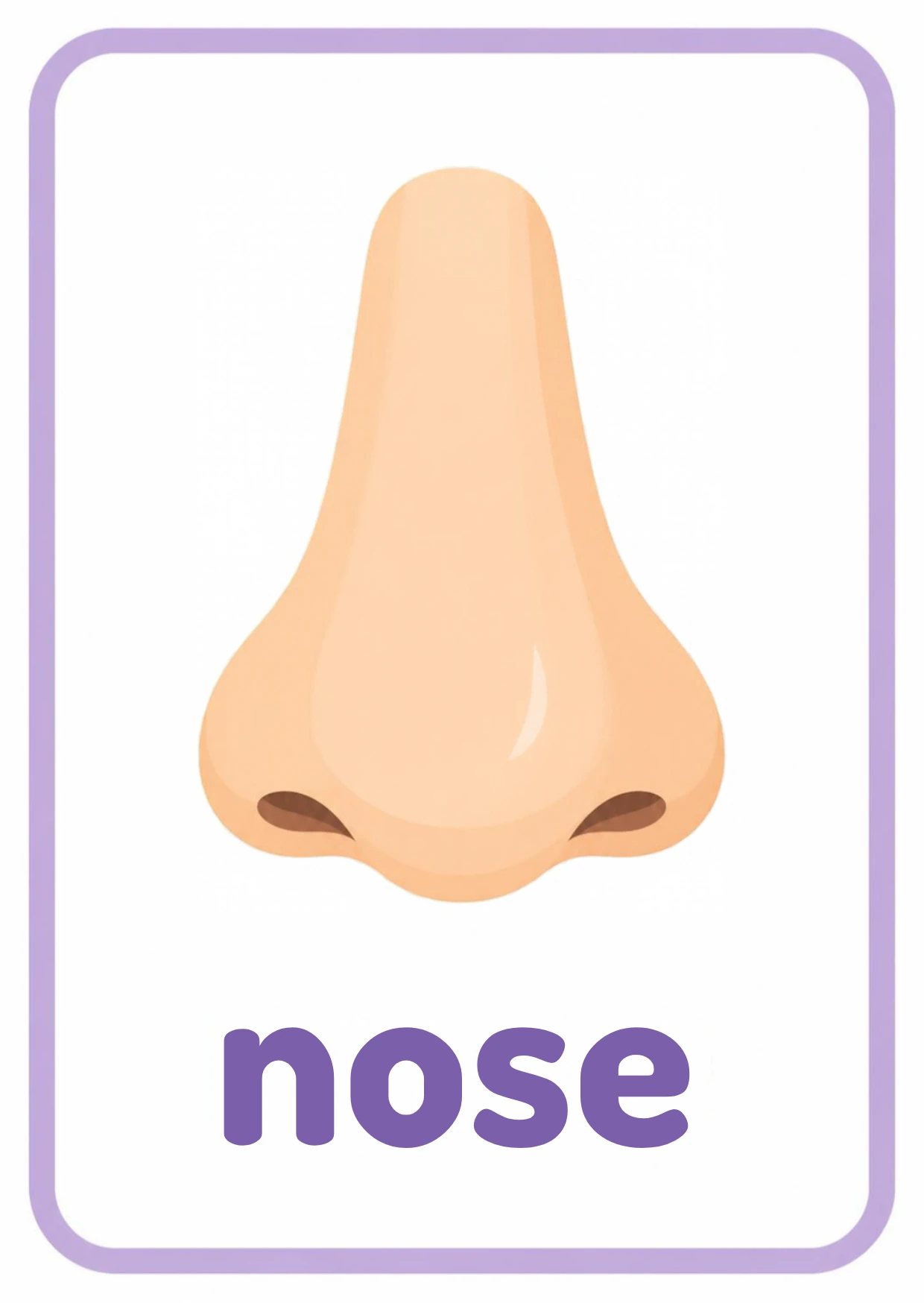
What is this?
The nose is the smelling part of the body, sitting in the middle of the face. It breathes air in and out through two little doorways, and it catches smells riding on that air — dinner cooking, flowers, rain, socks — and reports them all to the brain.
What does it mean?
Smell is the sneakiest sense: it works without being asked, and it is the fastest road to memory there is. One sniff of a familiar smell can bring back a whole place — grandma’s kitchen, the bakery, the swimming pool. The nose is a reporter sending invisible news upstairs.
What does the child need to know?
Your child needs to know: the nose smells and breathes, sniffing is how it pulls smells up to be read, some smells are lovely and some are warnings — smoke, gone-off food — and nothing ever goes inside a nose, not fingers, not beans, not anything.
Why this matters
A named nose becomes a working nose. Children who can say what they smell join a whole layer of the world most people ignore — and smell is also a safety sense: burnt toast, smoke, spoiled milk all announce themselves to a nose that is listening.
What it teaches
Olfactory vocabulary and attention, breathing awareness (nose in, mouth out — the runner’s trick), the sniff-and-guess memory game, safety associations with warning smells, and the giggle engine of any good sniffing contest.
Words to learn
nosesmellsniffbreathestinkyfresh
Say this to your child
“"This is your nose — right in the middle, the best seat in the house! It breathes in and out all day and it smells everything: bananas, flowers, rain, dinner. Sniff, sniff — see? Sniffing pulls the smell up so your brain can read it. And nothing ever goes inside a nose. Noses sniff, that is all!"”
Step by step
- Show the card and find the little nose: whose is it, and what is it for? Name it, then sniff the air dramatically to prove the point.
- Find your child’s nose in a mirror: touch it, wiggle it, breathe in and out through it and feel the air moving.
- Play the sniff test: three things with smells — a piece of fruit, a clean sock, a spoonful of something from the spice shelf — sniffed with eyes shut. Guess before you look.
- Teach the runner’s trick: breathe in through the nose, out through the mouth — in through the nose, out through the mouth. It is how noses and mouths share the work.
- Set the rule with a straight face: nothing goes in a nose. Not a finger, not a pea, not a bead. Noses are doorways, not cupboards.
Look closer at the picture
Look at the picture together: where does the little nose sit — in the middle of the face? What word is written beside it? Can you find your own nose without using your hands — by wiggling it?
Ask your child
"What does your nose do — all its jobs?" "What is the best smell in our house? The worst?" "How does sniffing help?" "What do we never put in our nose?"
What your child can say or do
Your child may sniff the air like a bloodhound at every meal, report dinner from the next room before it is announced, or patrol the house for stinky smells with the seriousness of an inspector — the nose, fully on duty.
Out in the real world
Noses work everywhere: the bread aisle at the shop, the rain on the walk home, the rubbish bin that needs taking out, the baby sibling’s head. Each smell is a sentence the nose writes — name a few, and the world gains a whole quiet channel.
Try it together
Sniff-and-guess kitchen: set out three covered cups, each hiding a smell — orange peel, a mint leaf, a dab of toothpaste. Sniff with eyes shut, guess, uncover, cheer. Rotate the cast daily; the nose gets sharper with practice, and the guessing never gets old.
Understanding check
Ask: "What does your nose do? What does sniffing do? What goes in a nose?" The two jobs, the pulling-up answer and the loud nothing — that is the lesson landed.
Parent tips
Keep the sniff test to food and kitchen smells — the safe category — and let your child add one mystery smell per round. If the guessing stalls, sniff together and compare notes out loud: two noses report differently, and comparing is the fun.
Staying safe
Nothing goes inside a nose — beads, beans, fingers and paper all end up in emergencies, and a nose is a doorway, not a drawer. Sniffing games use food and flowers only: cleaning products, spices up close and anything from a bottle under the sink stay off the list, and strong smells get sniffed from a distance.
This lesson pairs with the Nose flashcard in the library — print it, show it, keep it on the fridge. Back to Body Parts & Five Senses Flashcards.