
Skin — a step-by-step lesson for grown-up and child
This lesson meets the sense that goes everywhere the body goes. Skin covers the whole body — arms, cheeks, the tip of the nose — and it is doing two jobs at once: keeping the body safely in, and reporting what the world feels like.
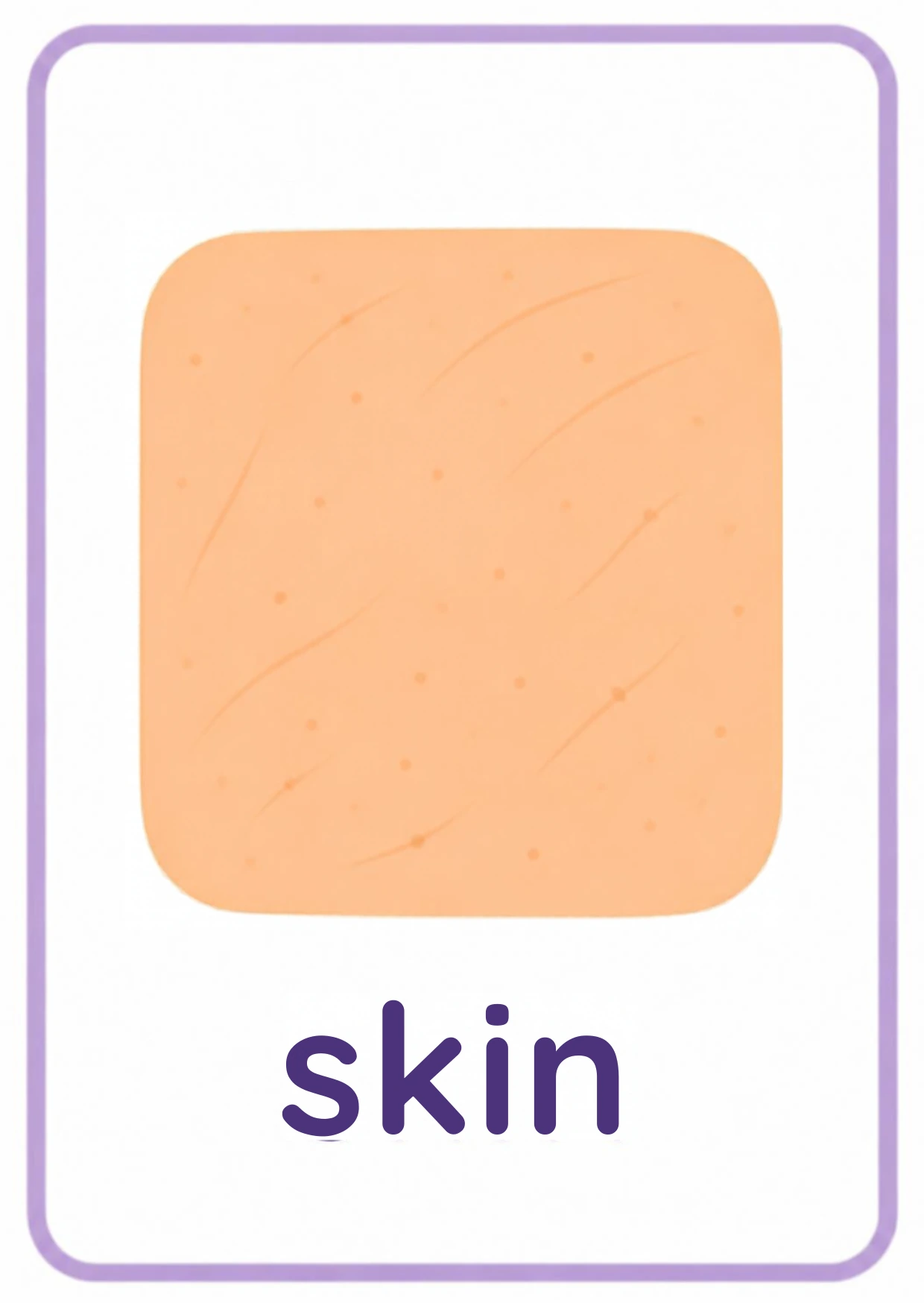
What is this?
Skin is the covering that wraps the whole body — and it is the touch sense itself. It reports warm and cool, soft and hard, bumpy and smooth, dry and wet, and it sends the warnings too: too hot, too sharp, something crawling.
What does it mean?
Skin is the body’s largest sense organ, and the only one worn everywhere. Touch is the fifth of the five senses — eyes see, ears hear, nose smells, tongue tastes, and skin does the feeling. It is also the body’s coat: it keeps the inside in, the weather out, and heals itself when it gets a scrape.
What does the child need to know?
Your child needs to know: skin covers the whole body and it is how we feel things, touch is the fifth sense, skin reports the world — warm water, cool tiles, a soft cat, a scratchy jumper — and it needs care: washes, plasters for scrapes, and sun hats on bright days.
Why this matters
Touch is the first sense a baby ever used — held, wrapped, rocked — and it stays the comfort sense for life: a hug is skin talking. Naming skin gives your child words for comfort and for warning — this jumper scratches, that radiator burns — and both kinds of sentence matter.
What it teaches
Tactile vocabulary (warm, cool, soft, rough, smooth, bumpy), the five-senses framework (touch as the fifth), body coverage awareness — skin is everywhere — and the self-care links: washing, plasters, sun protection.
Words to learn
skintouchwarmcoolsoftscratchy
Say this to your child
“"This is skin — it covers you everywhere! Your arms, your cheeks, the tip of your nose: all skin. It is your touch sense, the fifth of your five senses — it feels warm and cool, soft and scratchy, and it tells your brain everything. Skin is also your coat: it keeps you in and the world out. Take care of your coat!"”
Step by step
- Show the card and ask what the close-up picture might be. Reveal it: skin — the covering on your whole body, and the feeling sense itself.
- Prove the coverage: skin on the arm, skin on the cheek, skin on the nose, skin on the tummy. It is everywhere you look — the body’s own coat.
- Play the two-bowl test: one bowl of warm water, one of cool. One hand in each, then report — warm, cool! The skin told you which was which, instantly.
- Read textures: a soft blanket, a bumpy towel, a smooth table, a scratchy jumper. Touch each and say the word the skin sent.
- Finish with skin care: washes keep it clean, plasters look after scrapes, sun hats guard it on bright days. The coat does a lot — it earns its maintenance.
Look closer at the picture
Look at the picture together: what does the close-up show — a patch of skin? What word sits with it? Is the skin smooth or bumpy in the picture? Where does your own skin show right now?
Ask your child
"What covers your whole body?" "Which sense is skin — number five of how many?" "What did your skin feel today — warm? cool? soft?" "How do we take care of skin?"
What your child can say or do
Your child may report textures all day — the rug is fluffy, the window is cold — ask for a plaster with dignity when a scrape arrives, or announce that the bath water is warm and the tiles are cool, both confirmed by the fifth sense.
Out in the real world
Skin reports arrive constantly: bath water tested with a toe, the cat’s fur, granny’s scratchy scarf, the sun-warmed slide. Name the reports as they come — your skin told you that — and the touch sense becomes a working vocabulary instead of a feeling without words.
Try it together
The texture trail: line up four safe textures along the floor — blanket, bubble wrap, towel, smooth cushion — and walk them barefoot, naming each underfoot feeling. Then do it with eyes shut. The feet have skin too, and the trail proves it.
Understanding check
Ask: "What covers your body? Which sense is it? What did your skin feel today?" The covering, the fifth and a texture or two — that is the lesson landed.
Parent tips
Keep a texture basket — fabric squares, a sponge, a pinecone, a smooth stone — and rotate it weekly; the skin learns like the ears do, by comparison. And treat every plaster ceremony as skin science: the coat got a rip, the plaster is the repair, the body heals it itself.
Staying safe
Skin reports pain for a reason — hot things, sharp things and broken glass are look-don’t-touch, and the warning gets obeyed, not tested. Scrapes get washed and covered; burns get cold water and a grown-up, fast. Sun hats and sunscreen are the coat’s weather gear.
This lesson pairs with the Skin flashcard in the library — print it, show it, keep it on the fridge. Back to Body Parts & Five Senses Flashcards.