
Tongue — a step-by-step lesson for grown-up and child
This lesson meets the body’s show-off. The tongue hides all day behind the teeth and then, on request, peeks out — and between the silliness it does two serious jobs: tasting every bite and shaping every word.
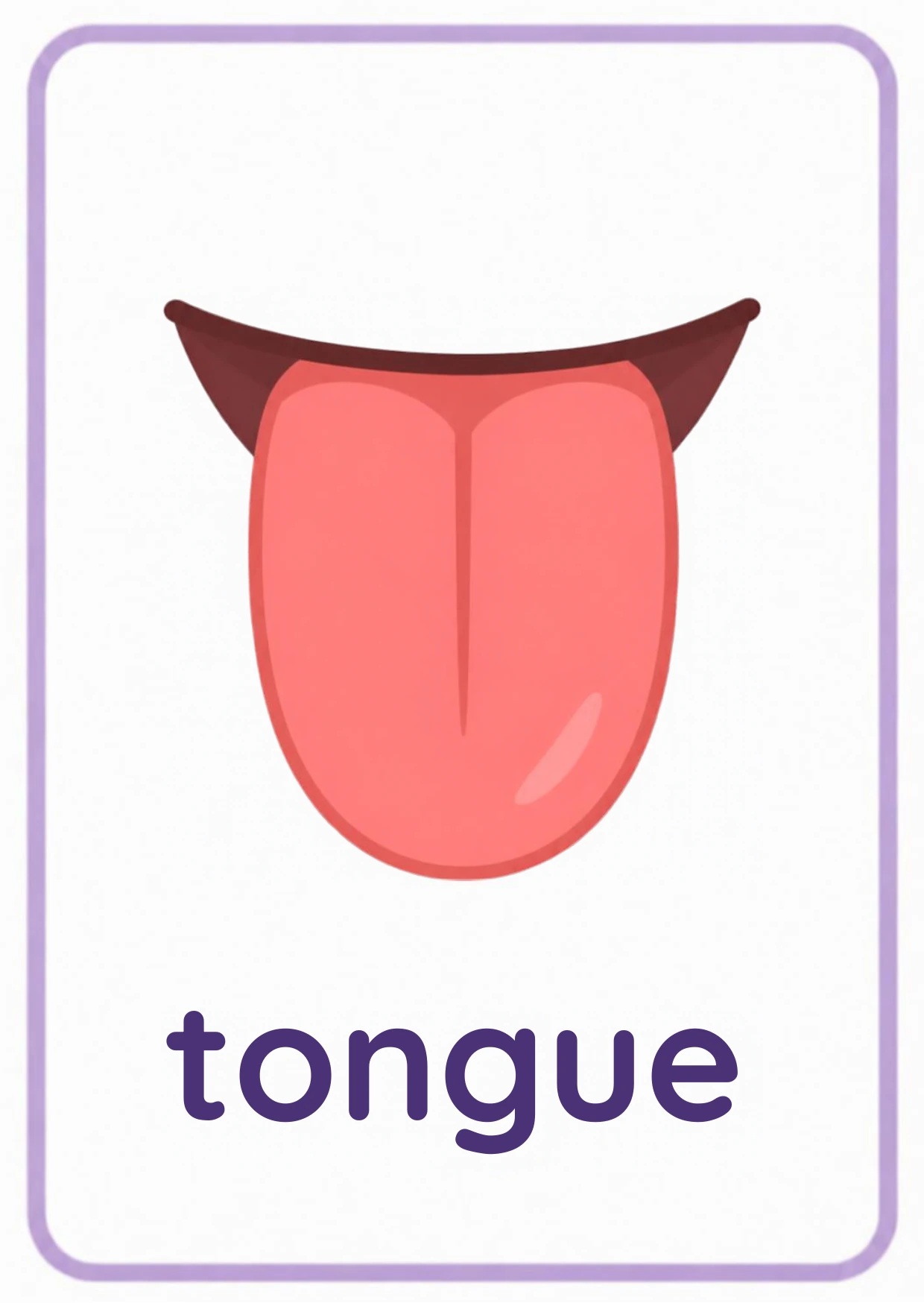
What is this?
The tongue is the pink muscle that lives inside the mouth. It tastes the food, moves the food where chewing needs it, and shapes the sounds that become words. It can go up, out, side to side and curl — the busiest muscle your child owns.
What does it mean?
The tongue is a muscle that never stops: it stirs every bite, checks every temperature, presses every sound into shape — the same tongue says llama and lollipop — and then cleans the teeth afterwards. It is also where the taste sense lives: sweet, salty, sour and more, all reported from this one pink floor of the mouth.
What does the child need to know?
Your child needs to know: the tongue lives inside the mouth, it tastes the food — one of the five senses happens right here — it helps make every word, it can peek out and go back in on request, and it stays inside for eating and talking: peeking is a game, not a habit.
Why this matters
The tongue is where eating meets speaking — the two hardest jobs a preschooler’s body does. Playing with it builds the oral-motor control that clear speech runs on, and naming it gives your child the word for the spot that burns on hot soup and tingles on pineapple.
What it teaches
Oral-motor control (up, out, side to side — the tongue workout), taste awareness as one of the five senses, speech-sound practice through play, and the giggle factor that keeps a hidden body part in the vocabulary.
Words to learn
tonguetastelickwordspinkmuscle
Say this to your child
“"This is your tongue — the pink muscle inside your mouth! It tastes your food, it moves your food, and it shapes every word you say: la-la-la, feel it tap! It can peek out — bleh! — and hide back in, quick as a tortoise. The tongue is the busiest, silliest, strongest muscle you own."”
Step by step
- Show the card and ask what is peeking out of the open mouth — the tongue! Name it, then find it in a mirror.
- Play the peek game: tongue out, tongue in, tongue up to the nose, tongue side to side. Four directions, four giggles — the tongue workout.
- Name the jobs: it tastes the food, moves the food for the teeth, and shapes the words. Say la-la-la and tip-tap the tongue behind the top teeth.
- Try the lick test: lick your lips like something yummy just happened. Then stick the tongue out for the wind to dry — that is how dogs do it.
- Finish with the manners: the tongue peeks for games and stays in for eating and talking. Peek now… and back in it goes, like a tortoise into its shell.
Look closer at the picture
Look at the picture together: what is sticking out of the open mouth? What word sits with the picture? Is the tongue out or hidden? Can you make your own do the same thing?
Ask your child
"Where does your tongue live?" "What does it taste — name the flavours it knows!" "What sound does la-la-la make with the tongue?" "When does the tongue peek out — and when does it stay in?"
What your child can say or do
Your child may run the four-direction tongue workout in the car mirror, report that llama and lollipop come from the same place, or peek the tongue and vanish it with tortoise speed — the show-off muscle, fully rehearsed.
Out in the real world
Tongues work at every meal and every sentence: stirring soup, checking for loose teeth, rolling Rs, licking an ice cream on a hot day. The dentist asks for it too — lift the tongue, says the mirror — and now your child knows exactly which part that is.
Try it together
Tongue aerobics: out-and-in for ten, up-to-the-nose for five, side-to-side for ten, then the big finish — can the tongue touch the chin? Points for trying. It is the oral-motor workout that speech therapists charge for, delivered as a comedy routine.
Understanding check
Ask: "Where does the tongue live? Name its jobs. Show me up, out and side to side." The mouth, the three jobs and the workout — that is the lesson landed.
Parent tips
The tongue workout doubles as speech practice for tricky sounds — L, T, D all live there — so keep the aerobics playful and short. And if the peeking outlasts the game, the tortoise rule is your friend: the tongue goes back in its shell for eating and talking.
Staying safe
The tongue stays in its own mouth — no licking friends, pets or shopping trolleys, and no touching it with fingers or toys. Hot food burns tongues first: the blowing-before-tasting rule applies here most of all, and very cold treats bite their own warning.
This lesson pairs with the Tongue flashcard in the library — print it, show it, keep it on the fridge. Back to Body Parts & Five Senses Flashcards.