
Onion — a step-by-step lesson for grown-up and child
The onion is the vegetable class’s mystery box: round, brown, papery, and hiding layer under layer under layer. This lesson teaches the word at the card, the underground growing, and the peeling ritual — skin by skin, like unwrapping a secret — plus the eye-watering superpower, watched from a respectful distance.
What is this?
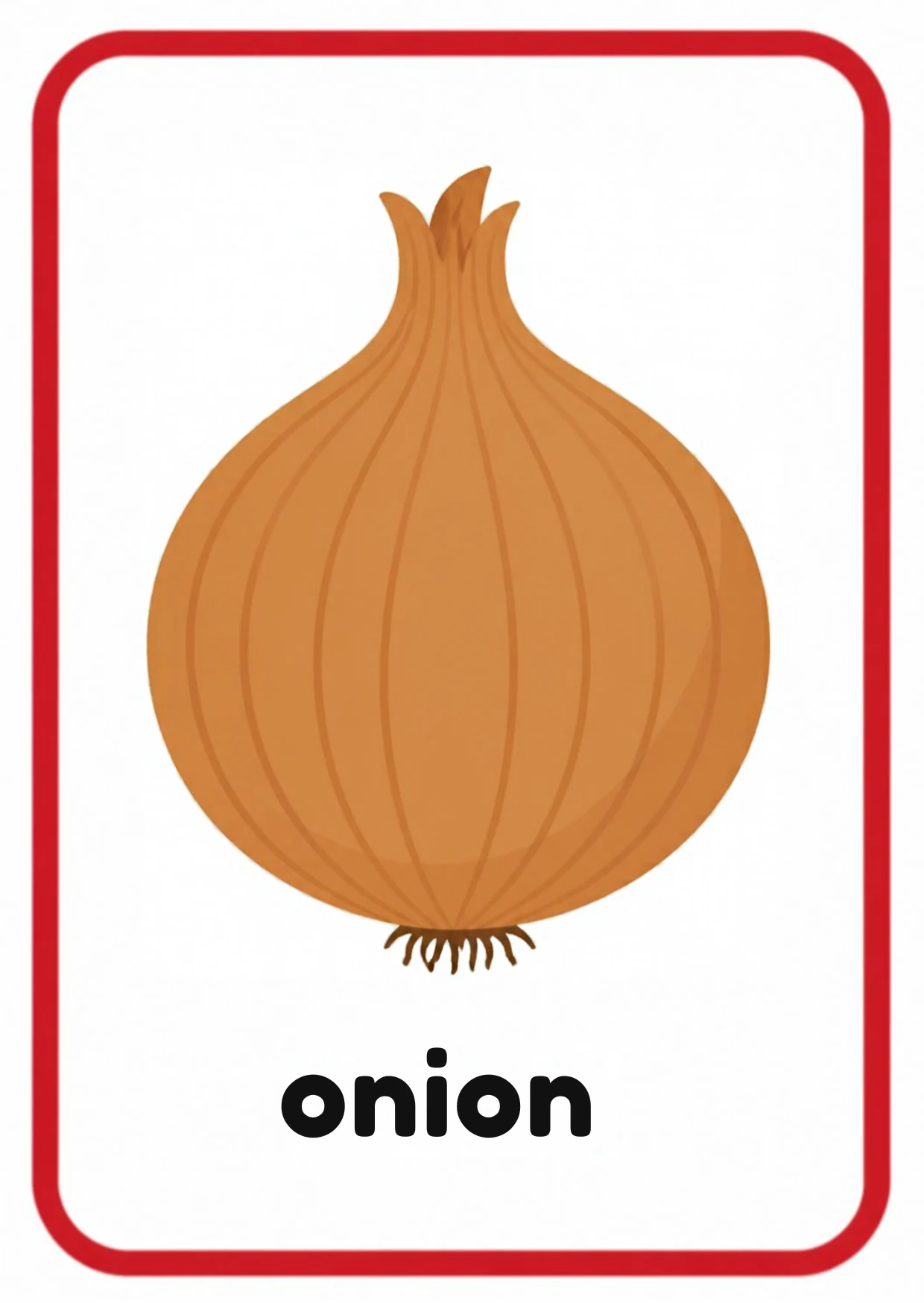
An onion is a round, brown, papery-skinned bulb that grows underground, with green shoots it sends up above the soil. The card shows a round brown onion. Inside, it is rings all the way down: layer under layer, each one thinner, until the middle. Its smell is the strongest in the vegetable drawer.
What does it mean?
Layers are a first model of inside-ness: things have insides, and some insides have insides. A child who peels an onion to its middle has physically explored structure — the same idea that later explains earth’s core, tree rings and story chapters. The drawer keeps a geology lesson in papery skin.
What does the child need to know?
Gather three things for this card: the word, the dark-soil biography — onions grow below the ground like their root-vegetable cousins — and the peeling ritual, skin by skin, with hands washed afterwards. Save room for the superpower: onions defend themselves with a juice that stings eyes into tears, fascinating to watch — the child sees it from a step away, the grown-up does the cutting, and nobody leans in.
Why this matters
The onion offers the class’s only chance to watch a plant defend itself, and children find the crying fascinating rather than sad: a vegetable with a superpower. Naming the cause — the juice, the fumes, the defence — turns a kitchen nuisance into a science moment with a moral: plants protect themselves too.
What it teaches
Layer and structure vocabulary, sequential peeling (fine motor, order), cause-and-effect observation (juice to tears), underground bulb knowledge, and respect-at-a-distance — watching powerful things safely, which is a life skill wearing a vegetable costume.
Words to learn
onionbrownlayerspeelsmellround
Say this to your child
““Onion! UN-yun — round and brown and wearing a hundred paper coats. It grows underground, hiding like the carrot. Peel it: one skin, two skins, three — layer under layer! Now the magic: when a grown-up cuts it, it makes your eyes water! The onion is defending itself. Plants have superpowers too.””
Step by step
- Show the card and say onion from the belly — UN-yun — then ask how many skins your child thinks it wears. Nobody ever guesses enough.
- Tell the growing story: onions grow underground like the carrot and the potato, round bulbs hiding in the dark with green shoots above.
- The peeling ritual: your child peels the papery skins off, one by one, onto a growing pile — like unwrapping a secret, layer under layer. Count the skins as they come.
- The smell test, hands washed after: cup hands over the peeled onion, sniff gently, and rate the smell on the family scale from apple to strongest-thing-ever.
- The superpower demo, grown-up operated: you cut the onion at a distance while your child watches from a step away — eyes may water! Explain the defence: the juice is the plant protecting itself. Fascinating, not sad.
Look closer at the picture
Look at the card together: it shows a round brown onion with the word onion underneath. Ask your child what shape it is, whether the skin looks smooth or papery, and whether the card shows any green shoots.
Ask your child
“Where does an onion grow?” “What is under the papery skin?” “What happens to eyes when it gets cut?” “Why does the plant make eyes water — what is it doing?”
What your child can say or do
Your child might peel anything papery in search of layers, warn visitors about the onion’s defences, or report the crying science at dinner — a plant with a superpower gets retold with the drama it deserves, and the drama is accurate.
Out in the real world
Onions are in nearly every dinner pot: soups, sauces, the frying smell that announces dinner before the table is set. The word repeats from the next room — “onions first!” — and the smell does the advertising all by itself.
Try it together
The layer-by-layer mystery: a grown-up peels the onion while your child counts the skins as they come off — one, two, three — and sniffs the air between layers. The eye-watering finale happens at a safe distance, watched like a magic show: the onion defends itself, and your child gets to be impressed.
Understanding check
Ask: “Where does an onion grow? What hides under the skin? What superpower does it have?” Underground, layer under layer, and the eye-watering defence — that is the lesson landed.
Parent tips
If the crying puts your child off onions entirely, reframe it: the onion is not being mean, it is being brave — defending itself like a hedgehog. Children forgive plants their defences easily, and the respect makes the tasting, later, feel earned.
Staying safe
All cutting is grown-up work at a distance from small faces — the juice that stings adult eyes stings young ones more. Peeling is your child’s job, hands washed afterwards; the knife, the board and the tears stay firmly in the adult camp.
This lesson pairs with the Onion flashcard in the library — print it, show it, keep it on the fridge. Back to Fruits & Vegetables Flashcards.