
Potato — a step-by-step lesson for grown-up and child
The potato is the vegetable children have eaten most and noticed least: chips, mash, jackets — all potatoes, all disguised. Underground is the address this lesson hands over — the same dark hiding place the carrot chose — and the great transformation is the main event: one dusty, hard, raw potato becomes every soft, steaming dinner food.
What is this?
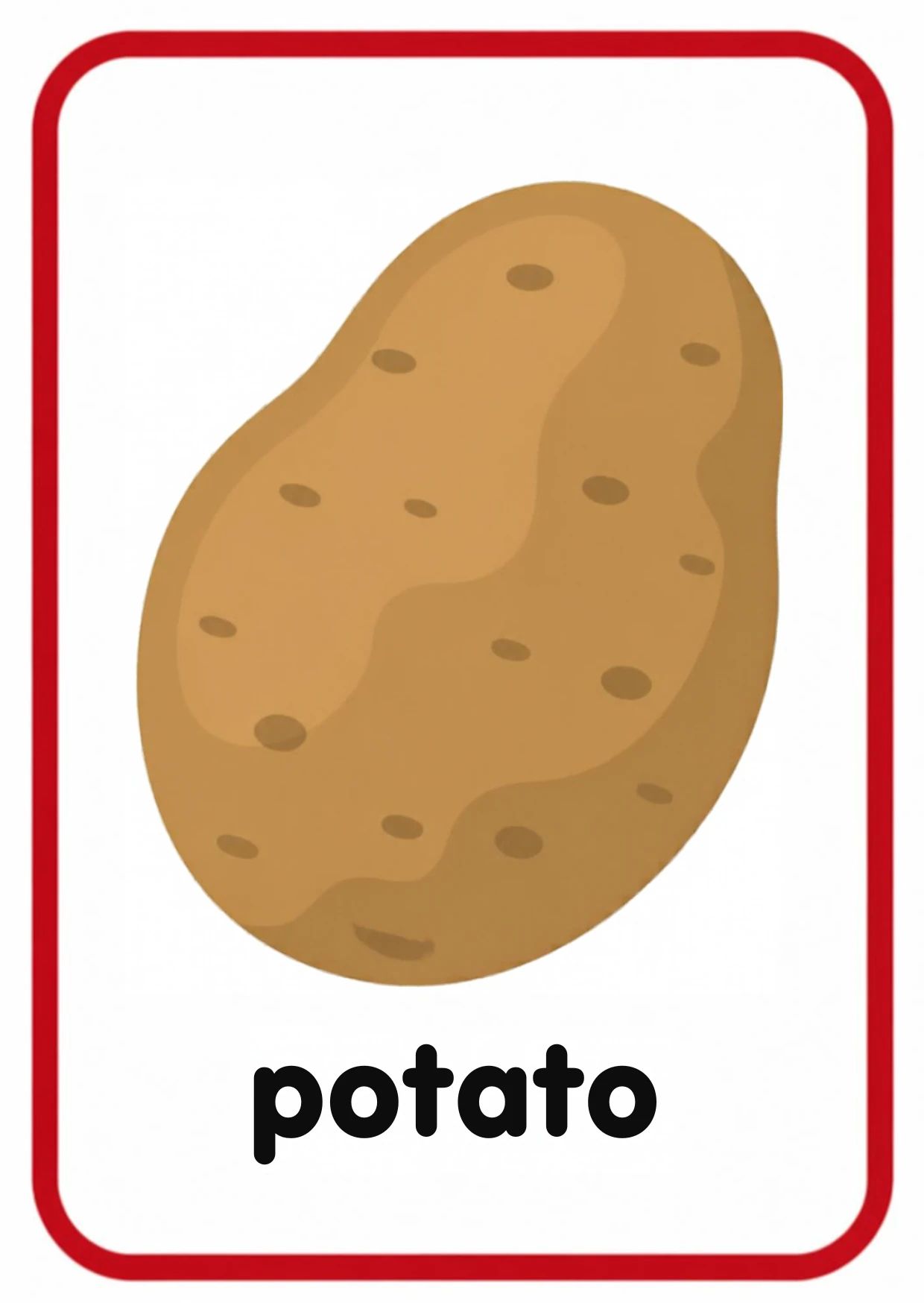
A potato is a round-ish, brown, spotty vegetable that grows underground on plants whose leaves show above the soil. The card shows a spotty brown one with its word beneath. Raw, it is hard and dusty; cooked, it is soft and steaming — and the spots, given time and soil, could grow into whole new plants.
What does it mean?
The raw-to-cooked transformation is kitchen physics at its most visible: same potato, two completely different feelings. A child who holds a raw potato and then eats mash has watched matter change state with their own hands — the beginning of cooking literacy, and of why-humans-cook conversations.
What does the child need to know?
Two facts carry this lesson: the potato grows in the dark below the soil, the same hiding habit as the carrot, and it exists in two states — hard and dusty raw, soft and steaming cooked — so both get met, one held and one tasted. Then the delight: the little spots are called eyes, and yes, that is exactly as wonderful as it sounds.
Why this matters
Potato connects the card to nearly every dinner your child has ever eaten, which makes it a vocabulary multiplier: mash, chips, jackets and roasties are all this word in costumes. Naming the root food behind the disguises gives a child power over the whole menu.
What it teaches
State-change observation (raw versus cooked), tactile comparison (hard and dusty versus soft and steaming), underground-growing knowledge shared with the carrot, part vocabulary (spots, eyes, skin), and menu-connected word power.
Words to learn
potatobrownspotsundergroundhardsoft
Say this to your child
““Potato! Po-TAY-to! Brown and spotty and hiding underground — just like the carrot. Feel this raw one: hard! Dusty! Now taste dinner: soft, warm mash — same potato! It changed in the cooking. And the little spots? Those are its EYES. A potato with eyes — imagine!””
Step by step
- Show the card and say potato with a bounce — po-TAY-to — then ask where it grows and wait: underground, like the carrot, hiding in the dark.
- The eyes hunt: find the little spots on the card and on a real potato — those spots are called eyes, and planted in soil each one could become a whole new plant.
- The raw hold: pass the raw potato around — heavy, hard, dusty — and let everyone describe it in one word each.
- The cooked reveal: serve the softest thing on the menu — mash, a jacket, soft boiled rounds — and compare: same potato, completely different feeling. Say both words: hard, soft.
- Close with the count: how many potato dinners can your child name from this week? Mash counts. Chips count. The word has been busy.
Look closer at the picture
Study the card together: it shows a brown, spotty potato with the word potato underneath. Ask your child to count the spots they can see, what shape the potato is closest to, and whether the skin looks smooth or rough.
Ask your child
“Where does a potato grow?” “What are the little spots called?” “Which is hard — raw or cooked?” “What potato dinners did we eat this week?”
What your child can say or do
Your child might hunt for eyes on every potato in the bag, demand “the hard one” to hold at dinner, or announce that chips are potatoes wearing costumes — a menu decoded is a vocabulary lesson winning.
Out in the real world
Potatoes dominate the week invisibly: mash on Monday, chips on Friday, the jackets at the weekend. Naming them all as the same word gives your child the biggest harvest in the vegetable drawer — one word, dozens of dinners.
Try it together
The potato double-act: hold the raw one — hard, dusty, heavy — and pass it around with one describing word each, then eat the softest possible mash from the same bag. Hard then soft, raw then cooked: your child just watched a transformation and named both of its endings at one meal.
Understanding check
Ask: “Where do potatoes grow? What are the spots called? Which is soft — raw or cooked?” Underground, eyes, and the cooked one — that is the lesson landed.
Parent tips
If your child only recognises chips as potato, line the evidence up gently: mash, a boiled round, a raw one. Same word all the way down the table — and the moment the penny drops, dinner becomes a revision lesson forever.
Staying safe
Raw potatoes are for holding, not chewing — the cooking does the digestible work, so the tasting is always the cooked version. The washing, peeling and boiling are grown-up jobs, and small hands get the describe-and-compare roles instead.
This lesson pairs with the Potato flashcard in the library — print it, show it, keep it on the fridge. Back to Fruits & Vegetables Flashcards.