
Tomato — a step-by-step lesson for grown-up and child
The tomato is the shiniest card in the vegetable half and the owner of the class’s best argument: scientists call it a fruit because it grows from a flower, cooks call it a vegetable because it lives in dinner. This lesson teaches the word, the vine it grows on, and the little green crown every tomato wears.
What is this?
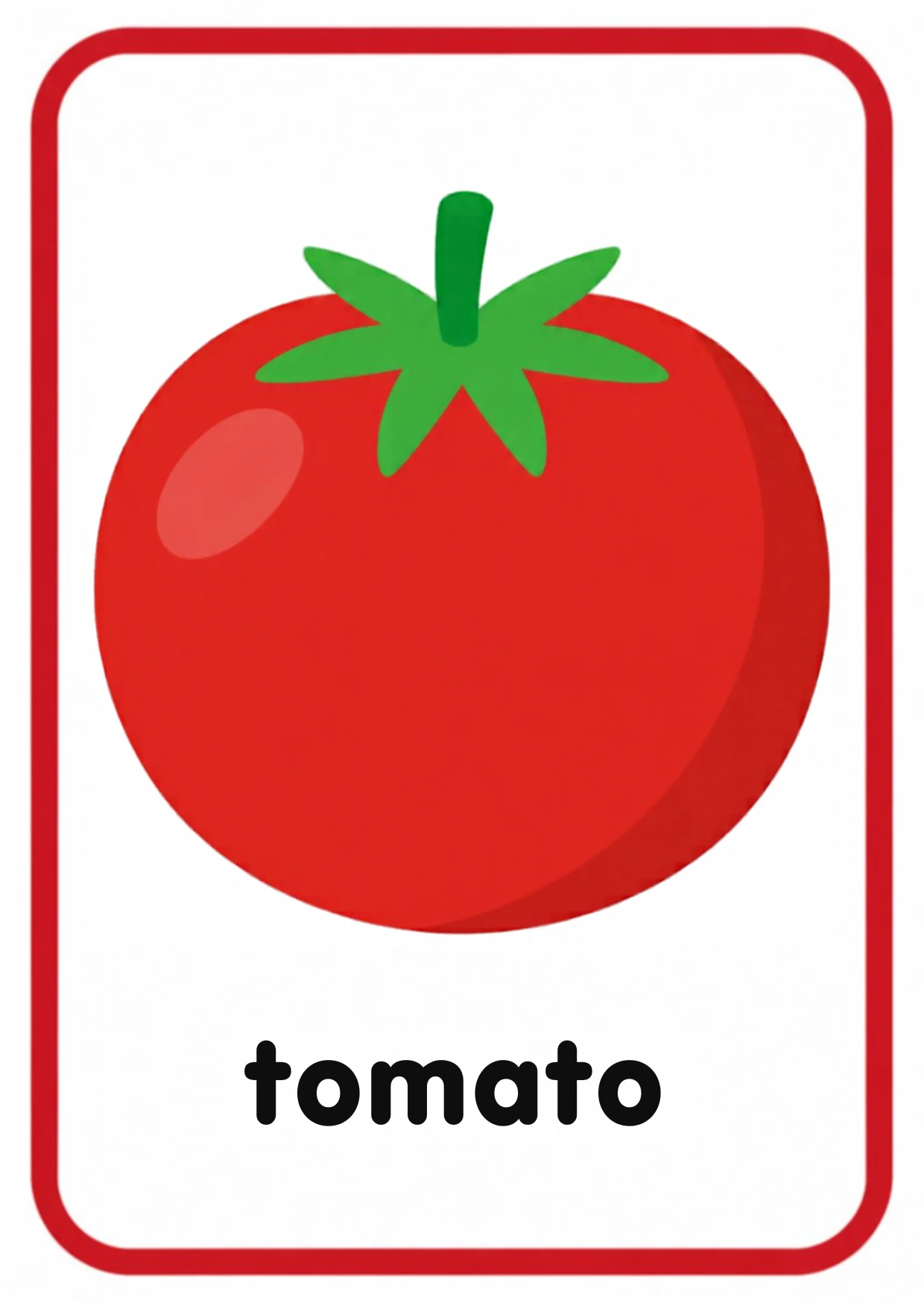
A tomato is a round, red, shiny fruit-vegetable that grows on vines in gardens and greenhouses, wearing a small green star where the stem held it. The card shows a round red tomato with a green stem. In this class it sits with the vegetables, where the kitchen has always kept it.
What does it mean?
The tomato’s double identity is a child’s first famous argument, and it teaches the useful idea that names can depend on who is talking: scientists vote fruit, cooks vote vegetable, and both are allowed. A child who enjoys the argument has met the idea that knowledge has committees — and that they can join the debate.
What does the child need to know?
For this card, gather three things: the word, the garden picture — tomato plants lean on sticks, climbing and hanging their fruit — and the crown hunt, because every tomato, card or real, wears a little green crown on top. The tasting completes it: washed, crowns off, sliced by a grown-up, and admired shiny side up before the first bite.
Why this matters
The shiny skin makes tomatoes the best light-study in the bowl: where does the shine come from? A small mirror conversation at snack time — light bouncing off the smooth skin — is early physics delivered on a food your child will eat anyway.
What it teaches
Observation of light and shine, vine-and-stick plant knowledge, the two-committee idea (fruit or vegetable, depending on the speaker), gentle handling of round rolling things, and the confidence to hold a small opinion in an adult argument.
Words to learn
tomatoredroundvineshinycrown
Say this to your child
““Tomato! Say it twice — tomato, tomahto — both are right! It grows on a vine in the garden, hanging shiny and red. Look, every tomato wears a little green crown, right on top. Find the crown! Now wash it, a grown-up slices it... look how it SHINES. Round, red, and dressed for dinner.””
Step by step
- Show the card and say tomato twice, two ways — tomato, tomahto — and announce that both are correct, which children find scandalous and delightful.
- Tell the growing story: tomatoes grow on vines in gardens, hanging like little lanterns, with sticks to lean on when they get heavy.
- The crown hunt: find the little green star on the card’s tomato, then on every real tomato in the house — every single one wears one.
- The roll test, gently: round things roll. One slow roll across the table, caught before the edge — shiny, round and in a hurry.
- The tasting: your child washes the tomatoes while a grown-up takes the crowns off and slices them. Admire the shine first, then eat it.
Look closer at the picture
Study the card together: it shows a round red tomato with a green stem and the word tomato underneath. Ask your child where the green part sits, what the shine on the skin could be, and what shape the tomato is.
Ask your child
“What does every tomato wear on top?” “Where do tomatoes grow — on vines or underground?” “Is it a fruit or a vegetable — what does the kitchen say?” “What happens if we roll it?”
What your child can say or do
Your child might hunt crowns on every tomato for a week, referee the fruit-versus-vegetable argument at dinner, or roll one around the plate announcing — “a tomato!” — with a straight face. The argument is the lesson’s encore, and children love being its judge.
Out in the real world
Tomatoes live in everything: salads, sauces, the pasta tonight, the ketchup tomorrow. Naming the round red original behind the sauces gives your child the source code of half the dinner table — one word, many disguises, all delicious.
Try it together
The crown hunt: three tomatoes on the table, and your child inspects each one for its little green crown, then rolls them — very gently — across the table to prove that round things roll. A grown-up crowns and slices for tasting, and the shiny red rounds get admired before the first juicy bite.
Understanding check
Ask: “What does a tomato wear on top? Where does it grow? What do scientists and cooks disagree about?” The crown, the vine, and the famous argument — that is the lesson landed.
Parent tips
If your child picks tomato pieces out of everything, keep the word alive anyway: name it in sauces, soups and ketchup. Recognition does not require eating — and the sauce-tomato connection is a genuine decoding skill the kitchen hands out free.
Staying safe
The crowns come off with a grown-up’s hands and the slicing too — small round things and knives are an adult meeting. Cherry tomatoes for the smallest eaters get quartered lengthwise, and the shine is for admiring before the chewing begins.
This lesson pairs with the Tomato flashcard in the library — print it, show it, keep it on the fridge. Back to Fruits & Vegetables Flashcards.