
Strawberry — a step-by-step lesson for grown-up and child
The strawberry is the fruit with its seeds on the outside — a fact children find hilarious and remember for years. Here the word is learned at the card, the growing story runs along the ground — low plants, sprawled in the dirt, where slugs also shop — and the seed count is done with eyes only before anyone washes or eats.
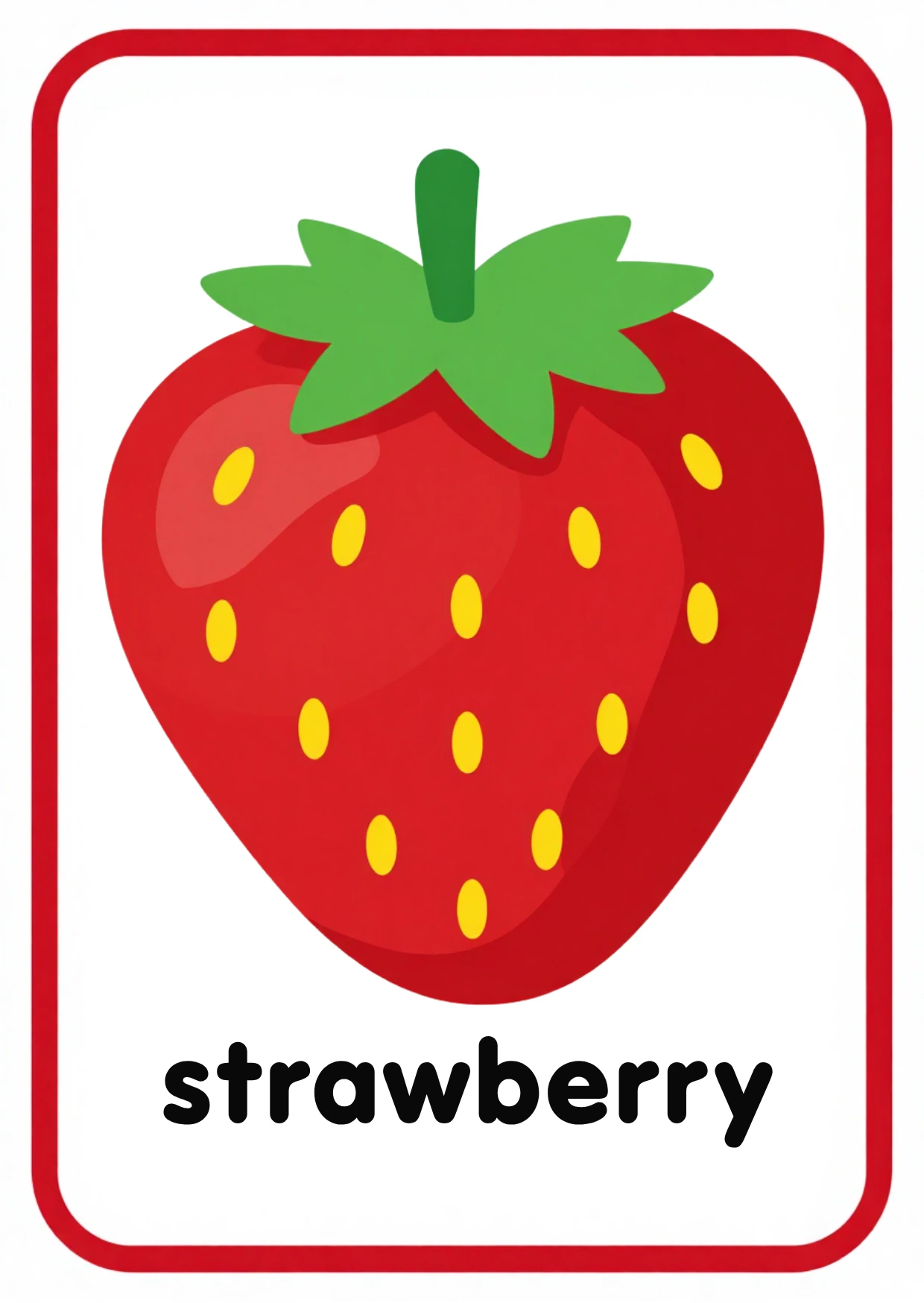
What is this?
A strawberry is a small, heart-shaped, bright red berry that grows on low leafy plants near the ground. The card shows a bright red strawberry with seeds and a green crown. The seeds sit ON the outside — hundreds of them — which is why the skin feels bumpy and looks speckled.
What does it mean?
Outside-in seeds make the strawberry a botanical celebrity: it is the exception children meet first. A child who knows that strawberries wear their seeds out loud and apples hide theirs inside has started collecting exceptions — and exception-hunting is real science, started at snack level.
What does the child need to know?
Your child needs the word at the card, the low-growing story — strawberries do not climb, they sprawl near the dirt — and one eyes-only seed hunt before tasting: how many seeds can you count? Too many! That is the answer, and it is correct every time. Then a grown-up washes and hulls, and everyone eats.
Why this matters
Looking closely before eating trains observation on a willing subject: the seeds are countable, visible, funny. Fine visual work disguised as a giggle builds the careful-looking habit that later finds differences in letters, numbers and faces.
What it teaches
Close observation with a target (seeds), exception knowledge in botany, fine motor in hulling, counting practice that happily fails (too many!), and patient waiting while the grown-up does the cutting.
Words to learn
strawberryredseedscrownsweetsummer
Say this to your child
““Strawberry! Straw-ber-ry — what a long word for something so small. Look at it: red all over, wearing a little green crown. And here is the secret — the seeds are on the OUTSIDE! Count them with your eyes... too many! That is why it is bumpy. Now wash them, and a grown-up will do the crowns.””
Step by step
- Show the card and say strawberry in three parts — straw-ber-ry — a long word for a small berry, said three times.
- Tell the growing story: strawberries grow on low plants close to the ground, hiding under leaves — shoppers include slugs, which is why we wash.
- The seed hunt, eyes only: look at the card, then at a real strawberry — how many seeds can you count? Too many! They live OUTSIDE. Say it like news.
- Tasting job: your child washes the berries in the colander while a grown-up pulls the green crowns off and slices them.
- Eat together and rank the sweetness — was the reddest one the sweetest? Let the jury decide.
Look closer at the picture
Study the card together: it shows a bright red strawberry with seeds and a green crown, with the word strawberry underneath. Ask your child where the seeds sit — on the skin or hidden inside — and what the green crown looks like to them.
Ask your child
“Where do strawberries grow — up high or down low?” “Which fruit wears its seeds on the outside?” “What is the green top called?” “Why do we wash them before we eat?”
What your child can say or do
Your child might announce the outside-seeds fact to anyone who will listen, count seeds at breakfast with total sincerity, or refuse hulled berries in favor of ones “with their crowns still on” — gardeners call that last one correct.
Out in the real world
Strawberries are seasonal celebrities: the shop punnets in summer, the pick-your-own fields, the plants some families grow in pots. Any real meeting is a rehearsal — and the outside-seeds fact renews itself at every single one.
Try it together
Seed-spotting detectives: one strawberry each, examined with eyes only — how many seeds can you count before giving up? Then the washing job: your child rinses them in the colander while a grown-up pulls the crowns and slices, and the berries get ranked by redness before the first bite.
Understanding check
Ask: “Where do strawberries grow? Where do they keep their seeds? Who takes the crowns off?” Low plants, outside-seeds and “the grown-up” — that is the lesson landed.
Parent tips
If your child meets a white-streaked or pale berry, teach the honest version: strawberries wear different amounts of red depending on the sun they caught. Same fruit, same seeds, same deliciousness — the color is a weather report.
Staying safe
Strawberries get rinsed before anything else — they grow close to the ground, and the crowns hold grit. A grown-up pulls the crowns and slices what needs slicing; whole berries are for confident chewers, and the smallest mouths get theirs quartered.
This lesson pairs with the Strawberry flashcard in the library — print it, show it, keep it on the fridge. Back to Fruits & Vegetables Flashcards.