
Orange — a step-by-step lesson for grown-up and child
The orange is the word-learning cheat: its name and its color are the same word, so every time your child says the fruit they are also practising the color. This lesson adds the smell — the peel’s perfume arrives before anything is even open — and the segments, which count beautifully.
What is this?
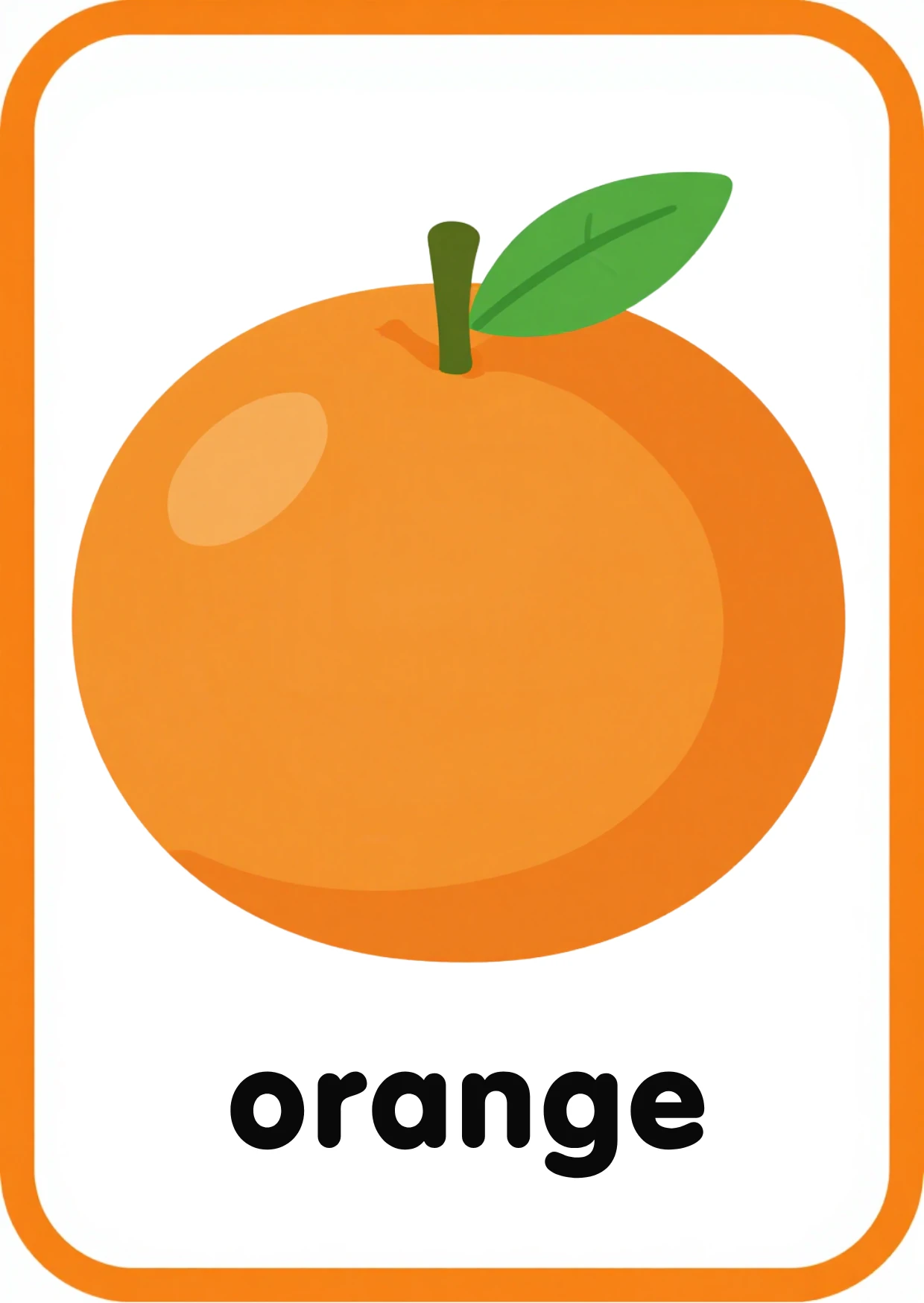
An orange is a round citrus fruit that grows on trees in sunny places, wearing a dimpled peel. The card shows a round orange with a green leaf. Under the peel sit segments in their own thin coats, and the smell — pressed out by little hands rolling it — starts before the first strip comes off.
What does it mean?
One word with two meanings doubles its airtime: orange the fruit at snack, orange the color at craft. A child who holds both meanings has met homonyms — words that wear two hats — years before the word homonym exists, and the fruit bowl demonstrated it with smell included.
What does the child need to know?
Your child needs the word at the card, the roll-and-sniff trick — rolling the fruit on the table presses oil into the peel and wakes the smell — and one shared peel-and-count: a grown-up starts the peel, small hands pull strips, and the segments get counted before they vanish.
Why this matters
Smell is the most underrated sense in vocabulary work: scent memories are strong and sticky, and a word that arrives with perfume attached gets a second anchor in the brain. Roll, sniff, peel, count — four senses doing the work of one word.
What it teaches
Olfactory vocabulary (smell, sniff, scent), fine motor in the peeling, counting the segments, two-meaning word awareness (fruit and color), and the table science of why rolling wakes a smell.
Words to learn
orangepeelsmellroundsegmentsjuicy
Say this to your child
““Orange! The fruit with two jobs — it is a fruit AND a color. Roll it, roll it... now sniff your hands! Can you smell the sunshine? Now we peel: strip by strip. And inside — look — little boats! Let us count the boats before we eat them.””
Step by step
- Show the card and say orange — then hold up a real one and ask what else the word can mean. Let your child discover the double meaning.
- The smell trick: roll the orange firmly on the table, then sniff your palms together — the perfume lives in the peel, and rolling wakes it.
- A grown-up scores the peel; your child pulls the strips off, one by one, saying the word at every piece.
- Split the segments out and count them together before eating — then allow the loud, juicy munching.
- Close with the color round-up: what else in the kitchen is orange? The carrot card is coming, and it will match.
Look closer at the picture
Look at the card together: it shows a round orange with a green leaf and the word orange underneath. Ask your child whether the fruit on the card is whole, where the leaf attaches, and what the real orange’s skin feels like next to the card’s smooth picture.
Ask your child
“Can one word mean two things?” “What color is an orange?” “Where does the smell live — the peel or the inside?” “How many segments did we count?”
What your child can say or do
Your child might roll every orange in the shop “to wake it up”, announce the smell before anyone asks, or correct you when you call the carrot an orange — “no, that is a carrot, it is ORANGE” — one word, two meanings, both in service.
Out in the real world
Oranges repeat all winter: the fruit bowl, the juice at breakfast, the smell on a grown-up’s hands after peeling. Every appearance rehearses both meanings — the fruit and the color — and the smell always gets top billing.
Try it together
The sniff station: roll two oranges on the table, sniff your palms, and vote on which smells sunnier. Then a grown-up scores the peel, your child pulls the strips off, and the segments get counted into two bowls before the loud, juicy munching begins. Smell, count, eat — the whole lesson in one snack.
Understanding check
Ask: “What two things is an orange? Where does the smell come from? Count the boats.” The double word, the woken perfume and a counted segment — that is the lesson landed.
Parent tips
If your child will not smell the peel, do not insist — sniff your own hands theatrically and wait. Curiosity about why your face is doing that usually wins inside a minute, and self-discovered smells stick harder than instructed ones.
Staying safe
A grown-up starts the peel with a small knife-score so small fingers have an edge to grip; the fruit itself gets rinsed before peeling, because hands travel from peel to mouth. Segments for the smallest eaters get their stringy coats removed first.
This lesson pairs with the Orange flashcard in the library — print it, show it, keep it on the fridge. Back to Fruits & Vegetables Flashcards.