
Eight Frogs — a step-by-step lesson for grown-up and child
This lesson counts with its whole body: eight frogs, four and four — and a hopping count that lets restless children do the number with their legs. Sitting still is optional here; counting is not.
What is this?
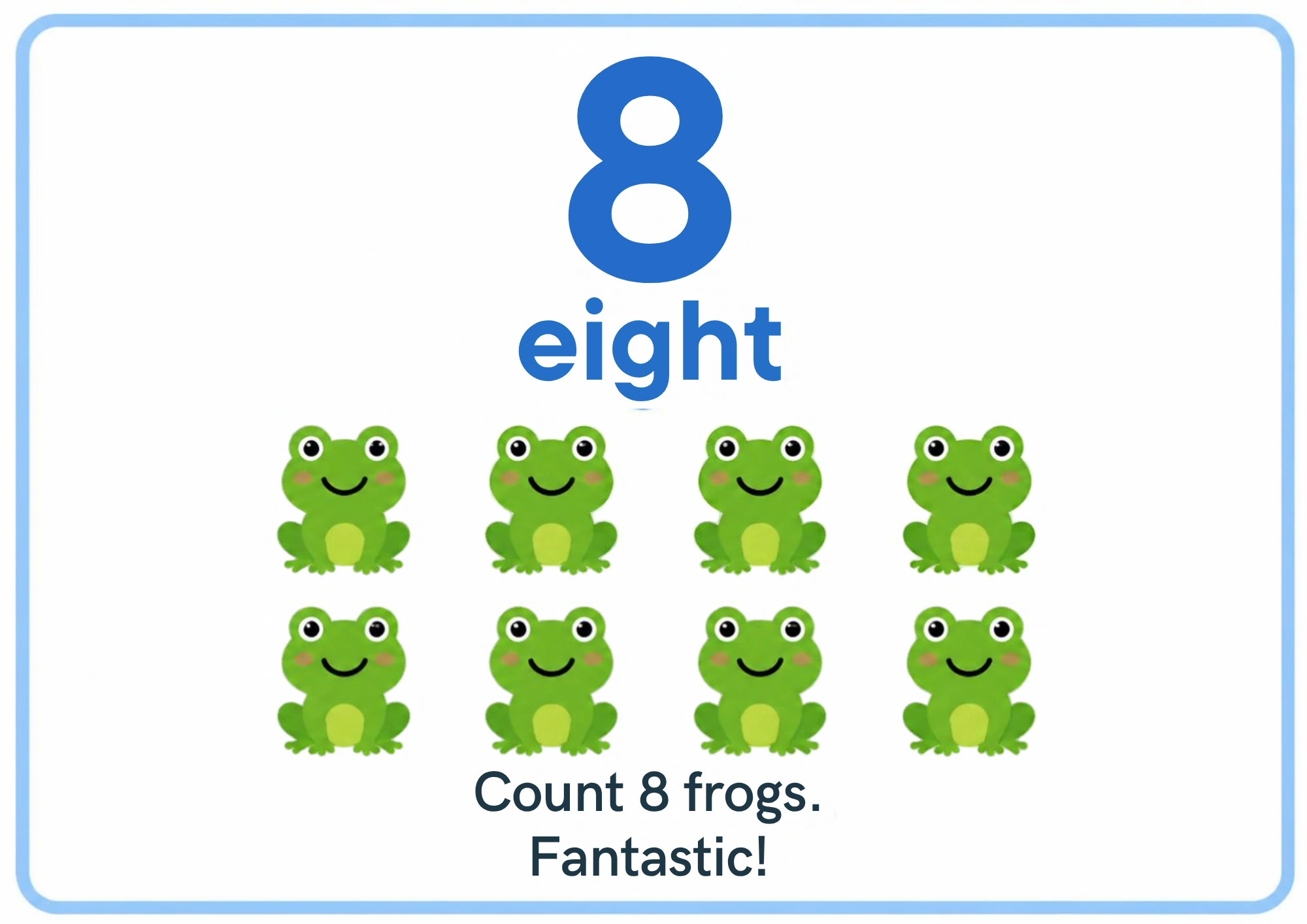
Eight is seven and one more — or four and four, which is easier to carry. On the card: eight green frogs, the word eight and a big blue numeral 8, each frog a station on the counting route.
What does it mean?
Eight is the first count that genuinely rewards splitting: four frogs here, four there, eight altogether. And frogs invite movement — hop-counting turns a table exercise into a whole-body game that busy bodies can actually finish.
What does the child need to know?
Your child needs: eight comes after seven, each frog gets one touch, and two groups can be counted one after the other. Moving while counting is a help, not a hindrance — hopping children are counting children.
Why this matters
The four-plus-four split is part-whole thinking in its friendliest clothes: two groups and their total. Children who discover that numbers can be taken apart and put back together have found the door that all later adding walks through.
What it teaches
Counting group by group, part-whole splitting (four and four), movement-plus-counting coordination, frog-leg gross motor work, and row-by-row organisation — the tidy grid doing its quiet teaching.
Words to learn
eightfrogsrowshopsplitaltogether
Say this to your child
“"Eight frogs — ribbit! Let’s count this row: one, two, three, four. And the other row: five, six, seven, eight! Four frogs and four frogs makes eight frogs. Now hop like a frog and count your jumps — one, two, three... all the way to eight!"”
Step by step
- Show the card and ask how many frogs are waiting — then count them together, finishing one group before hopping to the next.
- Count it the split way: four frogs on one side, four on the other — four and four — then count all eight straight through. Two routes, same number.
- Hop the count: eight frog jumps across the rug, one number per hop, ribbit optional but likely. Land on each number like a lily pad.
- Build eight: four blocks here, four blocks there, then push them together and count the combined pond — eight, every time.
- Finish with a frog count-down: eight hops shrinking to one enormous final leap — the biggest frog in the pond wins a ribbit chorus.
Look closer at the picture
Look at the card together: how many green frogs are waiting on it, and where are they sitting? Touch each frog once as you count to eight. Find the big numeral 8 and the word eight — then find the frog with the widest smile, if you can agree on one.
Ask your child
"How many frogs are on the card?" "How many on each side?" "Can you hop eight times and count your hops?" "What is four and four more?" "Are the two sides even, or does one have more?" — answered with hops, counts and ribbits.
What your child can say or do
Your child may hop-count doorframes, hallways and garden paths, announcing eight at every eighth hop with genuine relief. Moving counters sometimes gain a hop or lose one — the card is the anchor to come back and check against.
Out in the real world
Eights show up in grids: eight plates in the cupboard stack, eight stairs to the landing, eight legs if you count the spider and its friend. Two little groups of anything is an invitation to count it the split way.
Try it together
Lily-pad grid: chalk or tape eight squares on the floor and hop one number per pad, saying the number as each foot lands. Backwards for the brave. The grid keeps the count honest; the hopping keeps the child in the game.
Understanding check
Ask tomorrow what four and four makes: if eight arrives without fingers touching the table, the split has sunk in. If not, rebuild the two block-groups and count the merge together — the pond needs refilling, that is all.
Parent tips
Follow the energy: hopping counts work at bathtime, in hallways, up hills. If attention fades mid-count, split the count instead of shortening it — four and four is a rest stop built into the number itself.
Staying safe
Hopping happens on rugs and grass, never tiles or stairs, with the hop-lane cleared of toys first. Real frogs stay watched from the bank, never handled — eight is for counting, and pond edges are for grown-up hands.
This lesson pairs with the Eight Frogs flashcard in the library — print it, show it, keep it on the fridge. Back to Numbers 1–10.