
Two Ducks — a step-by-step lesson for grown-up and child
This lesson teaches the beat of counting: your child points at the first duck and says one, points at the second and says two — one number per object, in order, the rhythm every count from now on will dance to.
What is this?
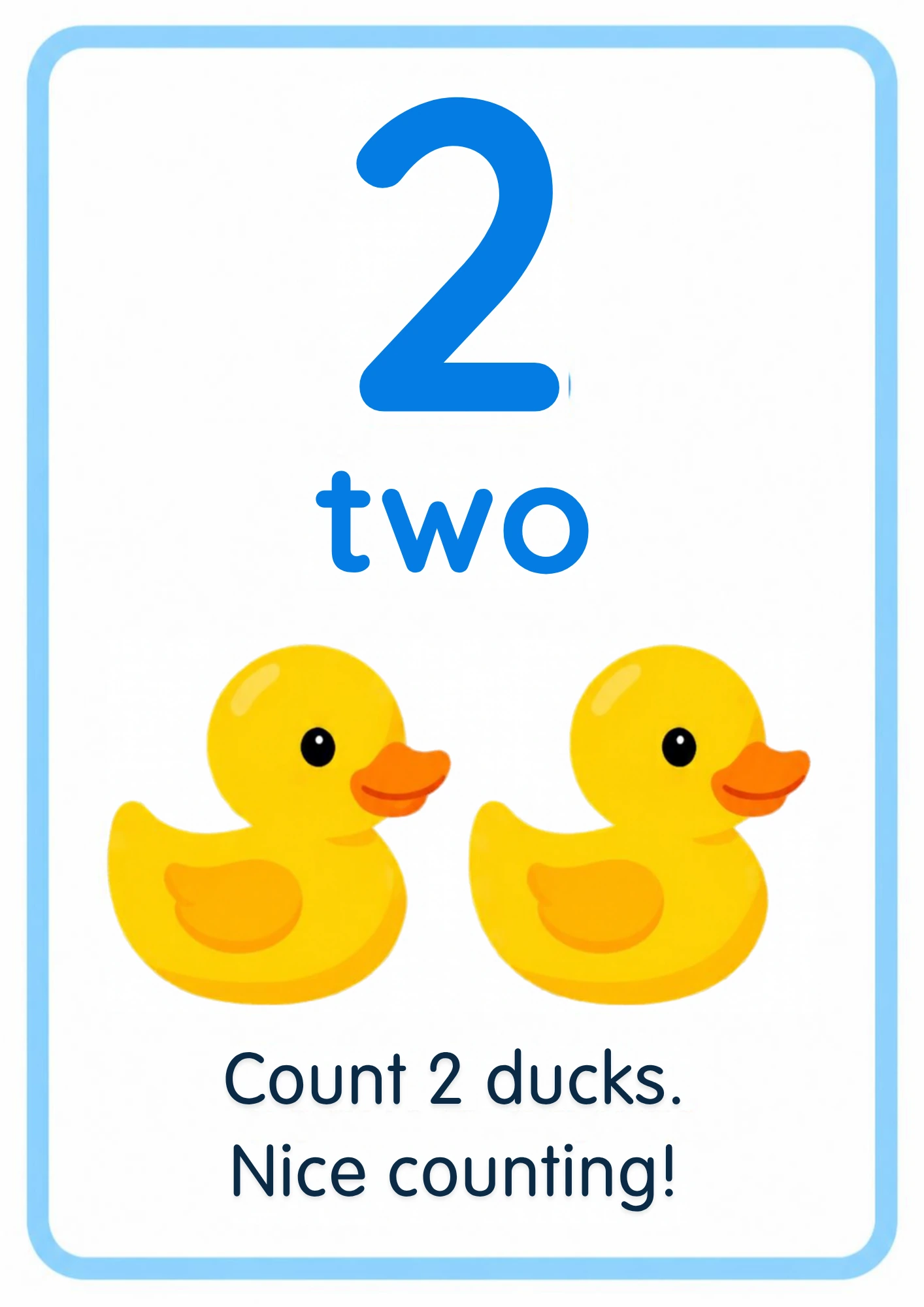
Two means one and then one more. On the card: a pair of yellow ducks, the word two and a big numeral 2 — each duck waiting for its own number, in its own turn.
What does it mean?
Counting is not reciting — it is matching numbers to things, one each. The ducks make that visible: miss a duck and the count comes out wrong; double-tap one and it comes out wrong differently. The errors teach the rule better than the successes.
What does the child need to know?
Your child needs: two is one and one more, each duck gets one number all its own, and doing the pointing and the saying at once is real brain juggling — it is fine to tap while the grown-up counts, or count while the grown-up taps.
Why this matters
One-to-one correspondence — one number, one object, no leftovers — is the foundation under all arithmetic. The duck pair is its smallest, kindest version: two objects, two words, one satisfying click when they match.
What it teaches
One-to-one correspondence, pointing accuracy, sequencing (first duck, then second), pair-vocabulary (two shoes, two hands, two eyes), and rhythm — counting has a beat, and this is where children first feel it.
Words to learn
twoduckspairpointnextboth
Say this to your child
“"Two ducks! Let’s say hello to each one — this duck is one... and this duck is two. Two ducks! Can you tap them? Now find two of something — two ears! Tap one, tap the other: one, two. Every duck gets its own number, just like that."”
Step by step
- Show the card and ask how many ducks are waiting — then count them together, one tap per duck: one... two.
- Count again with your child pointing and you saying the numbers, then swap: they say them, you tap. Both halves of the job need practising.
- Go tapping for twos: two ears, two shoes, two hands, two wheels on the trike. Touch each half of the pair as you count it.
- Line up two blocks and count them left to right, then swap their places and count again — two stays two no matter where the ducks wander.
- Finish with the pair test: hold up both hands and ask how many thumbs. Tap them together — one, two — and let your child take the last count alone.
Look closer at the picture
Look at the card together: how many ducks, and what colour are they? Point to each one as you count — one duck, then the other duck. Can your child find both number-pictures on the card, the 2 and the word two?
Ask your child
"How many ducks are on the card?" "Can you tap each duck once?" "What else comes in twos on your body?" "If one duck swam away, how many would be left?" — questions a three-year-old can answer with a tap, a giggle or a confident shout.
What your child can say or do
Your child may march around tapping pairs and announcing "two!" — shoes, knees, eyes, biscuits. Expect skips and double-taps at first; the tap-and-say coordination assembles itself over days, and every wrong count is doing real teaching work.
Out in the real world
Pairs run through the whole day: two sleeves, two welly boots by the door, two slices of toast, two eyes blinking in the mirror. Name the twos as they happen — each pair counted is the rhythm rehearsed.
Try it together
Pair hunt: hide four objects around the room — two cups, two spoons — and send your child to fetch the two that match. Bringing back a pair is one-to-one counting with a delivery job attached.
Understanding check
Ask for a two-count tomorrow on anything at hand — two biscuits, two blocks. If each object gets exactly one tap and one number, the rule has landed; if the count sprints ahead of the taps, tap along together for a few days.
Parent tips
Slow is the whole trick: your counting pace should match your tapping pace exactly. If hands and words tangle, take one job each — your taps, their numbers — and swap tomorrow. The coordination is the milestone, not the answer.
Staying safe
Tapping targets stay big and soft — ears, cups, cushions — and small countables stay out of baby siblings’ reach. Ducks on the card float safely; real bathtime ducks get counted sitting down, never standing in the water.
This lesson pairs with the Two Ducks flashcard in the library — print it, show it, keep it on the fridge. Back to Numbers 1–10.