
Short pencil — a step-by-step lesson for grown-up and child
This lesson honours the pencil stub every household owns. Short is the comparing word with a past: this pencil was long once, and the two cards side by side tell its whole story without a word of help from you.
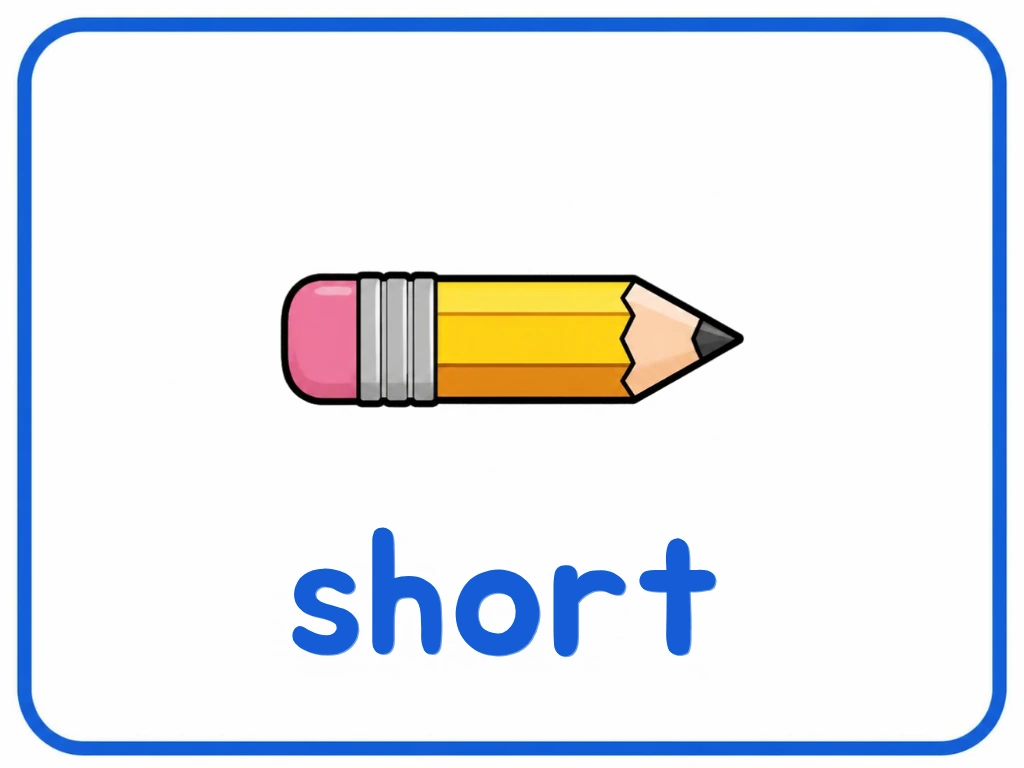
What is this?
Short means little from one end to the other — not much reach left. The pencil on the card has been sharpened down to a friendly stub: small enough to disappear inside a fist, worn short by all the drawing it has already done.
What does it mean?
Short is the partner of long, and the pencil pair shows something rare: a thing that changed. The stub was long once. Sharpening did not make it worse — it made it short, and well-loved. Comparing words describe right now; this pencil just happens to have a then, which makes the pair twice as interesting.
What does the child need to know?
Your child needs to know: short means littler in length than the thing beside it, the opposite is long, and short things still work perfectly — the stub draws. Losing length is not losing the job, and that small lesson travels much further than the pencil tin.
Why this matters
Ordering from longest to shortest is the game, but the idea underneath is bigger: things change and still belong. A child who defends the little stub at the end of the line-up is practising ordering and kindness at the same table.
What it teaches
Length vocabulary, ordering and comparing, fine-motor pencil grip — stub pencils practically force a good one — storytelling (what happened to this pencil?), and the gentle first idea that used does not mean useless.
Words to learn
shortlongstublittleendorder
Say this to your child
“"This pencil is short — it was long once, and all that drawing sharpened it away! Short means little from end to end. Look: long pencil, short pencil. Now let us line up your crayons — longest first… shortest last. Where does the stub go?"”
Step by step
- Show the card and ask the story question first: what do you think happened to this pencil? Let your child guess — then tell them: it was long once, and drawing sharpened it away.
- Hold up the long pencil card, then the short one, and say the pair together: long pencil, short pencil. Trace the long stretch of one and the little stub of the other.
- Open the crayon or pencil tin and line everything up from longest to shortest, end to end. The stub goes at the finish line — the very shortest, and proud of it.
- Test the stub’s job: can the short pencil still make a mark? One proud scribble answers the question every time.
- Let your child point at any two pencils and say which is longer, which is shorter — then swap and let them quiz you, mistakes warmly encouraged.
Look closer at the picture
Look at the picture together: how much pencil is there — does it stretch across the card or sit small in one corner? Where is its point? What words sit with it? Which card shows more pencil, this one or the long one?
Ask your child
"Which pencil is shorter?" "What happened to make this one short?" "Can the short pencil still draw?" "Where does the shortest crayon go in our line-up?"
What your child can say or do
Your child may cradle the stub and narrate its whole life story, place it last in every line-up with ceremony, or hold up a tiny crayon and declare it "still working!" — the comparing and the kindness arriving together.
Out in the real world
Short shows up all over the kitchen and the craft box: the short candle, the short piece of chalk, the last little soap. Point out that short things are the veterans — the soap is short because it washed so many hands, the candle short because it lit so many dinners.
Try it together
The crayon line-up race: tip the tin out and see how fast your child can order everything from longest to shortest — then mix it up and beat the clock again. Add a referee rule for equal lengths: two the same go side by side as twins, which is real comparing language wearing a game’s clothes.
Understanding check
Ask: "Show me short. Which pencil used to be long? Can the short one still draw?" The pinch of the fingers, the story and the proud scribble — that is the word landed.
Parent tips
Keep every stub — children defend them, and a tin of mixed lengths is the best ordering toy you own. If a crayon ever snaps and causes grief, this pencil pair is your comfort: it changed, and it still belongs. Tape the two halves side by side as twins.
This lesson pairs with the Short pencil flashcard in the library — print it, show it, keep it on the fridge. Back to Opposites & Comparing (Preschool).