
Use Gentle Hands — a step-by-step lesson for grown-up and child
This lesson teaches gentle as a physical skill, not a personality verdict: the two-finger touch, the practice ladder from teddy to pets, and the positive naming that builds body control instead of shame.
What is this?
Using gentle hands means touching softly and slowly — a light, careful touch for teddy bears, pets, babies and friends — watching how the touch lands and easing off when needed.
What does it mean?
Gentle is body control: the same hands that pat hard can stroke soft, and the difference is attention, not character. Four-year-old bodies are still building the brake system — gentle is the brake, practised daily.
What does the child need to know?
The practice ladder: teddy first (no feelings to hurt), then the real pet or baby with a grown-up beside. The two-finger touch is the classic starter — two fingers physically cannot whack. Watch the receiver: if they lean away, soften.
Why this matters
Children move toward what you name: "show me gentle" gives a target; "stop hitting" only names the problem. A child known for gentle hands gets invited closer — to hold the puppy, meet the baby, join the game — and closeness is its own reward.
What it teaches
Body control and soft-touch calibration, reading others’ signals (leaning in or away), empathy, impulse braking, and the pride of being trusted with fragile things — trust is the whole curriculum here.
Words to learn
gentlesoftstroketwo fingerscarefulcalm
Say this to your child
“"Gentle hands are slow hands and soft hands. Two fingers, like a butterfly landing. Watch teddy’s face — he likes it. When we meet a real pet or a baby, we use the very same touch, and we watch how they feel about it. If they lean away, we soften."”
Step by step
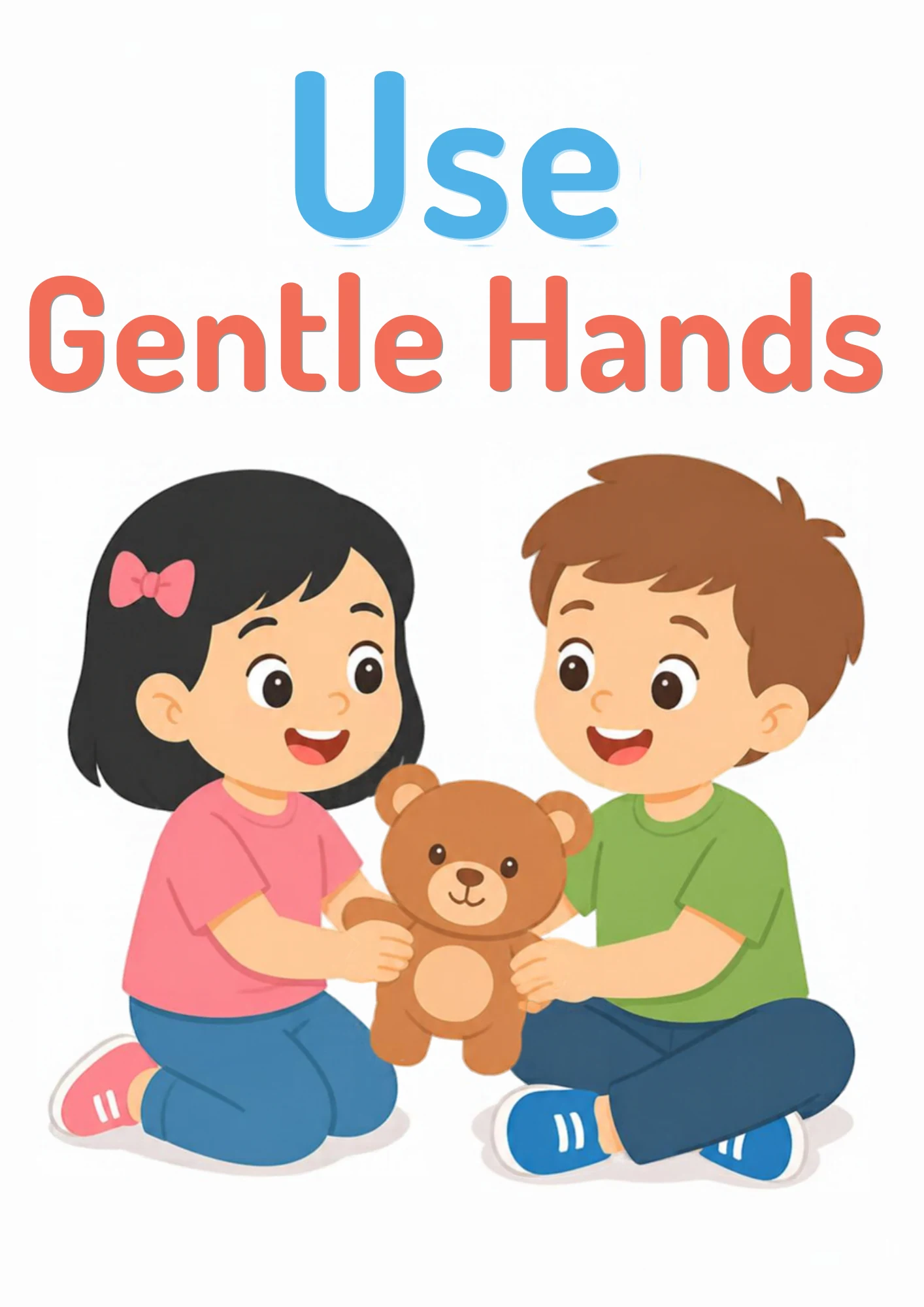
- Show the card: two children, one teddy — both pairs of hands rest ON the bear softly. Name what their hands are doing: holding, not squeezing.
- Teach the two-finger touch: two fingers on teddy’s ear — "this is the gentle touch." Practise on your arm, their arm, the bear.
- Build the ladder aloud: teddy first, then pet or baby, grown-up always beside for the real ones.
- Narrate the receiver: "look — the puppy leaned IN, that means the touch was perfect."
- When roughness happens, skip the scolding and offer the target: "show me your gentle hands." They know the way.
Look closer at the picture
Ask your child: what are the children holding? How many hands are touching the teddy? Are their fingers squeezing or resting? What are their faces doing? Can YOUR hands copy their hands right now?
Ask your child
"What do gentle hands feel like — show me on my arm." "Why do we practise on teddy first?" "What does it mean when a pet leans away?" "Who did you touch gently today?"
What your child can say or do
"Two fingers — butterfly landing!" "The cat leaned in, I did gentle!" Your child may stroke your cheek with visible concentration, or correct a doll’s rough hands with the family rules.
Out in the real world
Gentle moments are daily: stroking the neighbour’s dog with permission, holding the newborn cousin’s hand, touching library books, patting the class goldfish bowl-side. Each is a live rep with a receiver who gives feedback.
Try it together
Gentle-or-rough guessing game: you touch teddy two ways — a squeeze and a butterfly stroke — and your child names which is which, then performs both on demand. Naming the rough makes the gentle a choice.
Understanding check
Ask: "What is the two-finger touch? Who do we practise on first? What do we do when the pet leans away?" Butterfly, teddy-first, soften = landed.
Parent tips
Offer the positive target, never just the prohibition — "show me gentle" beats "stop that" every time. Praise the touch you see, in the moment. If roughness keeps returning, add heavy-work play (squashing dough, wall pushes) — brakes need somewhere legal to work.
Staying safe
Real pets and babies are always two-person jobs: your child’s hands plus your supervision. Never leave a child alone with a dog, however gentle the history — and ears, tails, eyes and faces are look-with-eyes zones, not touch-with-hands zones.
This lesson pairs with the Use Gentle Hands flashcard in the library — print it, show it, keep it on the fridge. Back to Life Skills & Good Habits (Class 32).