
Hat — a step-by-step lesson for grown-up and child
This lesson teaches Hh and its breath sound with the hat card: your child traces the letter, fogs a mirror (or a window) with h-breaths, and learns the quietest letter in the whole set.
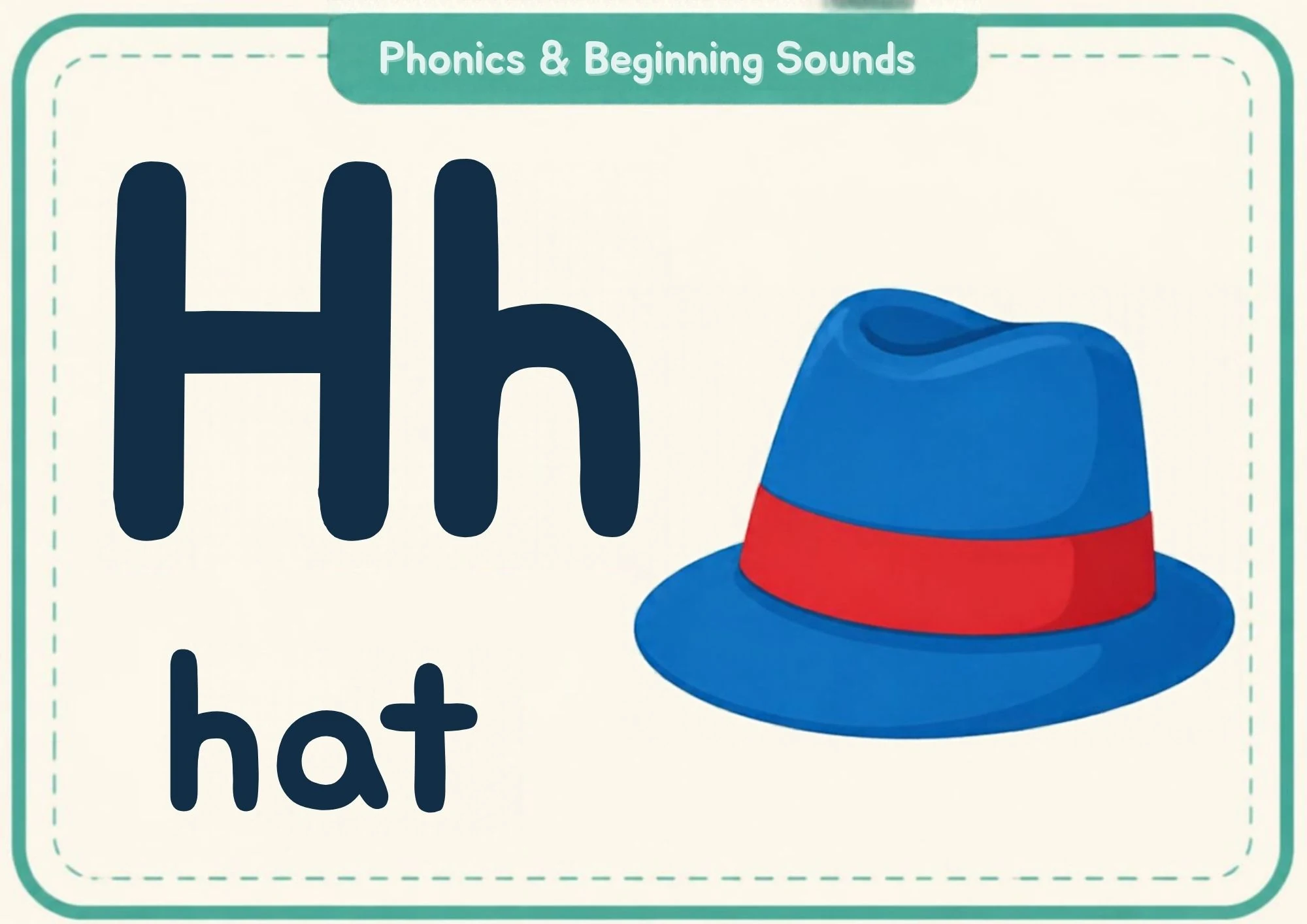
What is this?
Hh is the letter that stands for the first sound in hat — a soft puff of air, no mouth shape, no voice: just breath with a letter on it.
What does it mean?
H is the alphabet’s whisper: it proves that some sounds are almost nothing at all. Learning to hear almost-nothing is real listening training — the hardest listening there is.
What does the child need to know?
Your child needs to feel the h-puff on their own hand, hear the difference between "hat" and "at" (one breath changes everything), and keep the puff gentle.
Why this matters
/h/ starts hand, help, home, hungry — words a child says every single day. It is also the sound children most often drop ("at" for hat), and playful breath games bring it back without a single correction.
What it teaches
Breath control, gentle air awareness, and the fine listening that separates a puff from silence.
Words to learn
hhathandhousehothello
Say this to your child
“"Breathe out warm air on your hands, like fogging a window: hhh. That is h! H says hhh, like hat. Warm your hands with the sound."”
Step by step
- Show the card: "Hh. It is only breath — hhh, like warming your hands. The hat sound!"
- Finger-trace the Hh on the canvas: two tall posts and a bridge, while huffing softly.
- Play the mirror-fog game below — the breath becomes something you can see.
- Huff three h-things: hat, hand, house. Small puffs, clear words.
- Finish by whispering "hat" without the h, then with it — hear the magic puff arrive.
How to say it
Open the mouth slightly and sigh warm air: "hhh". No voice, no shape, no effort — the laziest sound in English. If it becomes "kuh", the throat woke up; relax it again.
Look closer at the picture
On this card the big navy pair Hh sits beside a blue fedora hat with a red band, and the word "hat" is printed below — the letter that is barely a sound, on the card that is easy to wear.
Ask your child
"Can you feel the warm air?" "Is h loud or quiet?" "Say hat — now say at. What changed?"
What your child can say or do
Your child might say: "hhhhat!" with a proper fog-cloud, or invent the game nobody taught: huffing at every window in the house and drawing h-letters in the fog.
Out in the real world
Bath steam, cold-morning breath and hot soup all make real h-clouds. Story wolves huff famously. And every hello, hat and hand is one puff away from practice.
Try it together
Mirror-fog game: hold a hand mirror (or use any window) and fog it with h-breaths. Before the fog fades, draw a big H in it with a fingertip and name an h-word — hat, hand, house. Fog, draw, name; fog, draw, name. The window does the scoring.
Understanding check
Show the card tomorrow and ask for the sound: a soft, visible breath is the pass. Then say "at" and "hat" back to back — if your child hears the difference, the dropped-h habit is already curing itself.
Parent tips
Never chase the dropped h with corrections — huff the breath first, then add the word, and the h returns on its own. Whispering h on purpose also works: quiet sounds make children listen harder.
This lesson pairs with the Hat flashcard in the library — print it, show it, keep it on the fridge. Back to Phonics & Beginning Sounds (Class 28).